
New Zealand flax moth
Glyphipterix achlyoessa
Description
How to identify
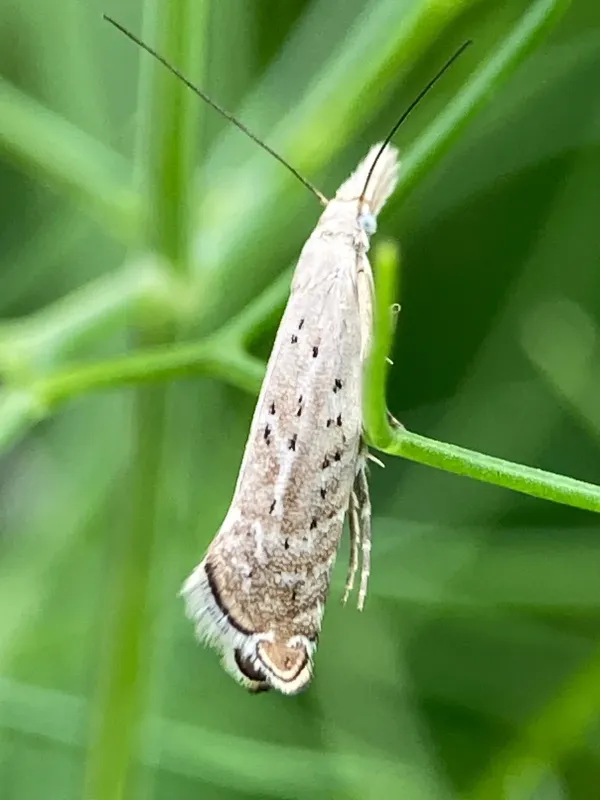
The New Zealand flax moth (Glyphipterix achlyoessa) belongs to the Glyphipterigidae family within the order Lepidoptera. It is a small insect often overlooked until noticeable damage occurs on host plants.
Adult moths are characterized by narrow wings with a metallic or mottled appearance. The wings are usually dark brown or black, featuring distinct silver or white markings.
The larvae, or caterpillars, are equipped with strong chewing mouthparts, which they use to mine through plant leaves. They typically have pale bodies and are adapted to live within the foliage.
The insect's life cycle is closely synchronized with its environment. Females lay eggs directly on host plants, ensuring that the emerging larvae have an immediate food source.
After completing their larval stage, they pupate, often moving into the soil or spinning a protective cocoon on the leaf surface to safeguard themselves from environmental stressors.
What it damages
The primary host plant for this pest is the New Zealand flax, or Phormium tenax. The moth is known to cause significant damage to both ornamental and industrial plantings of this species.
Larvae consume the internal tissues of the leaves, creating numerous tunnels or mines. This interrupts photosynthesis and weakens the overall structure and health of the plant.
In areas of high infestation, affected leaves often turn yellow, curl, and die prematurely. This severely detracts from the plant's aesthetic value and overall commercial quality.
Infestations typically begin in patches, but under favorable conditions, the moth population can spread rapidly across a landscape, putting entire plantings at risk.
Beyond the primary feeding damage, the tunnels serve as entry points for secondary pathogens, such as fungi or bacteria, which can cause faster tissue decay.
Signs of infestation
The earliest signs of infestation are light-colored spots or linear mines on the leaves, where the larvae have burrowed just beneath the epidermis of the plant.
Close inspection often reveals dark excrement left by the larvae within the mines, which gives the damaged leaf tissue a dirty, stained appearance.
Heavily infested leaves frequently lose their rigidity and begin to wither from the tips downward, a symptom that can sometimes be mistaken for drought stress.
In later stages, small holes and shredded tissue appear on the leaves where the larvae have emerged to move to new feeding sites or to pupate.
Inspecting the underside of the leaves during the early morning can help identify the presence of active caterpillars or the formation of their silk cocoons.
Control measures
The most effective cultural control is the immediate removal and destruction of infested foliage to reduce the population size within the garden.
Biological control using products containing Bacillus thuringiensis is an eco-friendly and highly effective method for targeting caterpillars in their younger stages.
In cases of severe infestation, systemic insecticides that move into the leaf tissue can be used to reach and eliminate the larvae feeding within their mines.
Maintaining good plant health through proper irrigation and balanced fertilization helps Phormium recover more quickly and increases its natural resilience to pests.
Regular monitoring of your flax plants throughout the growing season is essential to catch early signs of activity and prevent the infestation from becoming unmanageable.
Taxonomy
- Latin name
- Glyphipterix achlyoessa
- Order
- Lepidoptera (butterflies)
- Family
- Glyphipterigidae
- EPPO code
- GLYXAC
Discussion
No discussions yet — be the first.