
Lahore argasid tick
Ornithodoros lahorensis
Description
How to identify
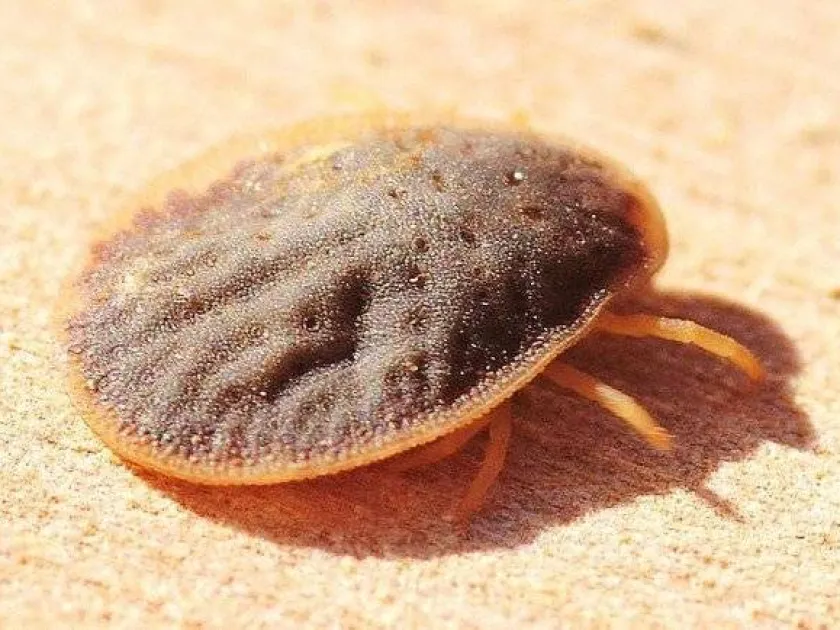
The Lahore argasid tick (Ornithodoros lahorensis) is a significant parasite belonging to the Argasidae family. Adults are relatively large, reaching up to 10 mm in length, with a flat, oval body.
The cuticle of these ticks is textured and leathery, lacking the hard scutum found in ixodid ticks. Their mouthparts are located ventrally and are not visible from above, which is a key diagnostic feature.
They are highly resilient creatures, capable of surviving for long periods without feeding. This ability allows them to persist in abandoned animal shelters and cracks in structures for months.
The life cycle progresses through the egg stage, larvae, multiple nymphal stages, and adults. Mating and egg-laying occur in hidden places, such as deep crevices in walls or floors.
Unlike hard ticks, these soft ticks feed quickly on their host, often during the night, and quickly retreat back into their dark refuges after taking a blood meal.
What it damages
The primary hosts of this parasite are sheep and goats, although cattle, horses, and camels can also be infested. Humans can also be bitten if they enter infested areas.
The main impact is the direct harm caused by significant blood loss, which leads to anemia, reduced growth rates, and weakened immune systems in livestock, particularly in lambs.
Beyond blood loss, these ticks act as vectors for various pathogens, including viruses and bacteria that cause severe animal diseases, leading to significant economic losses in the agricultural sector.
Animals suffer from intense irritation and itching at the bite sites, causing them to rub against structures, leading to fleece damage and secondary skin infections.
The stress caused by persistent tick attacks severely affects the overall productivity of the herd, including reduced meat and milk production.
When it appears
Tick activity is highly dependent on environmental temperature. In favorable, warm conditions, the life cycle is rapid, and the tick population can grow exponentially.
Inside barns and animal enclosures, the microclimate often remains stable enough for the ticks to remain active throughout most of the year.
During colder months, ticks enter a state of dormancy, hiding deep within cracks in walls, wooden pillars, or floorboards, where they can endure harsh winter temperatures.
As spring temperatures rise, the dormant ticks become active and start searching for hosts to feed, usually during the night when animals are resting in their enclosures.
High humidity combined with warmth in summer months is considered optimal for the development of eggs and larvae in the soil or floor crevices.
Signs of infestation
Restlessness in livestock, especially at night, is a primary indicator of an infestation. Animals may exhibit increased activity and attempts to scratch themselves against objects.
Visual inspections often reveal bite marks or localized skin inflammation on parts of the body with thinner hair, such as the inner thighs, groin, and underarms.
The presence of small black or brown fecal spots (frass) in the crevices of walls or floorboards is a clear diagnostic sign of an active tick population nearby.
- Unexplained weight loss in animals.
- Signs of skin trauma and secondary infections on the body.
- Animals showing agitation and discomfort during resting hours.
- Physical presence of ticks in the crevices of the barn structures.
If an infestation is suspected, it is recommended to perform a thorough check of the animal housing, focusing on shaded and hidden areas where ticks congregate.
Control measures
Controlling this tick species requires a multi-faceted strategy focused on habitat management and chemical treatment of the infested premises.
The most effective physical control method is the elimination of shelters by sealing all cracks, crevices, and gaps in walls, floors, and roofs of livestock buildings with cement or sealants.
Regular deep cleaning and disinfection of barns are essential to remove organic debris where the ticks hide and breed, combined with the application of approved acaricides.
Treating animals with systemic or contact-based acaricidal products before they are housed in potentially infested pens is a vital prophylactic measure.
Maintaining strict quarantine protocols when introducing new animals into the herd prevents the migration and spread of these parasites to unaffected areas.
Taxonomy
- Latin name
- Ornithodoros lahorensis
- Family
- Argasidae
- EPPO code
- ORNILA
Discussion
No discussions yet — be the first.