
Argasid ticks
Argas
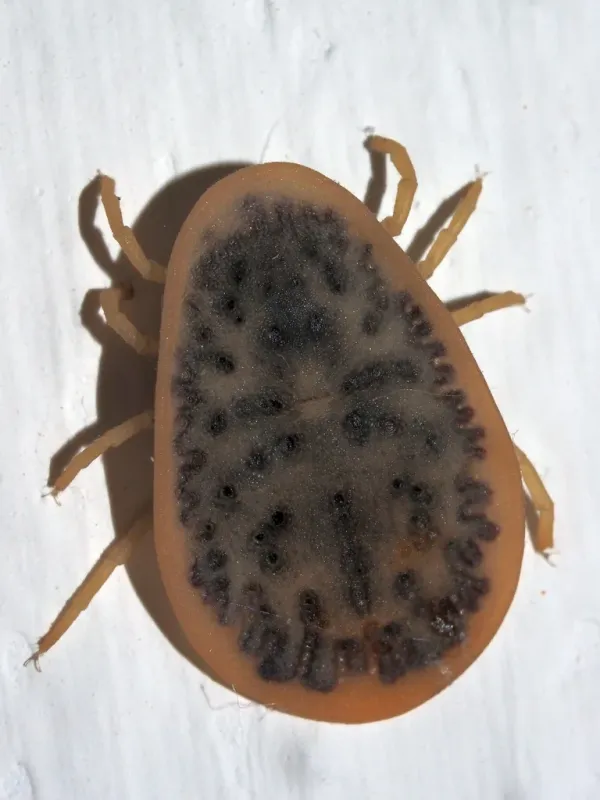
Description
How to identify
Argasid ticks (family Argasidae), commonly known as soft ticks, are distinct from hard ticks (Ixodidae) due to the lack of a sclerotized dorsal shield. Their bodies are flattened and have a leathery, wrinkled cuticle, allowing them to remain inconspicuous in tight spaces.
The life cycle of these ticks involves stages such as eggs, larvae, multiple nymphal instars, and adults. Unlike many other parasites, Argasids are nest dwellers; they spend the vast majority of their life cycle hiding in crevices within poultry houses or bird nests.
These ticks are remarkable for their extreme durability. They are capable of surviving for several years without feeding, remaining dormant in walls or flooring until they detect a potential host. This resilience makes them a difficult pest to eradicate once established.
The most economically significant species is the fowl tick (Argas persicus). They are nocturnal feeders, emerging at night to attach to the skin of birds, engorge on blood, and then quickly return to their dark, secluded refuges.
Identifying an infestation often requires inspection at night or a close search for their characteristic fecal spots. Their morphological adaptation allows them to squeeze into gaps as thin as paper, making them masters of concealment in farm environments.
What it damages
Argasid ticks pose a significant threat to the poultry industry. By feeding on the blood of chickens, turkeys, and other birds, they cause severe physiological stress. Frequent blood loss leads to chronic anemia, which is especially detrimental to young or laying birds.
Beyond the direct impact of blood consumption, these ticks are notorious vectors of various pathogens, including avian spirochetosis and other infectious diseases. The transmission of these agents occurs during the feeding process, posing a serious health risk to the entire flock.
Affected birds show clear signs of distress. The discomfort caused by persistent tick bites results in reduced appetite, poor feather condition, and a significant drop in egg production. In severe cases, high tick density can cause the death of the host.
The physical irritation caused by the bites triggers intense itching, which leads to behavioral problems such as cannibalism and feather-pecking. Birds may injure themselves in an attempt to alleviate the persistent pain caused by the parasites.
The economic loss is not limited to bird mortality or production drops; it also includes the costs of ongoing treatment, disinfection, and potential trade restrictions due to the presence of vector-borne pathogens on the farm.
Signs of infestation
The most immediate behavioral sign of an Argasid tick infestation is restlessness in the flock during the night. If birds are noisy, constantly preening, or moving around their perches at night, it suggests that they are being harassed by parasites.
A visual inspection of the housing should focus on finding small, dark spots of tick excrement clustered in crevices or under the edges of roosts. Finding these spots is a definitive indicator of an active population inhabiting the structure.
Another telltale sign is the presence of empty exuviae (shed skins) left behind after the ticks have molted. These can be found in the cracks of walls, inside wooden nesting boxes, or beneath equipment used by the birds.
Physical examination of the poultry may reveal pale combs and wattles, indicating anemia. In some cases, tiny, inflamed bite marks or crusty patches might be visible on the skin, though these are often missed due to the density of feathers.
- Nocturnal restlessness and vocalizations in the flock.
- Accumulation of dark fecal spots in cracks and crevices.
- Shed larval or nymphal skins found in housing.
- Anemia symptoms like pale combs or lethargy.
- Drop in growth rates or egg laying performance.
Control measures
Effective control of Argasid ticks necessitates a rigorous approach that goes beyond simply treating the individual birds. Since the ticks reside in the physical structure of the poultry house, the primary effort must be directed towards the environment.
The first step involves thorough sanitation. All cracks, holes, and gaps in walls, floors, and nesting structures must be sealed or filled with sealant. Eliminating these refuges is essential for reducing the population density of the ticks.
Chemical control involves the application of appropriate acaricides to the surfaces of the poultry house. These treatments must be applied comprehensively, targeting the areas where ticks hide, and may require multiple applications to account for the egg-laying cycles of the pests.
White-washing walls with lime is a traditional but effective method for both disinfecting surfaces and physically covering potential hiding spots. This practice creates a hostile environment for the ticks and helps keep the facility cleaner for the birds.
Strict biosecurity measures are required to prevent the introduction of Argasid ticks to new or clean farms. Incoming birds, used equipment, or housing materials from infested sources should be treated or quarantined to avoid establishing a new cycle of infestation.
Taxonomy
- Latin name
- Argas
- Family
- Argasidae
- EPPO code
- ARGSSP
Discussion
No discussions yet — be the first.