
Argasid tick
Argas radiatus
Description
How to identify
The argasid tick (Argas radiatus) is a member of the Argasidae family within the order Parasitiformes. This species is primarily a nocturnal ectoparasite that hides in cracks and crevices of avian housing.
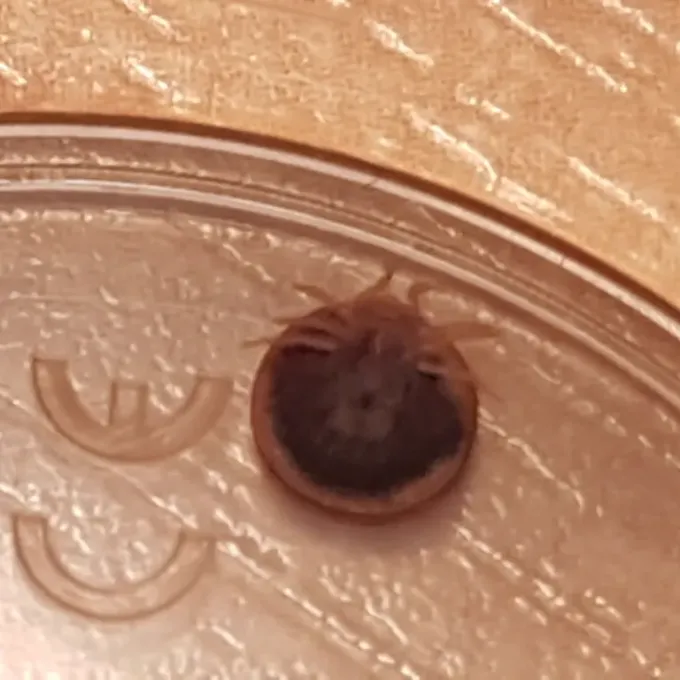
Adult ticks have a flattened, oval-shaped body covered in fine granules. Their coloration ranges from light yellowish to dark brown, depending on their feeding status and engorgement levels.
The life cycle involves egg, larva, nymph, and adult stages. Unlike ixodid ticks, these parasites can withstand long periods of starvation, surviving in empty coops for several years.
The larvae are typically the most active stage and may remain attached to the host for several days to feed, whereas adults engage in rapid, short nocturnal feedings.
Their biology is highly adapted to indoor environments where temperature and humidity levels remain relatively stable throughout the year.
What it damages
This tick is a major concern in poultry farming, primarily affecting chickens, turkeys, and pigeons. It does not damage plants but causes severe economic losses in livestock.
Infested birds exhibit extreme restlessness, loss of appetite, and significant reduction in egg production and overall growth rates.
Severe infestations lead to anemia, especially in younger birds, and can cause mortality due to the combined effects of massive blood loss and chronic stress.
These ticks are efficient mechanical vectors for several avian pathogens, including spirochetosis, which can spread rapidly through a flock.
Constant biting induces skin irritation, predisposing the birds to secondary infections and worsening their general health condition.
When it appears
The activity of these ticks is largely dependent on the ambient temperature. In heated poultry houses, they can remain active all year round.
During spring and summer months, higher temperatures facilitate faster development and more frequent reproductive cycles for the parasite.
In colder seasons, the ticks enter a state of diapause, retreating into deeper structures and construction gaps to survive until conditions improve.
Increased activity is often observed when the temperature exceeds 25 degrees Celsius, creating optimal conditions for rapid population expansion.
Migration of wild birds often acts as a bridge, introducing new tick populations into managed poultry facilities during specific seasonal windows.
Signs of infestation
The most common sign of infestation is nighttime restlessness in the flock, with birds frequently scratching and showing clear distress.
Physical examination of the birds, particularly in areas like the wings, cloaca, and neck, may reveal bite marks, irritation, and dried blood clots.
Dark spots of excrement and discarded molted skins in the cracks of walls, under perches, or near feeders are classic indicators of tick presence.
A decline in productivity, growth, and egg quality that does not respond to nutritional adjustments often points to an ectoparasite issue.
Visibly pale combs and wattles in poultry are strong clinical signs of anemia resulting from chronic parasitic feeding.
Control measures
The core of effective control involves rigorous mechanical cleaning followed by the strategic application of acaricides within the poultry house.
Eliminating hiding spots by sealing cracks and gaps in walls, floors, and ceilings is essential to disrupt the tick life cycle.
- Regular application of approved insecticidal sprays and dusts.
- Flame treatment of structural surfaces to destroy eggs and hidden adults.
- Complete replacement of bedding and systematic sanitation of all equipment.
- Strict quarantine measures for newly introduced birds to prevent initial infestation.
Integrated pest management is crucial because of the tick's ability to hide in deep structural recesses, making total eradication a multi-step process.
Routine monitoring using traps or periodic manual inspections of cracks is the best strategy for early detection and prevention of population outbreaks.
Taxonomy
- Latin name
- Argas radiatus
- Family
- Argasidae
- EPPO code
- ARGSRA
Discussion
No discussions yet — be the first.