
Persian bug
Argas persicus
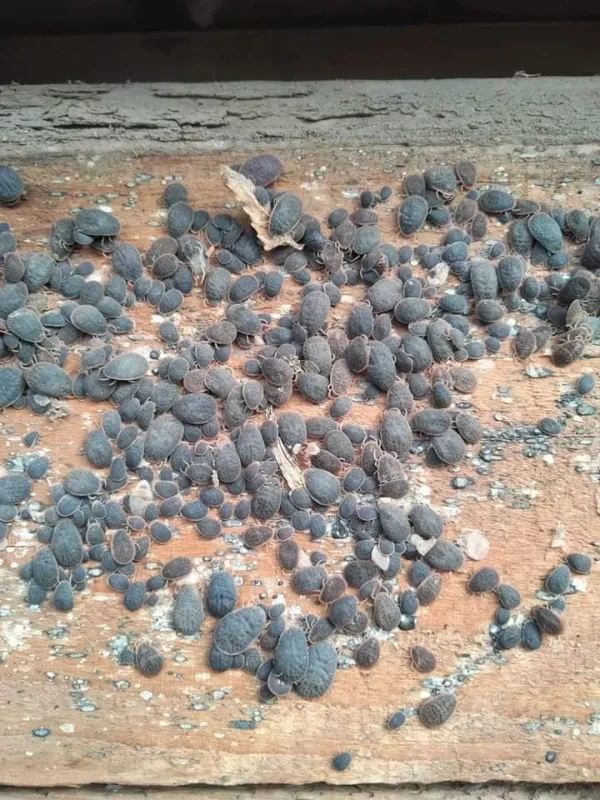
Description
How to identify
The Persian bug (Argas persicus), also known as the poultry tick, belongs to the Argasidae family. It is a nocturnal ectoparasite that primarily infests poultry flocks.
Adult ticks have a flat, oval body that ranges in color from yellowish-brown to dark brown, turning deep red after a blood meal.
The mouthparts are positioned ventrally, hidden beneath the anterior margin of the body, making them difficult to detect during quick visual inspections.
Females are significantly larger than males, often reaching up to 10 mm in length. Larvae are lighter in color and tend to remain attached to the host for several days.
These ticks are remarkably resilient, capable of surviving without a blood meal for several years while hiding in cracks and crevices of poultry houses.
What it damages
They mainly affect chickens, turkeys, ducks, geese, and pigeons. The parasites feed at night, causing significant distress to the birds during their resting hours.
Severe infestations can lead to anemia, especially in young chicks, and may cause death if the parasitic load is excessively high.
Beyond blood loss, these ticks are known vectors for serious avian diseases, such as spirochetosis, which can devastate poultry productivity.
Affected birds show signs of skin irritation, constant scratching, and overall malaise, leading to reduced egg production and slower weight gain in growing birds.
Chronic infestation weakens the birds' immune systems, making them more susceptible to secondary infections and environmental stressors.
When it appears
The activity level of Argas persicus is highly dependent on temperature, with peak reproduction occurring in warmer months above 20°C.
In temperate climates or climate-controlled poultry facilities, these ticks can remain active and continue their reproductive cycle throughout the entire year.
During colder periods, they enter a state of diapause, sequestering themselves in deep cracks, under litter, or within nesting boxes until conditions improve.
The life cycle involves egg, larva, multiple nymphal stages, and adult stages, with each stage requiring a blood meal to progress.
Infestations typically flare up in neglected housing where sanitation is poor and structural gaps provide ample hiding places for the ticks.
Signs of infestation
Increased restlessness in the flock at night is a primary sign of infestation. Birds may frequently shift their feet, jump off perches, or exhibit erratic behavior.
Daytime inspections may reveal small bite marks, scabs, or localized skin inflammation, particularly on areas with less feather cover.
Evidence of their presence includes black or dark brown spots, which are tick excrement, found concentrated in cracks near perches or nesting sites.
The presence of larvae attached to the skin of the birds is a definitive diagnostic sign of a recent or ongoing tick infestation.
Decreased egg laying and poor feather condition without digestive issues are common indicators that the flock is suffering from a parasitic tick burden.
Control measures
Mechanical cleaning is the first step: remove old bedding and seal all structural cracks and crevices where ticks are known to hide.
Application of acaricides is necessary to treat the structure of the poultry house. Ensure all surfaces, especially crevices and perches, are thoroughly covered.
Strict adherence to sanitation protocols and regular inspection of the poultry house are essential for long-term prevention and management.
Heat treatment using a flame gun on metal or stone surfaces can effectively kill ticks and their eggs in areas where chemicals might be undesirable.
- Routine inspection of birds
- Regular facility disinfection
- Sealing wall and perch cracks
- Maintaining high hygiene standards
Taxonomy
- Latin name
- Argas persicus
- Family
- Argasidae
- EPPO code
- ARGSPE
Discussion
No discussions yet — be the first.