
Tamarisk moth
Ornativalva plutelliformis
Description
How to identify
The Tamarisk moth (Ornativalva plutelliformis) belongs to the Gelechiidae family. It is a small moth specialized in feeding on various species of the Tamarix genus.
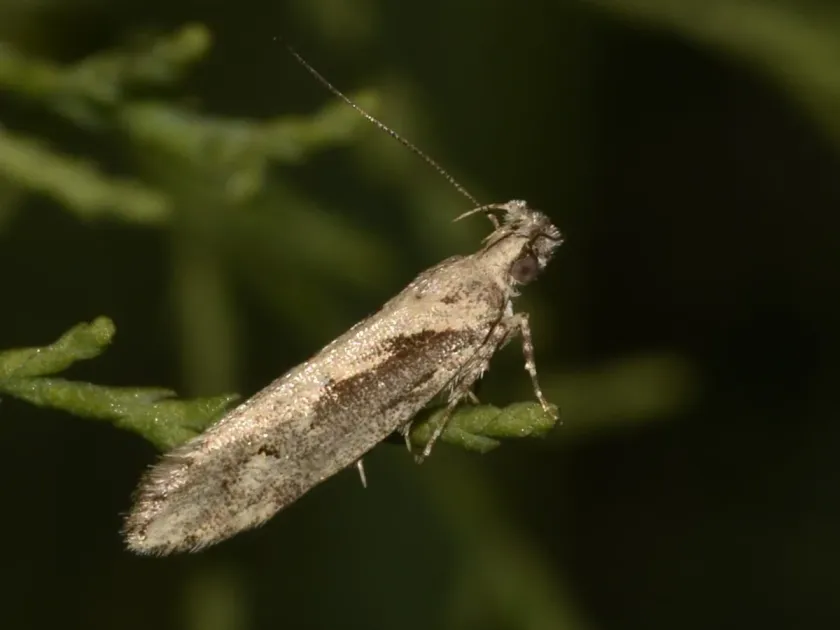
The adult moth features narrow, fringed wings with a cryptic coloration, ranging from light gray to brownish, which provides excellent camouflage against tree bark.
The lifecycle includes complete metamorphosis: egg, larva (caterpillar), pupa, and adult. The larvae go through several instars, becoming more destructive as they grow larger.
This species is mainly distributed in arid and semi-arid regions where tamarisk trees thrive. Its population density is highly correlated with the climatic conditions of the area.
Pupation often occurs in sheltered areas such as plant debris or the soil surface, where the insects can safely wait out unfavorable weather conditions.
What it damages
The primary damage is caused to the shoots and scale-like leaves of the Tamarix shrubs. Larvae often bore into the young shoots, disrupting the plant's growth.
By creating webbing and tying leaves together, the caterpillars form shelters that hide them from predators but also severely disfigure the appearance of the shrubs.
In cases of heavy infestation, the cumulative damage leads to stunted growth, leaf yellowing, and the potential death of young, succulent branches.
Ornamental landscapes suffer significantly from the moth's activity, as the aesthetic value of the tamarisks is compromised by widespread defoliation and tip dieback.
The stress caused by the moth makes the shrubs more susceptible to secondary environmental stresses, including extreme drought and potential pathogenic infections.
When it appears
Adult activity typically begins when temperatures rise in early spring. The timing of the first generation is often synchronized with the initial growth phase of the host plants.
Multiple generations can occur throughout the growing season. In warmer climates, continuous development is common, leading to overlapping life stages of the insect.
Larval activity peaks when the host plant is actively producing new shoots. This is the period when monitoring and interventions are most crucial for effective control.
As autumn approaches and temperatures drop, the moths prepare for diapause. They look for suitable overwintering sites, often near the base of the plant or in leaf litter.
Seasonal weather patterns have a significant impact on the moth's survival. Prolonged, mild winters and hot, dry summers often lead to higher population outbreaks.
Signs of infestation
The most visible sign of an infestation is the presence of silk webbing that binds together the tips of the shoots, creating small, messy nests.
Dark granular frass (excrement) accumulation on the bark and near the tied leaves is a clear indicator that larvae are feeding within the structures of the plant.
Visual tip necrosis and yellowing, where the ends of the branches appear shriveled or discolored, suggest that the larvae have mined into the stems.
Upon closer inspection, one can find the small, cryptic caterpillars hiding within the webbed nests or inside the hollowed-out sections of the shoots.
- Webbed bundles of leaves at shoot tips.
- Accumulation of larval frass on branches.
- Yellowing and dieback of young branch tips.
Control measures
Sanitation is key; pruning and destroying infested branches is an effective way to physically remove larvae and reduce the population in gardens or nurseries.
Chemical control should be timed to target early larval instars before they bore deep into the shoots. Systemic insecticides are often more effective during this period.
Encouraging natural predators such as parasitic wasps or lady beetles can help keep the population in check, serving as a component of Integrated Pest Management.
Maintaining plant vigor through proper irrigation and fertilization helps the tamarisks recover more quickly from larval feeding damage.
Monitoring using pheromone traps can help detect the arrival of adult moths, allowing for precise timing of treatment applications to prevent population booms.
Taxonomy
- Latin name
- Ornativalva plutelliformis
- Order
- Lepidoptera (butterflies)
- Family
- Gelechiidae
- EPPO code
- GELEPU
Discussion
No discussions yet — be the first.