
Australian tussock moth
Orgyia australis
Description
How to identify
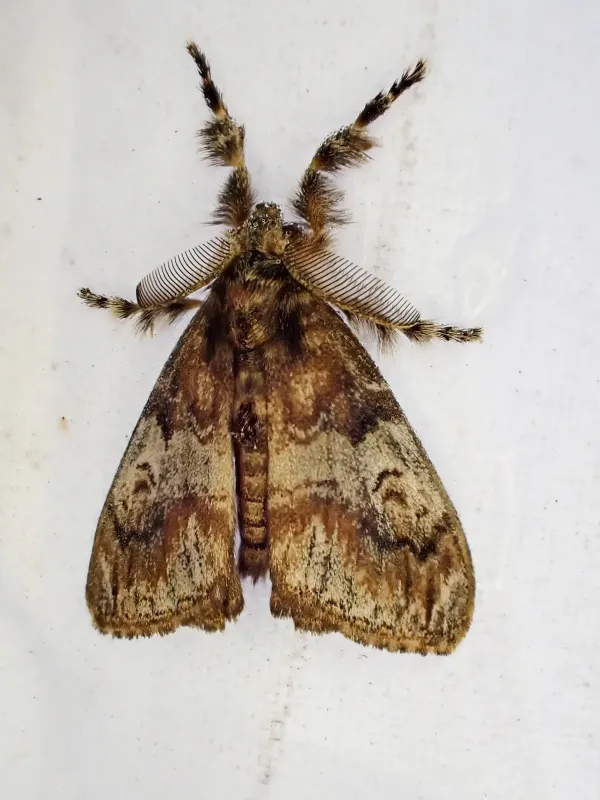
The Australian tussock moth (Orgyia australis) is a member of the Erebidae family. Males typically possess wings with a span of 25–30 mm and brownish markings, while females are often flightless and sedentary.
Larvae are characterized by distinct tufts of hair on their bodies, which serve as a defense mechanism against potential predators. These tufts are often brightly colored, making them easily noticeable.
The life cycle encompasses four developmental stages: egg, larva (caterpillar), pupa, and adult. The duration of each phase is highly dependent on local climatic conditions and food availability.
Females deposit eggs directly onto the surface of the cocoon from which they emerged, covering them with specialized hairs from their body to protect against environmental stressors.
Field identification is primarily conducted by scouting the undersides of leaves and the crevices of tree bark, where egg masses and resting larvae are commonly found.
What it damages
This species is a polyphagous pest, meaning it feeds on a wide range of woody plants, shrubs, and ornamental trees. It is particularly known for affecting fruit-bearing trees and nursery stock.
In cases of high population density, caterpillars can cause complete defoliation of the host plant. This significant leaf loss impairs the plant's ability to produce energy through photosynthesis.
Continuous feeding damage reduces the overall vigor of the plant, making it more susceptible to secondary infections from fungi, bacteria, and other environmental stressors like drought.
The damage to buds and young shoots can lead to stunted growth and reduced fruit yield, which poses a significant economic challenge for commercial orchardists and nurseries.
Severe infestations also alter the aesthetic value of ornamental trees, leading to increased maintenance costs and potential loss of nursery inventory if left unmanaged.
Signs of infestation
The most common sign of infestation is skeletonized foliage, where caterpillars have eaten the leaf tissue while leaving the tough veins intact. This is often observed during the early larval stages.
Presence of silk webbing and pupal cocoons tucked away in bark crevices or branch forks is a clear indicator that the moths are actively reproducing on the plant.
Accumulation of larval frass (droppings) on the ground or on lower leaves is a strong indicator of an active caterpillar colony feeding in the canopy above.
Premature leaf drop and wilting of terminal shoots are symptoms of extreme infestation levels, indicating that the plant is under severe physiological stress.
Egg masses appear as flat, hairy patches on branches or trunks. Discovering these during the winter months allows for effective early intervention before the larvae emerge.
Control measures
Mechanical control involves the manual removal and destruction of egg masses during the dormant season. This simple practice is highly effective at reducing the population for the next season.
Biological control methods, such as the application of Bacillus thuringiensis, are highly recommended because they target caterpillar larvae specifically without harming beneficial insects.
If chemical control is necessary, apply insecticides with systemic or contact action specifically during the early larval stage when the caterpillars are most vulnerable to treatment.
- Utilizing sticky bands around tree trunks to prevent migration.
- Encouraging natural predators such as birds and parasitoid wasps.
- Implementing pheromone traps for monitoring male population levels.
- Sanitation pruning to remove heavily infested branches.
Integrated pest management (IPM) is essential for maintaining tree health, combining regular field monitoring with environmentally conscious control strategies to minimize chemical usage.
Taxonomy
- Latin name
- Orgyia australis
- Order
- Lepidoptera (butterflies)
- Family
- Erebidae
- EPPO code
- ORGYAU
Discussion
No discussions yet — be the first.