
Vapourer moth
Orgyia antiqua
Description
How to identify
The Vapourer moth (Orgyia antiqua) is a species of the Erebidae family. It exhibits distinct sexual dimorphism, where males are winged and active, while females are flightless and stout.
The caterpillars are highly recognizable due to their colourful appearance, featuring tufts of hair (tussocks) that act as a deterrent to predators. They possess four distinct dorsal tufts.
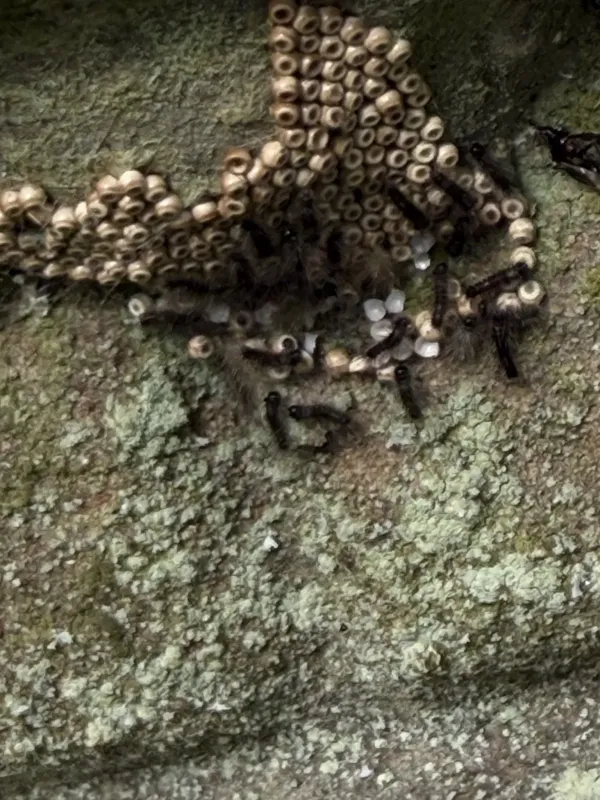
The life cycle involves a complete metamorphosis. They overwinter as egg masses, which the female typically lays on the cocoon from which she emerged.
The egg masses are covered in protective hairs from the female's abdomen, which help camouflage and insulate the eggs against winter temperatures.
This species is known to have one or two generations per year depending on the climatic zone, impacting the overall severity of plant damage.
What it damages
This moth is a polyphagous pest capable of infesting a wide range of fruit trees including apple, pear, plum, and cherry, as well as various ornamental shrubs.
Young larvae feed on the underside of leaves, creating small holes, while older larvae consume entire leaf blades, leaving only the veins intact.
Severe infestations can lead to significant defoliation of the host plant, resulting in reduced vitality, stunted growth, and a decrease in fruit production.
In forest or park settings, the Vapourer moth also targets deciduous trees such as oak, beech, and birch, creating noticeable defoliation patches.
Repeated yearly defoliation significantly weakens the tree, making it susceptible to secondary infections and environmental stressors.
When it appears
Larval hatching usually occurs in late spring, aligning with the bud break of host plants to ensure immediate access to food.
The larval stage lasts until mid-summer, when they transition into pupation within a silk cocoon anchored to bark or leaves.
Adult moths of the second generation emerge in late summer, with mating and egg-laying occurring shortly thereafter to prepare for the overwintering stage.
Field monitoring should be continuous throughout the growing season, with special attention paid to leaf health and early signs of larval presence.
Winter surveys of trunks and branches are critical to identify the number of overwintering egg masses and predict the infestation risk for the coming season.
Signs of infestation
The primary symptom of infestation is skeletonized foliage, often appearing as patches of missing tissue on leaves during the early larval development stages.
Presence of light brown or greyish cocoons attached to twigs or tucked into leaf folds is a definitive sign that the pest has completed a development cycle.
Egg masses appearing as small, brownish, felt-like pads on the bark of tree trunks are clear indicators of a high risk for the following spring.
Visual identification of the hairy, brightly coloured caterpillars is the most reliable way to confirm an active infestation in the garden.
- Skeletonized leaves with holes
- Silk cocoons attached to bark
- Protective egg masses on twigs
- Noticeable leaf loss in summer
Control measures
Manual control is a highly effective, low-impact strategy; carefully removing and destroying overwintering egg masses during winter pruning significantly reduces population density.
For small-scale infestations, hand-picking caterpillars from foliage is a practical and environmentally friendly control method.
Biological control using microbial insecticides, such as Bacillus thuringiensis, is effective against young larvae without harming beneficial pollinators.
Chemical intervention should be reserved for outbreaks where the pest density exceeds economic thresholds, utilizing targeted, registered insecticide sprays.
Encouraging biodiversity by providing habitats for natural predators like insectivorous birds and parasitic wasps helps maintain a natural balance in the orchard.
Taxonomy
- Latin name
- Orgyia antiqua
- Order
- Lepidoptera (butterflies)
- Family
- Erebidae
- EPPO code
- ORGYAN
Discussion
No discussions yet — be the first.