
Opogona glycyphaga
Opogona glycyphaga
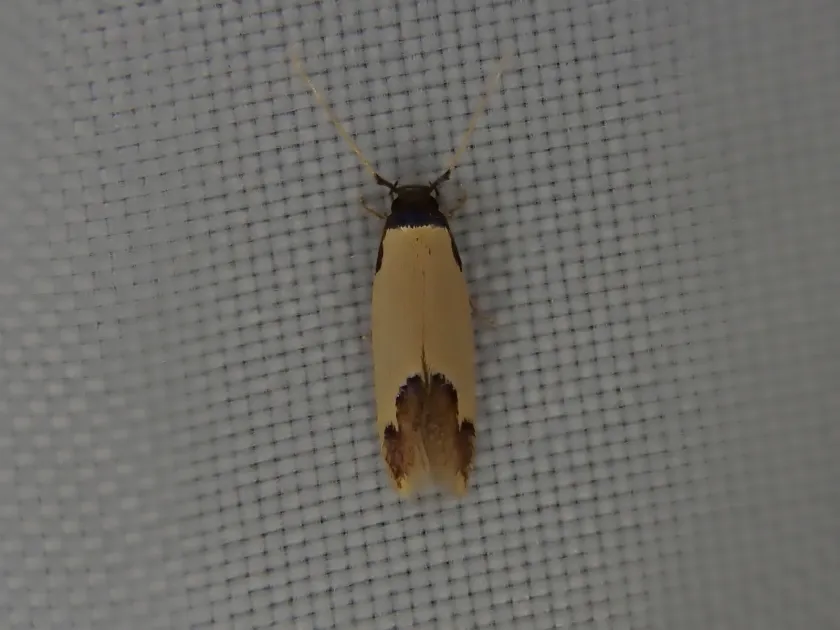
Description
How to identify
Opogona glycyphaga belongs to the family Tineidae. These moths are relatively small, with a wingspan typically ranging between 15 and 20 millimeters.
The adult moths exhibit nocturnal or crepuscular behavior, making them elusive during daylight hours. Their coloration usually mimics the bark or dry debris of host plants.
The larvae (caterpillars) are pale, often creamy-white, and possess a dark, sclerotized head capsule adapted for boring into tough plant tissues.
As members of the Lepidoptera order, these insects undergo a complete metamorphosis. The developmental speed is highly sensitive to ambient temperature and environmental humidity levels.
This species is notorious for its ability to infest both living plant tissues and decaying organic matter, which contributes to its success as an invasive pest.
What it damages
The pest primarily targets tropical and subtropical crops, including bananas, sugarcane, and various ornamental greenhouse plants.
The larvae are internal feeders. By boring into the stems, roots, and fruits, they disrupt the vascular system of the plant, preventing the flow of nutrients and water.
Young plants are particularly vulnerable, often suffering severe stunted growth or total mortality following an infestation.
Fruit damage manifests as internal tunneling, which not only renders the produce unmarketable but also invites secondary pathogens, leading to rapid rot.
Due to the cryptic nature of the larvae, significant damage often occurs before external symptoms become obvious to the grower.
Signs of infestation
The presence of fine "frass" or sawdust-like debris on the surface of stems is a primary indicator that larvae are active within the tissue.
Symptoms in the host plant include yellowing leaves, unexpected wilting, and reduced vigor, despite optimal watering and fertilization practices.
Small, circular entry holes on the bark or fruit surface are common, often accompanied by silk-like secretions left by the larvae as they tunnel.
Dissection of suspect plant parts will reveal characteristic larval galleries or tunnels, which are often filled with dark excrement.
In protected cultivation, monitoring adults using light traps or sticky cards is the most reliable way to detect the onset of an infestation early.
Control measures
Phytosanitary measures are the first line of defense, involving the strict inspection of all imported plant materials to prevent the spread of the pest.
Cultural practices, such as the systematic removal and destruction of infested plant materials, are essential to reduce the pest population density.
Systemic insecticides are the preferred chemical control method, as they can reach larvae feeding deep within the protected galleries of the plant.
To avoid the development of insecticide resistance, it is crucial to implement an Integrated Pest Management (IPM) program that rotates chemical agents.
Biological control agents, including specific parasitoid wasps and entomopathogenic nematodes, show potential for managing populations in greenhouse environments.
Taxonomy
- Latin name
- Opogona glycyphaga
- Order
- Lepidoptera (butterflies)
- Family
- Tineidae
- EPPO code
- OPOGGL
Discussion
No discussions yet — be the first.