
Opogona
Opogona
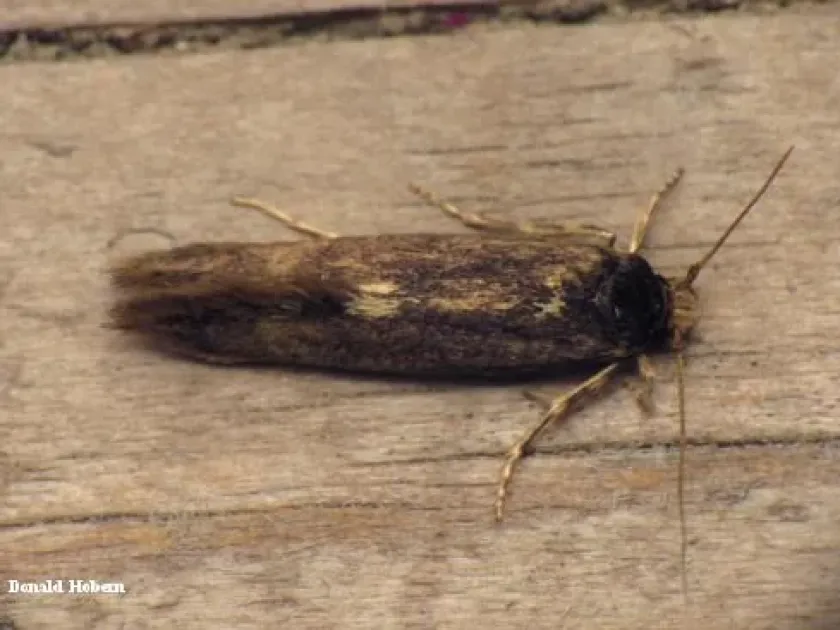
Description
How to identify
Opogona belongs to the Tineidae family (tineid moths). Adult specimens are small moths with a wingspan of approximately 15–20 mm, characterized by an ochre-yellow coloration with dark spots or bands on the forewings.
The larvae (caterpillars) of Opogona have a cylindrical, whitish or yellowish body with a dark head. They lead a cryptic life, boring tunnels into stems, fruits, or the root systems of host plants, which makes early detection challenging.
The insect's life cycle is highly dependent on temperature and humidity, typically ranging from 40 to 60 days. In optimal greenhouse conditions, the pest can develop year-round, producing multiple generations per season.
Females lay eggs singly or in small groups in bark cracks, leaf bases, or damaged areas of the stem. A single female can lay hundreds of eggs, contributing to the rapid spread of the pest.
The pupa is formed inside a cocoon constructed from silk and plant debris, usually located near the feeding site or in the substrate around the host plant.
What it damages
Opogona is a polyphagous pest affecting a wide range of ornamental, tropical, and agricultural crops. Both indoor plants and large-scale industrial plantations are at risk.
Common hosts include Dracaena, Yucca, Cordyline, various palm species, as well as pineapples and sugar cane. Damage is primarily caused by larvae consuming internal plant tissues.
The pest poses a serious threat to weakened plants or propagation material in greenhouses and nurseries. Damage often concentrates at the base of the stem, leading to the collapse or death of the entire plant.
Within fruits and tubers, larvae bore deep, winding tunnels that become packed with frass (excrement). This renders the produce unmarketable and invites secondary fungal and bacterial infections.
High levels of infestation lead to stunted growth, shoot deformation, premature leaf drop, and total loss of commercial value for the crops.
Signs of infestation
The first sign of infestation is the presence of small entry holes on the surface of stems or fruits, often partially obscured by silk webbing or larval frass.
Plants may suddenly lose turgor, turn yellow, and wilt despite adequate irrigation. This indicates that the larvae have destroyed the vascular system within the stem.
During inspection, look for stem deformation, soft patches, or signs of decay where larvae have tunneled. Often, larvae or traces of their activity can be found within the hollowed-out cavities.
Adult moths are nocturnal and rarely seen during the day. Their presence can be monitored using light traps or adhesive yellow sticky cards placed within the growing area.
Webbing found in leaf axils or near the root collar should raise immediate suspicion of an infestation, requiring a thorough inspection of the plant material.
Control measures
The primary control measure is strict phytosanitary inspection of all incoming propagation material. Preventing the movement of infested plants from endemic regions is crucial.
In greenhouses, the use of yellow sticky traps is recommended for monitoring adult populations and timing control measures effectively.
Chemical control involves the application of systemic insecticides that can penetrate plant tissues where the larvae feed. Products based on organophosphates or pyrethroids have proven effective.
It is essential to promptly remove and destroy heavily infested plants and plant debris, as these serve as reservoirs for larvae and pupae.
- Regular inspections of plants, especially the root collar zone.
- Use of biological control agents (entomophages).
- Adherence to quarantine protocols for new plant introductions.
- Maintaining optimal agricultural practices to enhance plant immunity.
Taxonomy
- Latin name
- Opogona
- Order
- Lepidoptera (butterflies)
- Family
- Tineidae
- EPPO code
- OPOGSP
Discussion
No discussions yet — be the first.