
Oinophila
Oinophila
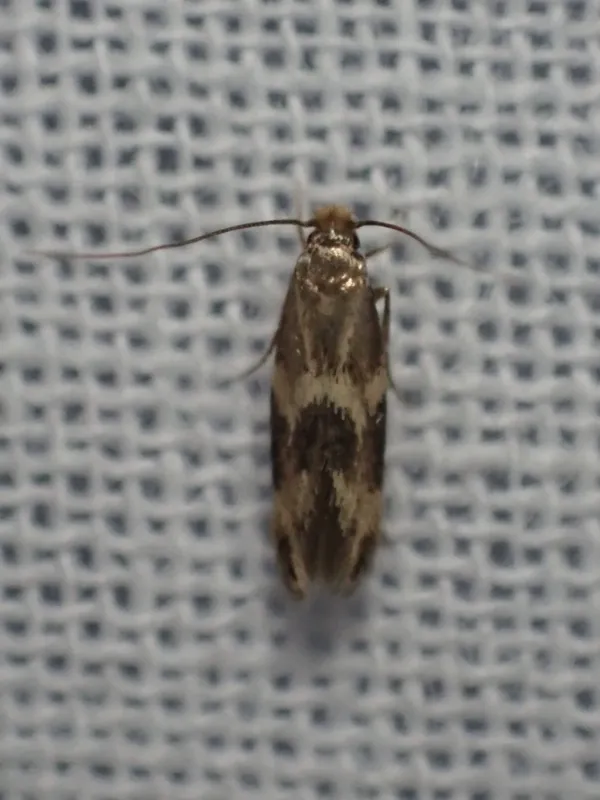
Description
How to identify
Oinophila is a genus of small moths belonging to the family Tineidae. Adult moths are characterized by narrow wings and a dull, brownish coloration that provides effective camouflage in dark, cluttered environments.
The larvae are small, whitish caterpillars with a distinct, darkened head capsule. They are elusive, spending most of their time hidden within the substrate they consume or inside protected galleries.
The lifecycle follows complete metamorphosis: egg, larva, pupa, and adult. Each stage is adapted to survival within confined spaces where organic decay or dry vegetation is present.
Identification of the species is often challenging due to their resemblance to other fungus moths. Precise classification frequently requires the examination of genital anatomy by entomological specialists.
These moths are opportunistic, thriving in anthropogenic environments like warehouses, cellars, and greenhouses, where they act as both detritivores and destructive pests.
What it damages
The primary damage is caused by the larval stage, which feeds on organic matter, including dried plant tissues, seeds, grain, and discarded horticultural waste.
Larvae are capable of penetrating various types of packaging, causing contamination of stored goods through webbing and excrement, which renders the products unsalable.
Their feeding activity often creates micro-habitats that promote the growth of molds and fungi, further exacerbating the spoilage of the infested commodity.
In nursery or greenhouse settings, Oinophila larvae may occasionally feed on rotting roots or stems, leading to weakened plant health and increased susceptibility to other pathogens.
Significant economic losses occur primarily in conditions of poor storage hygiene, where high humidity levels favor the rapid expansion of moth populations.
When it appears
In climate-controlled storage facilities, Oinophila can remain active throughout the year, as the environment provides optimal temperatures for continuous reproduction.
Population peaks are typically observed during warmer months when ambient heat influences the speed of larval development and adult emergence from pupae.
The pest often establishes long-term reservoirs in neglected areas, emerging whenever environmental conditions or resource availability improve.
Migration of adults into new areas can occur anytime during the growing season, especially if they are introduced via contaminated packaging or equipment.
The absence of extreme seasonal fluctuations in indoor environments is the primary reason for the persistent nature of this pest in commercial storage.
Signs of infestation
The presence of fine, silky webbing over stored materials or along container surfaces is one of the earliest indicators of an Oinophila infestation.
Small, dark, granular frass (excrement) scattered throughout the product indicates that larvae have been actively feeding within that specific area.
Hollowed-out seeds or visible boreholes in plant materials provide clear evidence of larval destruction, even if the insects themselves remain hidden.
Adult moths fluttering near light sources or resting in dark corners during the day signal an ongoing infestation and the potential for new egg-laying cycles.
A persistent, musty odor in the storage area often points to advanced spoilage caused by the combined action of the moth larvae and associated fungal colonization.
Control measures
Maintaining strict sanitation standards, such as frequent removal of debris and dust, is the most effective preventative measure against Oinophila.
Controlling the microclimate is crucial; reducing ambient humidity to levels below 60% effectively suppresses larval development and population growth.
Physical treatments, including regulated temperature extremes (deep freezing or heating), are highly effective for eliminating infestations in small batches of product.
Monitoring with pheromone or light traps allows facility managers to detect adult activity early and prioritize targeted cleaning or remediation efforts.
When chemical intervention is required, only approved warehouse-grade insecticides should be used, with full compliance to safety regulations for stored agricultural products.
Taxonomy
- Latin name
- Oinophila
- Order
- Lepidoptera (butterflies)
- Family
- Tineidae
- EPPO code
- OINOSP
Discussion
No discussions yet — be the first.