
Kirby's bagworm
Oiketicus kirbyi
Description
How to identify
Kirby's bagworm (Oiketicus kirbyi) belongs to the order Lepidoptera, family Psychidae. Adult males are small moths showing clear sexual dimorphism, whereas females are wingless and spend their entire lives protected within a silken case.
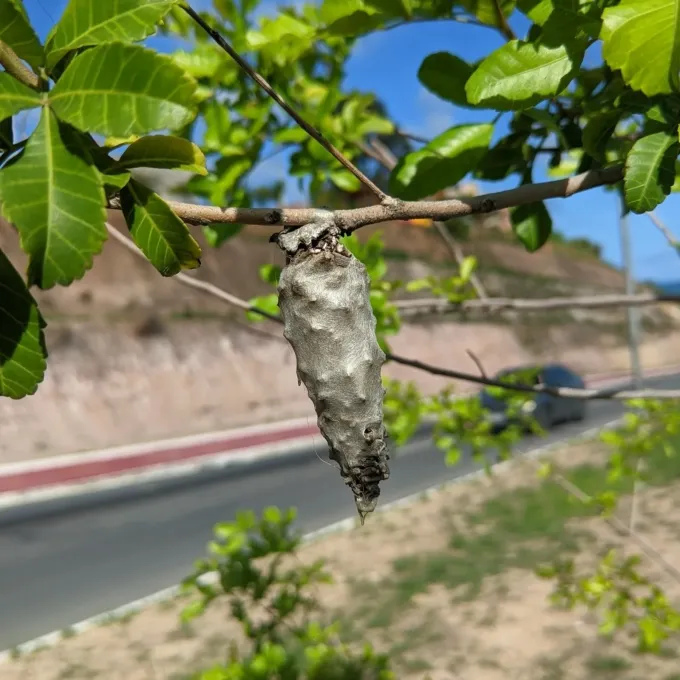
Larvae construct characteristic protective shelters, known as "bags," made of silk, bark fragments, leaves, and twigs from the host plant. This case serves as a reliable shield throughout the larval stage, effectively camouflaging the pest as part of the tree.
The insect's lifecycle includes egg, larva, pupa, and adult stages. The female remains inside the bag after pupation, where the male enters to mate. After fertilization, the female lays eggs inside the case, ensuring the offspring are protected from environmental hazards.
Naturally distributed throughout tropical and subtropical regions of Latin America, the pest is relatively sedentary due to the flightless nature of the females. However, its high reproductive rate allows populations to expand rapidly when environmental conditions are favorable.
The presence of the pest is typically identified by observing hanging cocoons firmly attached to branches with silk threads. These structures are often mistaken for dried fruits or natural debris, which frequently leads to delays in detecting infestations in agricultural fields.
What it damages
Kirby's bagworm is a polyphagous pest affecting oil palms, coconut palms, citrus, cacao, and various deciduous and coniferous trees. Its ability to feed on a wide range of hosts makes it a serious threat to industrial plantations.
Larvae cause damage by feeding on leaves, either scraping the epidermis or consuming the entire leaf blade. In cases of mass outbreaks, the pest can cause severe defoliation, which critically undermines the tree's health and reduces its overall productivity.
Damage to the photosynthetic surface of the leaves disrupts the plant's metabolic processes, leading to stunted growth and reduced yields. For oil palm plantations, this leads to significant economic losses due to lower production output.
Besides direct foliage consumption, larvae may damage young shoots and developing fruits, leaving shallow grooves on the surface. Such injuries degrade the quality of the product and create entry points for secondary infections and fungal pathogens.
Severe infestations can result in the death of weak young seedlings if control measures are not implemented in time. The impact is most noticeable during drought periods when the plants are already struggling with water stress.
Control measures
One of the most effective manual control methods involves removing and destroying the bags from affected trees. This approach is practical for small areas or young orchards where access to the canopy is manageable.
Biological control relies on natural predators and parasitoids, such as parasitic wasps, which play a significant role in suppressing bagworm population densities in natural ecosystems.
In industrial cultivation, spraying with systemic or contact insecticides is performed during the active emergence of young larvae. Precise timing is essential, as the dense silk bag provides larvae with significant protection against many chemical agents.
Pheromone traps are used to monitor the population dynamics of adult males, which helps in identifying the optimal window for control actions and reducing the total number of chemical applications needed.
Agronomic practices include maintaining good orchard sanitation, performing timely pruning to remove heavily infested branches, and fostering an environment that supports the survival of beneficial predatory insect populations.
Taxonomy
- Latin name
- Oiketicus kirbyi
- Order
- Lepidoptera (butterflies)
- Family
- Psychidae
- EPPO code
- OICEKI
Discussion
No discussions yet — be the first.