
Bagworm moth
Oiketicus
Description
How to identify
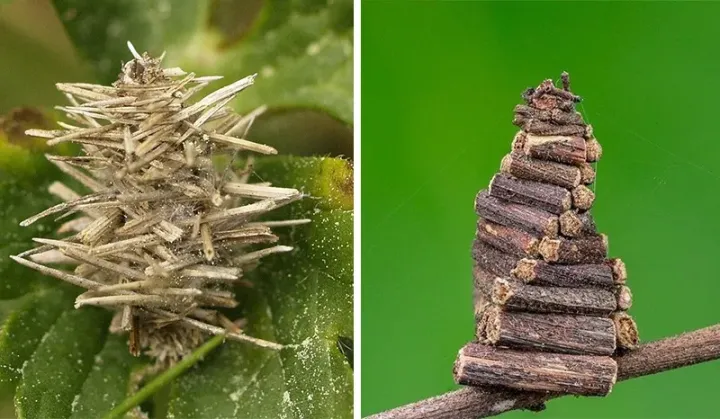
Bagworms are members of the family Psychidae, characterized by their unique ability to construct protective cases known as bags. The genus Oiketicus is particularly notable because the larvae spend their entire life cycle hidden within these cases made of silk, twigs, and foliage.
These insects exhibit extreme sexual dimorphism. Adult males are typical moths with wings, while females are often wingless, legless, and possess a worm-like body, remaining within the protective bag throughout their adult lives.
The primary identification feature is the bag itself, which the larva carries everywhere. It is securely fastened to host branches with silk, effectively camouflaging the insect as a piece of bark or a withered leaf fragment.
The size of the bag varies based on the age of the larva and the host plant, often reaching several centimeters in length in mature specimens. The construction material is chosen to blend perfectly with the surrounding environment.
Larvae possess strong mandibles capable of chewing through tough plant material, which they use both for feeding and for meticulously reinforcing their protective cases as they grow.
What it damages
Bagworms are generalist pests that attack a wide variety of deciduous and coniferous trees, as well as many shrubs. They are particularly devastating to ornamental trees and fruit-bearing plants in garden environments.
Larvae consume leaf epidermis, skeletonize leaves by eating only the soft tissues, or feed on buds, leading to stunted growth and a general decline in the tree's health and vitality.
In cases of heavy infestation, bagworms can completely defoliate a tree. This severe loss of foliage inhibits photosynthesis, causing stress, reducing growth rates, and potentially leading to tree mortality during periods of drought or winter.
Beyond leaves, bagworms may also damage fruit, causing pits or unsightly scars. This damage frequently exposes the fruit to opportunistic fungal infections, causing rot and premature fruit drop.
The physical presence of bags and the resulting leaf loss serve as entry points for various pathogens and other secondary pests, making consistent monitoring essential for nursery and garden management.
When it appears
The life cycle of the bagworm is strictly tied to the seasonal growth of its host plants. Overwintering typically occurs in the egg stage, which are safely housed inside the old female's bag or as early-instar larvae.
Spring activity coincides with bud burst. Overwintering larvae emerge and begin feeding actively. During this stage, they are most vulnerable as they seek out fresh growth and start constructing their initial bags.
Summer is characterized by rapid larval growth and the constant expansion of their cases. By mid-to-late summer, larvae reach their maximum size and begin the pupation process within their reinforced bags.
Mating occurs toward the end of the season. Once mated, the female deposits eggs within her case, which provide protection for the next generation against winter conditions.
Understanding these phenological stages is crucial for timing chemical or biological interventions, as targeting the larvae before they construct thick, protective cases is key to effective population suppression.
Signs of infestation
The most obvious sign of infestation is the appearance of small, cone-shaped bags hanging from twigs or branches, which may be mistaken for dormant buds or dried debris at first glance.
Signs of skeletonized foliage — where only the main veins remain on the leaf — clearly indicate that bagworms have been feeding in that specific canopy area.
An abundance of silk webbing on branches and trunks, often used by larvae to anchor themselves while transitioning between feeding sites, is a reliable indicator of active bagworm presence.
Significant leaf drop and general canopy thinning on host trees, especially during the summer, are common symptoms of an ongoing, large-scale infestation.
- unusual debris-covered bags on branches
- leaves consumed to their main veins
- visible silk anchor lines on the bark
- buds or young fruits showing irregular feeding scars
Control measures
For smaller infestations, manual removal is the most effective and eco-friendly strategy. Physically picking the bags from trees during the winter and early spring ensures the eggs are destroyed before hatching.
Chemical control using systemic or contact insecticides can be effective, but applications must be timed precisely when the larvae are young and actively feeding, before they mature and seal their cases.
Biological control methods, particularly those utilizing the bacterium Bacillus thuringiensis, offer a targeted approach that is effective against larvae while being safer for non-target beneficial insects.
Good horticultural practices, such as proper pruning and maintaining overall plant health, help the tree withstand minor attacks and remove potential egg-laying sites from the canopy.
Encouraging natural predators, including predatory wasps and birds, provides long-term suppression of bagworm populations, helping to balance the garden ecosystem without relying solely on chemical interventions.
Taxonomy
- Latin name
- Oiketicus
- Order
- Lepidoptera (butterflies)
- Family
- Psychidae
- EPPO code
- OICESP
Discussion
No discussions yet — be the first.