
Bagworm moth
Oiketicoides
Description
How to identify
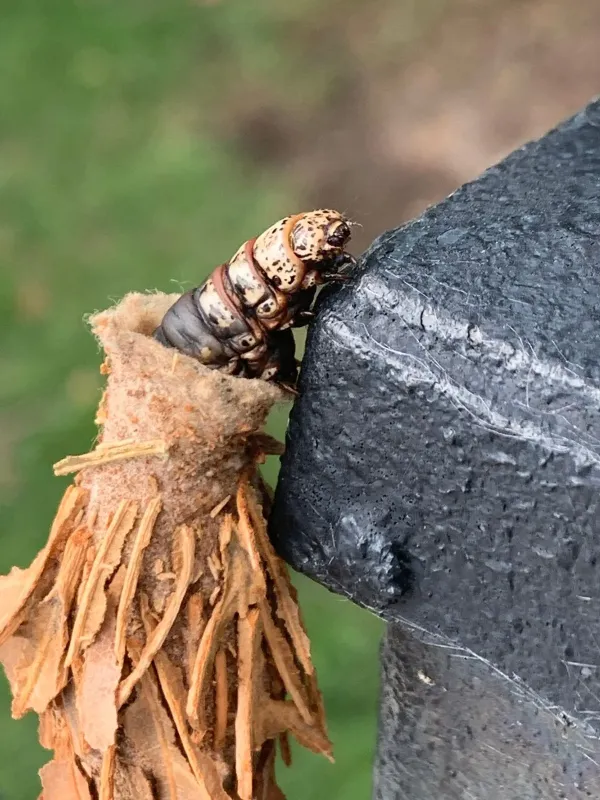
The bagworm moth (genus Oiketicoides) belongs to the family Psychidae, order Lepidoptera. This unique pest is characterized by the larvae constructing a protective case (bag) made of plant debris, twigs, soil particles, and silk, which they inhabit throughout their larval stage.
There is a pronounced sexual dimorphism: adult males are winged moths capable of flight, while adult females are wingless, legless, and eyeless, resembling vermiform larvae that remain inside their protective cases for their entire lifespan.
The size of the protective case depends on the species and the age of the caterpillar, reaching several centimeters in length. The case often mimics the appearance of the host plant, making the detection of the pest particularly difficult for growers.
The larvae possess a tough, durable cuticle adapted to life within the cramped space of the case. They use silk threads to anchor their homes to twigs or tree trunks, where they spend most of their existence.
The life cycle includes a complete metamorphosis: egg, larva, pupa, and adult. The female lays eggs within her own case before dying, and the newly emerged larvae immediately begin building their own protective structures.
##damage##Bagworms are polyphagous, attacking a wide range of woody plants and shrubs. They pose a significant threat to fruit trees such as apple, pear, and plum, as well as various ornamental conifers and deciduous trees in landscaping.
The larvae feed on leaves, consuming entire sections or skeletonizing the leaf blade, leaving only the major veins intact. High infestation levels can lead to severe defoliation of large parts of the plant's canopy.
In addition to foliage damage, larvae also feed on the tender bark of young shoots and buds. This weakens the tree, reducing its winter hardiness and leaving it vulnerable to opportunistic diseases and secondary infections.
In nurseries, massive outbreaks of bagworms can halt the growth of young trees, leading to stunted development or death due to the depletion of the plant's nutrient reserves.
The pest not only ruins the aesthetic appearance of ornamental plants but also significantly reduces the yield of fruit-bearing species by disrupting photosynthesis and normal metabolism.
When it appears
The active feeding period occurs during the spring and summer, coinciding with the plant's main vegetative cycle. During this time, the larvae are at their most voracious, constantly expanding their protective cases as they grow.
Pupation takes place inside the case, which is firmly attached to a twig, typically in the second half of summer. This stage lasts several weeks before the emergence of the adults.
The flight of the males usually occurs in late summer or early autumn. During this time, they actively search for females, which release pheromones while remaining inside their cases on the host plants.
Overwintering most commonly occurs in the egg stage inside the dead mother's case or as early-instar larvae, ensuring high survival rates even in harsh climates due to the protection provided by the silk and plant debris.
The initial emergence of young larvae in the spring corresponds with the budding phase, providing them with immediate access to fresh, tender foliage.
Signs of infestation
The primary sign of infestation is the presence of strange, stationary cone-shaped structures on twigs or trunks, often mistaken for bits of debris or bark fragments hanging on silk threads.
- Leaves with characteristic holes or chewed edges.
- Presence of hanging cases that may wiggle slightly if touched, indicating the presence of a live larva.
- Skeletonized leaf patches caused by early-instar feeding.
- Unexplained lack of growth in young saplings despite adequate irrigation and care.
By late summer, empty pupal casings protruding from the bags are visible, indicating that the adult moths have emerged and the reproductive cycle has concluded.
Control measures
In small gardens, the most effective method is the manual collection and destruction of the cases. This must be performed before the eggs hatch in the spring to prevent the spread of new larvae.
Insecticide application is effective during the early larval stages when the caterpillars are young and have not yet built a thick, resistant protective case. Biological agents based on bacteria are highly recommended.
Implementing good horticultural practices is essential: balanced fertilization, proper watering, and pruning infested branches where the pest populations concentrate are key to managing the spread.
In commercial orchards, pheromone traps should be used to monitor male activity, which allows for precise timing of chemical treatments targeting the young larvae before they cause widespread damage.
Encouraging natural predators, such as birds and predatory insects, helps limit bagworm populations; maintaining a healthy ecological balance in the garden is a sustainable long-term strategy.
Taxonomy
- Latin name
- Oiketicoides
- Order
- Lepidoptera (butterflies)
- Family
- Psychidae
- EPPO code
- OIKESP
Discussion
No discussions yet — be the first.