
Thick-legged flower beetle
Oedemera nobilis
Description
How to identify
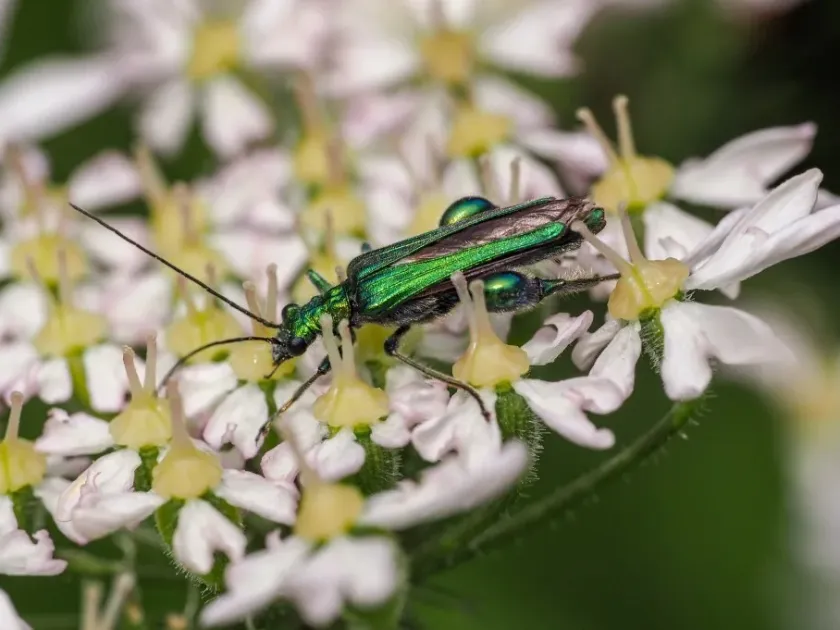
The thick-legged flower beetle (Oedemera nobilis) is a common member of the Oedemeridae family. Adult beetles have a distinct elongated body with a brilliant metallic green or copper iridescence.
The most striking identifying feature of the male is its significantly swollen hind femora (thighs), which distinguishes it from the more slender-bodied females.
The wing covers (elytra) are somewhat narrowed towards the apex and show visible longitudinal ridges. Their body is covered with fine, short hairs, giving them a velvety appearance.
These beetles are frequently found on various flowering plants in sunny, open environments. Their bright appearance often causes confusion with other common garden beetles.
As members of the order Coleoptera, they are well-adapted to life in agricultural and garden landscapes where pollen sources are abundant during their active flight season.
What it damages
The damage caused by the thick-legged flower beetle is primarily linked to the feeding habits of adult beetles, which consume pollen and nectar from the flowers of many plant species.
They are known to visit plants from the Rosaceae and Apiaceae families, among others. By feeding on the anthers, they can interfere with the pollination process of fruit-bearing crops.
For commercial flower growers, the beetles can cause aesthetic damage by chewing on petals, which reduces the marketability of cut flowers and ornamental displays.
The larvae of this species are saproxylic, meaning they develop inside rotting wood or dead plant stems. Consequently, they do not cause direct damage to living plant tissues.
While often considered harmless visitors, high population densities in specific areas can lead to significant localized impacts on plant health and yield in specialized cultures.
When it appears
The flight period for the thick-legged flower beetle typically occurs from late spring through mid-summer, coinciding with the peak flowering times of many common garden plants.
They are primarily diurnal insects, favoring sunny weather for their activities. On overcast or rainy days, they seek shelter deep within the floral structures.
The lifecycle is tied to the availability of pollen, which provides the necessary energy for their reproductive phase. Adult activity decreases as the flowering season tapers off.
During the peak season, beetles can be found mating and feeding simultaneously. Monitoring during this period is essential for those looking to protect high-value ornamental plants.
Their life cycle includes egg, larval, pupal, and adult stages, with the adult stage being the only one that interacts directly with the flowers of our managed gardens.
Signs of infestation
The most obvious sign of presence is the visual detection of metallic green beetles clustered inside flowers or on the petals of blooming plants.
Feeding damage is characterized by damaged anthers, missing pollen, and irregular, ragged edges on flower petals caused by the beetles' mandibles.
If you gently shake a flower or a plant stem, the beetles will quickly take flight or drop to the ground, allowing for an easy estimate of their local population.
Visible frass (insect waste) on the petals or inside the calyx of the flower can also indicate a sustained period of feeding by these beetles.
An indirect sign of heavy infestation is a noticeable decline in the number of fruits or seeds setting on plants that rely heavily on healthy anthers for efficient pollination.
Control measures
Generally, active management is rarely required as the thick-legged flower beetle is often considered a minor pest unless populations are exceptionally high.
For home gardens, manual removal of the beetles in the early morning is highly effective. Collecting them at this time is easier as the cool air keeps them sluggish.
A proactive cultural practice involves removing decaying wood or dead plant debris from the immediate area, which significantly limits the habitat suitable for larval development.
Chemical control should be used as a last resort and only when the pest levels pose a genuine economic threat to the yield of the crop being grown.
Promoting a healthy garden ecosystem by supporting natural predators like birds and predatory insects will help keep the population of these beetles in natural check.
Taxonomy
- Latin name
- Oedemera nobilis
- Order
- Coleoptera (beetles)
- Family
- Oedemeridae
- EPPO code
- OEDMNO
Discussion
No discussions yet — be the first.