
Wharf borer
Nacerda melanura
Description
How to identify
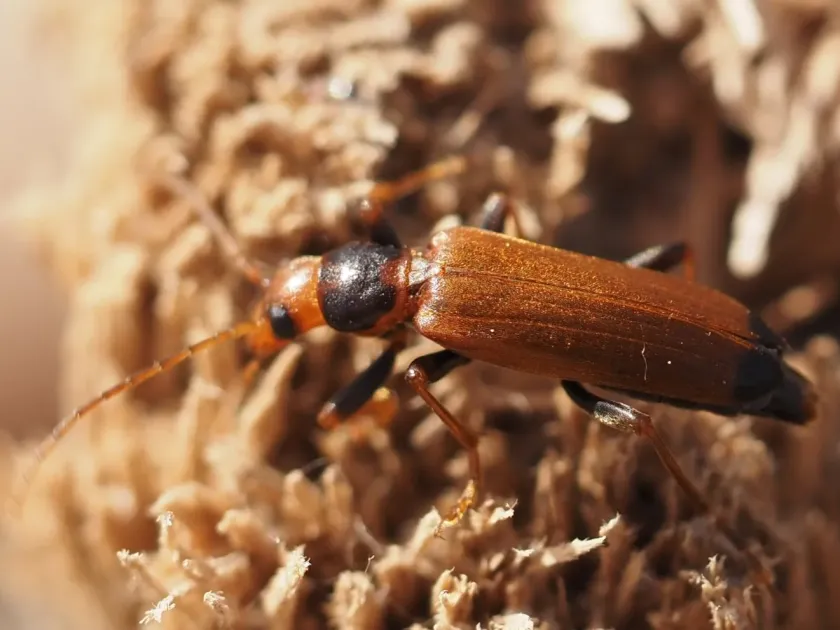
The wharf borer (Nacerda melanura) is a beetle of the family Oedemeridae. Adult beetles are typically 8 to 15 mm long, with a distinct yellowish-brown or reddish body and prominent black tips on their elytra, making them identifiable to trained observers.
The larvae are light-colored, fleshy, and can reach up to 25 mm in length. They spend their entire developmental period hidden deep within moist timber, often remaining undetected until significant structural damage has already occurred.
Adult beetles are strong fliers and are highly attracted to artificial light sources, which is often the primary way they are discovered by homeowners or facility managers during the summer season.
The biological cycle of this beetle is highly specialized, as it requires wood that is already in a state of decay or high moisture content, often exacerbated by fungal growth, to successfully complete its development.
While adult beetles cause no direct damage to wood, they are the reproductive stage of the species. Their presence in a structure is a warning sign that the building's timber components are suffering from moisture-related issues.
What it damages
The larval stage is responsible for all structural damage. Larvae tunnel through damp, decaying wood, feeding on both the softened wood fibers and the associated fungi, effectively destroying the integrity of the material.
In urban environments, wharf borers frequently target wharf pilings, bridge timbers, and wooden structural components in damp basements. They can cause severe degradation to foundation beams if these are in contact with moist soil.
The tunneling activity of larvae creates an intricate network of passages within the timber. As these passages multiply, the load-bearing capacity of the wooden element decreases, eventually leading to structural failure.
Damage is often hidden beneath the surface of the wood. The external appearance of the beam may seem solid, while the internal structure is being converted into a fragile, hollowed-out mess, posing safety risks to the building.
The presence of wharf borers often indicates an underlying moisture control failure. Without addressing the source of the dampness, the wood remains an attractive breeding ground for successive generations of the pest.
When it appears
The adult flight period typically occurs during the warmer summer months, primarily June and July. During this timeframe, mating occurs, and eggs are laid in the crevices of damp or rotting wooden surfaces.
The life cycle generally spans one year, but environmental factors such as ambient temperature and moisture levels can influence the duration of development, potentially extending it to two years in less optimal conditions.
Larvae remain active throughout the warmer months, continuously feeding and expanding their tunnels. During winter, they retreat deeper into the timber to survive the colder temperatures, maintaining their presence within the structure.
The emergence of adult beetles is synchronized with the seasonal warmth, which triggers the transformation from pupa to adult. This cycle repeats annually as long as the environmental conditions remain favorable for larval development.
Predicting the intensity of the infestation can be difficult due to the hidden nature of the larvae, but the surge in adult sightings during peak summer months provides a clear indicator of the population's health.
Signs of infestation
The most common sign of an infestation is the sighting of adult beetles near windows, light fixtures, or doors during the summer, as they are naturally drawn to light sources.
Circular exit holes on the surface of wooden beams represent points where newly emerged adults have exited the wood. These holes are a definitive indicator that an established colony is present nearby.
The accumulation of frass, which resembles fine sawdust, at the base of wooden supports or in cracks, is a clear sign that larvae are actively tunneling and consuming the timber above.
Wood that feels soft, damp, or displays a dark, discolored appearance is prone to wharf borer infestation. Tapping the wood with a tool may produce a hollow, dead sound, signaling internal damage.
In cases of severe infestation, one might notice a slight bulging or cracking of the wood surface as the structural integrity beneath begins to give way under the weight of the material.
Control measures
The primary control strategy is moisture management. Eliminating direct contact between timber and soil, and improving drainage around building foundations, is essential to prevent wood decay.
Applying borate-based wood preservatives or other professional-grade insecticides to at-risk timber can create a toxic barrier that prevents larval establishment and protects the structural wood.
If wood is already infested, it must be removed and replaced with pressure-treated lumber. The remaining sound timber should be thoroughly treated with fungicides and insecticides to prevent re-infestation.
Improving air circulation in basements and crawl spaces using fans or dehumidifiers helps lower wood moisture levels below the threshold required by wharf borer larvae to thrive.
Implementing light traps during the adult flight season can serve as a monitoring tool. Capturing adults allows for early detection, enabling property owners to intervene before the larval population causes critical damage.
Taxonomy
- Latin name
- Nacerda melanura
- Order
- Coleoptera (beetles)
- Family
- Oedemeridae
- EPPO code
- NACEME
Discussion
No discussions yet — be the first.