
Ananca bicolor
Ananca bicolor
Description
How to identify
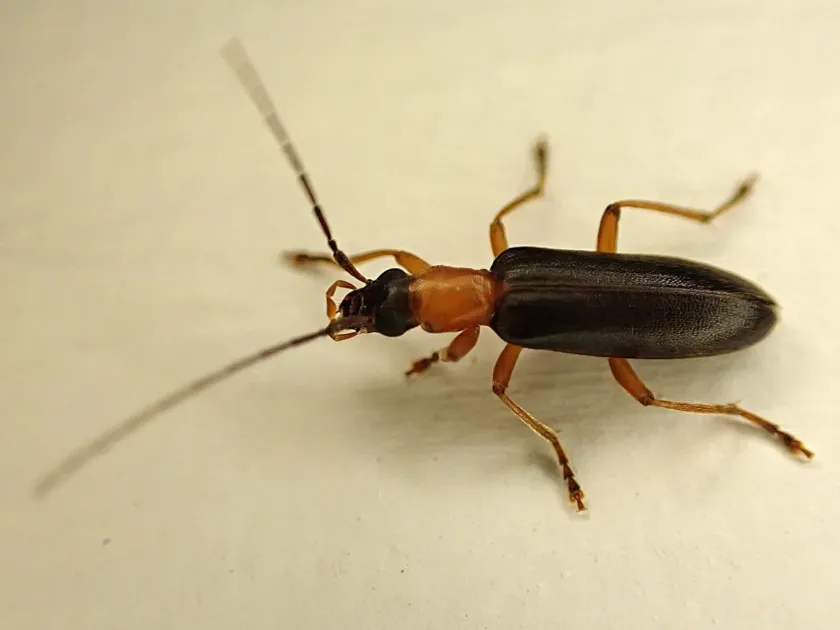
Ananca bicolor is a member of the family Oedemeridae, commonly known as false blister beetles. The adult beetle features an elongated, soft body typically measuring 10–15 mm in length.
The head and pronotum are usually darker, while the elytra display longitudinal light-colored stripes. This distinctive pattern is a key feature used for field identification.
Larvae develop within decaying wood or moist plant debris. They possess a cylindrical, pale body and robust, chewing mouthparts adapted for tunneling through organic matter.
As part of the order Coleoptera, these insects have adapted to specific ecological niches, often thriving in environments with high moisture levels and poor soil aeration.
Adult beetles are primarily nocturnal, possessing flight capabilities that allow them to disperse effectively across agricultural landscapes in search of suitable breeding sites.
What it damages
The primary damage is caused by larvae that infest stems, roots, and the crown area of crops that are physiologically weakened or already compromised by adverse conditions.
These pests affect a wide range of vegetable and industrial crops, particularly those cultivated in fields with poor drainage or stagnant water issues.
Larval activity destroys the internal tissues of the plant, disrupting nutrient and water transport and causing gradual wilting and potential plant death.
Adult beetles can also cause damage to flowers and reproductive organs, feeding on pollen and tender petals, which significantly impacts seed set and yield.
Furthermore, the damage caused by larvae creates entry points for various fungal and bacterial infections, accelerating the decay and mortality of the affected plants.
When it appears
The lifecycle of Ananca bicolor is highly dependent on ambient temperatures, with adult population peaks occurring during the warm summer months.
Oviposition takes place during the spring and summer. Females select decaying organic matter or moist soil near host plants to lay eggs, ensuring an immediate food source for hatching larvae.
Larval development can take an extended period and may sometimes span more than one growing season, depending on environmental factors and host availability.
Adults remain active until early autumn when decreasing temperatures signal the start of their dormancy period in protected soil or debris sites.
Monitoring for this pest should be initiated as soon as stable, warm spring temperatures arrive, as this triggers the emergence of adult beetles.
Signs of infestation
A primary visual symptom of infestation is sudden localized wilting of crops, often occurring without obvious environmental causes like drought or water stress.
Upon closer inspection of the stems, one can detect entry holes created by larvae, accompanied by deposits of frass (boring dust) near the infestation site.
Reproductive organs show signs of damage, such as chewed flower petals and damaged anthers, which often indicates the presence of adult feeding activity.
Nocturnal visual counts of adults on the plants provide an accurate assessment of the population pressure and the need for immediate management actions.
Internal inspection of stems reveals tunnels filled with larval waste, with the plant tissue often becoming discolored and soft due to secondary rot.
Control measures
Agrotechnical methods are the first line of defense; rigorous removal of crop residues from fields after harvest is essential to disrupt the pest's breeding cycle.
Improving soil drainage and preventing waterlogging are key strategies to minimize the moist environments required for larval survival and development.
Crop rotation is highly recommended to prevent the buildup of pest populations, as this forces the insects to find new environments rather than remaining in the same field.
Biological control agents, such as entomopathogenic fungi or nematodes, can be used to target larvae in the soil layer during the growing season.
Chemical control should be reserved for cases where pest density exceeds economic damage thresholds and must be applied in accordance with regional environmental regulations.
Taxonomy
- Latin name
- Ananca bicolor
- Order
- Coleoptera (beetles)
- Family
- Oedemeridae
- EPPO code
- ANANBI
Discussion
No discussions yet — be the first.