
Nacerda
Nacerda
Description
How to identify
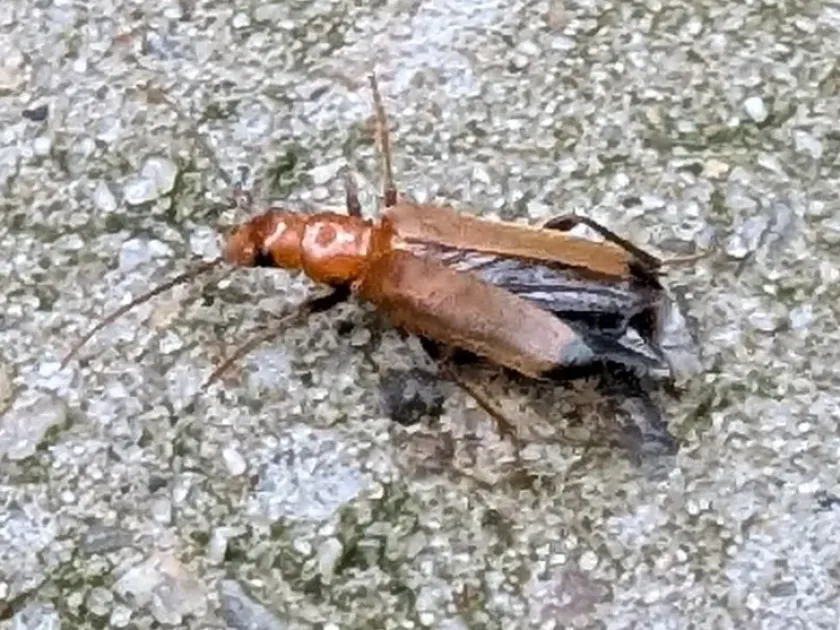
The wharf borer (genus Nacerda) belongs to the Oedemeridae family of beetles. Adult beetles typically measure 8–15 mm and possess a distinctive elongated, slender body with a yellowish-brown or reddish coloration.
A key identifying feature is the presence of comb-like antennae and elytra (wing covers) that have several prominent longitudinal ridges. The surface of the body is often covered in fine hairs.
The larvae are creamy-white, grub-like creatures designed for boring into wood. They live entirely within the wood substrate, making their early life stages invisible to the average observer.
Adults are nocturnal and are frequently attracted to artificial lights. Their presence near buildings often indicates an infestation in damp wooden elements such as foundation supports.
Unlike other wood-boring insects, Nacerda specifically thrives in wood that is saturated with moisture, often in areas where wood is in contact with soil or masonry.
What it damages
The primary diet of the larvae consists of damp wood, especially timber that is undergoing initial decay due to fungal growth. They can inhabit both coniferous and deciduous wood species.
The pest causes significant damage to structural timbers, bridge supports, railway ties, and wooden dock structures. Larvae bore long, irregular tunnels through the wood, compromising its structural integrity.
Over time, infested wood loses its load-bearing capacity. Extensive colonization can result in wood becoming spongy and friable, eventually requiring complete structural replacement.
In agricultural settings, these beetles can damage warehouses, sheds, and farm structures where ventilation is poor and humidity levels remain consistently high.
Furthermore, the tunnels created by the larvae create micro-habitats that invite wood-rotting fungi and mold, accelerating the decay process far beyond the damage caused by the insect alone.
When it appears
The life cycle of the wharf borer is closely tied to environmental temperature and moisture availability. Adults are most active during the summer months when they emerge for mating.
Females lay their eggs in the crevices of damp, decaying wood. Once hatched, the larvae begin their long development cycle, which typically lasts for one or more years.
The emergence of adult beetles usually coincides with the warmest time of the year, allowing them to complete their metamorphosis and disperse to find new hosts.
In temperature-controlled or persistently damp indoor environments, the life cycle may be altered, but it remains strictly dependent on the availability of moisture-rich wood.
Overwintering typically occurs in the larval stage deep inside the wood. This survival strategy allows the species to withstand harsh temperatures and maintain its population until the next season.
Signs of infestation
The most visible sign of an infestation is the presence of small, oval-shaped exit holes on the surface of the timber, created by adults as they emerge.
The presence of fine, sawdust-like bore dust (frass) near structural joints or baseboards is a strong indication that larvae are active within the wood.
Discolored, softened, or sagging wood surfaces are classic symptoms of internal structural failure caused by extensive larval boring.
Frequent sightings of adult beetles near light sources in buildings are a warning sign that there may be a breeding colony in the basement or subfloor areas.
Peeling away surface layers of damp wood often reveals a network of irregular, debris-filled tunnels that signify an established infestation.
Control measures
The most effective control strategy is the elimination of the wood moisture source. By improving ventilation and reducing humidity, the environment becomes unsuitable for larval development.
Structural repairs involving the removal and replacement of severely damaged timber are necessary, as chemical treatments have limited penetration depths in heavy beams.
Applying borate-based wood preservatives or insecticides can create a protective barrier that prevents new infestations and protects surrounding healthy wood.
For severe, deep-seated infestations, professional fumigation of the building or affected structure is recommended to ensure the complete eradication of all life stages.
- Ensure proper drainage and moisture barriers around building foundations.
- Clear away piles of decaying scrap wood or lumber near your property.
- Use pressure-treated or rot-resistant timber for structural projects in damp environments.
Taxonomy
- Latin name
- Nacerda
- Order
- Coleoptera (beetles)
- Family
- Oedemeridae
- EPPO code
- NACESP
Discussion
No discussions yet — be the first.