
Storm petrel
Oceanodroma
Description
How to identify
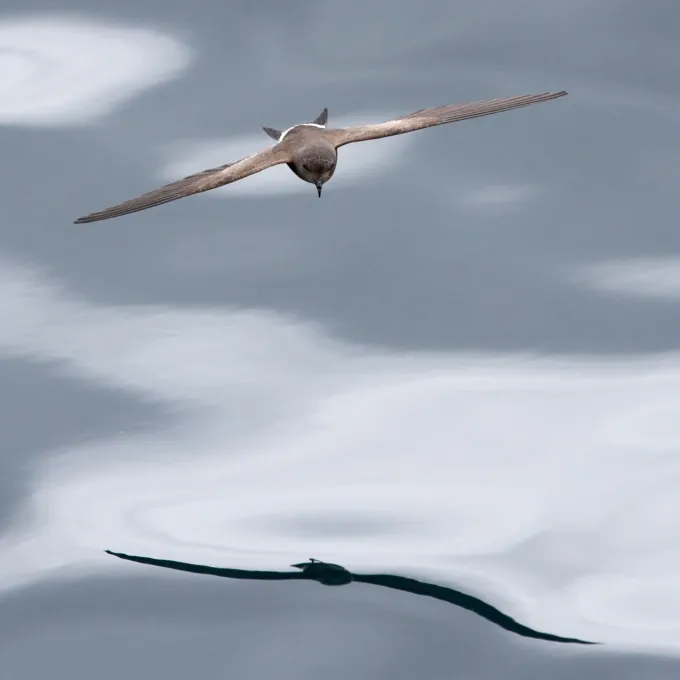
The storm petrel (lat. Oceanodroma) belongs to the family Hydrobatidae of the order Procellariiformes. These are small seabirds that resemble swallows in appearance but live an exclusively pelagic life.
Their appearance is characterized by dark plumage, often with a white rump. They have long, narrow wings and a forked tail, which allows them to maneuver skillfully above the water surface during flight.
An important feature is the presence of tubular nostrils on the upper bill, through which excess salts from seawater are excreted. This is an adaptation that allows them to inhabit the open ocean.
The size of these birds varies: body length is about 15–25 centimeters, and wingspan is up to 50 centimeters. They have a specific musky odor emanating from their plumage.
The systematics of the genus is periodically reviewed by scientists based on genetic data, leading to the identification of new species and the relocation of some groups within the family.
What it damages
It is important to emphasize that the storm petrel is not a pest of agricultural crops. This species is a wild seabird that feeds exclusively on plankton, small fish, and squid.
In agronomic practice, the storm petrel poses no threat to field, garden, or greenhouse crops. It does not damage crops, is not a carrier of phytopathogens, and does not compete with beneficial entomophagous insects.
On the contrary, seabirds play an important role in ocean ecosystems by contributing to the nutrient cycle. Their life activities are limited to coastal zones and the open sea.
Sometimes, misconceptions arise due to the similarity of names with small soil pests; however, representatives of the genus Oceanodroma are absent in entomology and plant pathology.
The use of this taxon in agronomic references is purely for informational purposes to avoid confusion with actual agricultural pests.
Taxonomy
- Latin name
- Oceanodroma
- Family
- Hydrobatidae
- EPPO code
- OCEDSP
Discussion
No discussions yet — be the first.