
European storm petrel
Hydrobates pelagicus
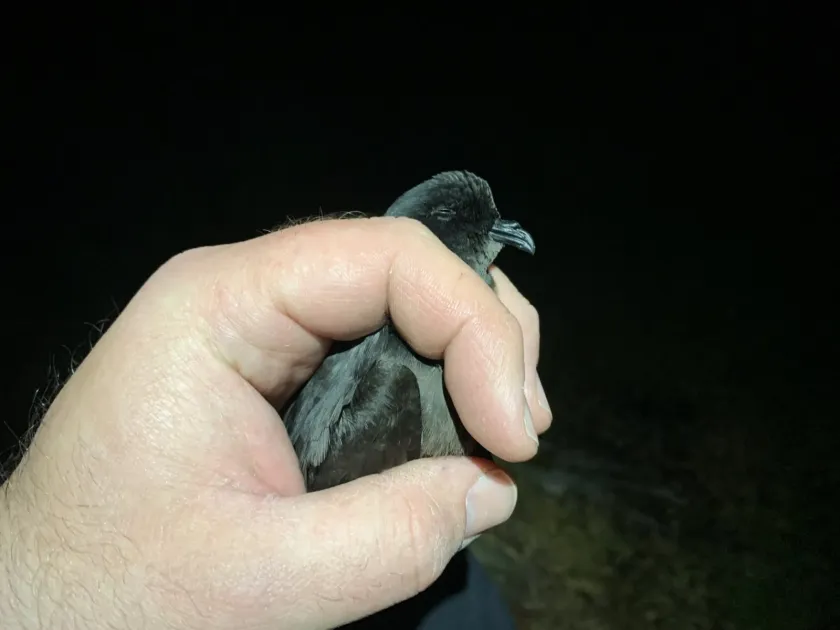
Description
How to identify
The European storm petrel (Hydrobates pelagicus) is the smallest species of seabird in the order Procellariiformes, often seen skimming over ocean waves.
It is distinguished by its dark plumage and a very prominent white patch on the rump, which serves as a key identification feature for observers.
The species is pelagic, meaning it spends almost its entire life cycle over the open sea, only returning to land during the short breeding season.
Due to its small size and nocturnal habits while on land, it is rarely seen by people, despite having large colonies in suitable rocky crevices.
The bird has a very specific, strong musky odor, which is an adaptation for recognition among mates within deep and dark nesting burrows.
What it damages
The European storm petrel does not cause any damage to agricultural crops, orchards, or horticultural plants whatsoever.
As a marine bird that feeds exclusively on plankton, small fish, and crustaceans in the ocean, it has no interest in terrestrial vegetation.
There is absolutely no agro-economic impact caused by this species, as its habitat and ecological niche are completely separated from farming activities.
Reports labeling this bird as a crop pest are factually incorrect and likely stem from misidentification with other avian species that may inhabit rural areas.
Farmers can be assured that the presence of these birds near coastal farms poses zero risk to crop yields, produce quality, or livestock.
When it appears
Breeding activity occurs during the summer months when individuals return to coastal nesting sites, typically in rocky, uninhabited areas.
For the remainder of the year, the petrels are strictly oceanic, migrating across vast distances of the Atlantic Ocean and Mediterranean Sea.
The biological development of the young is tied to oceanic productivity, ensuring the birds are far removed from terrestrial farming schedules.
By late autumn, the young have fledged and the entire population disperses back into the open sea, far from any inland vegetation.
Because their life cycle is dictated by the marine environment, there is no overlap with the growth cycles of agricultural crops.
Signs of infestation
Evidence of the species is limited to remote coastal burrows or rock crevices, which are unsuitable for any type of cultivation or agriculture.
The presence of the species is often detected by researchers through the distinctive musky smell and faint nocturnal vocalizations in nesting colonies.
One will not find any signs of infestation, such as nibbled leaves, damaged fruits, or tracks, as the bird is physically incapable of feeding on plants.
Ornithologists note that the species remains highly elusive, preferring areas inaccessible to humans and farm machinery alike.
Sightings of the bird are considered a positive indicator of marine environmental health rather than a sign of agricultural instability.
Control measures
There are no control measures required for the European storm petrel, as it is not a pest and performs no negative action against agriculture.
The species is protected under various international environmental laws and conservation directives, making its preservation a priority in coastal zones.
No agricultural pest management plan should ever include this species, and any attempt to disturb them would be both futile and ecologically harmful.
Instead, sustainable farming practices near coastal areas should focus on protecting local biodiversity, including these sensitive seabirds.
Farmers are advised to continue their operations without concern, as the European storm petrel is a benign neighbor to all agricultural activities.
Taxonomy
- Latin name
- Hydrobates pelagicus
- Family
- Hydrobatidae
- EPPO code
- HYDBPE
Discussion
No discussions yet — be the first.