
Brown China-mark moth
Nymphula nitidulata
Description
How to identify
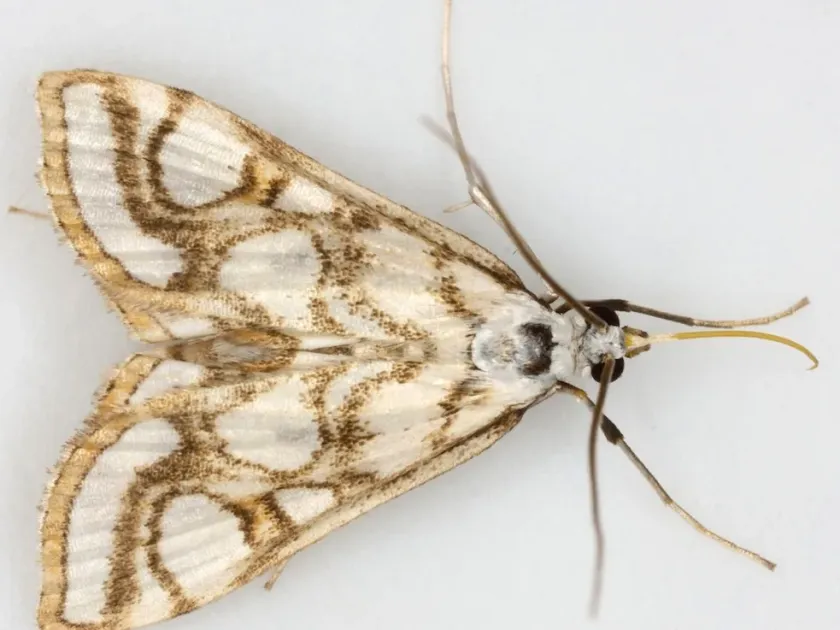
The Brown China-mark moth (lat. Nymphula nitidulata) is a member of the Crambidae family. The adult moth features distinctive white wings with brown or yellowish-brown markings, providing camouflage against the water surface and floating vegetation.
The larvae, or caterpillars, are uniquely adapted to semi-aquatic life. They possess a translucent, light-colored body and are capable of breathing under water, which allows them to thrive in aquatic environments.
Adult moths are nocturnal or crepuscular. During the day, they remain hidden on the undersides of leaves or within marginal vegetation, making them difficult to spot without close inspection.
The life cycle is closely linked to aquatic habitats where host plants, particularly water lilies, are present. Pupation occurs in a silk-lined cocoon attached to submerged stems of the host plant.
Identification is based on observing the adults near ponds at twilight or identifying the specific larval feeding damage on the leaves of aquatic plants.
What it damages
The primary host plants are species within the Nymphaeaceae family, such as white water lilies (Nymphaea alba). The moth can cause significant damage to wild populations and garden pond displays alike.
Larvae consume the leaf tissue of aquatic plants. They create holes or irregular excavations, which can lead to a drastic reduction in the photosynthetic capacity of the plants when infestations are heavy.
Severe feeding damage spoils the ornamental value of water lilies, causing leaves to yellow, become ragged, and eventually wither away before their natural life cycle is complete.
Feeding sites often serve as points of entry for secondary infections, such as rot and fungal pathogens, which further weaken the host plants and degrade the health of the aquatic ecosystem.
The damage affects both floating leaves and partially submerged structures, meaning the entire plant can be subjected to intense feeding pressure throughout the growing season.
When it appears
Adult moths typically emerge in late spring and are active throughout the summer months, from June to August. Depending on regional temperatures, the species may produce one or two generations per year.
Larval activity peaks in mid-summer when water temperatures are optimal for their development. During this period, the damage to aquatic foliage is most pronounced.
As autumn approaches, the larvae prepare for overwintering. They remain in their cocoons attached to submerged plant materials, waiting out the colder months in a state of diapause.
In spring, as water lilies begin their new growth, the emerging larvae immediately target the tender young leaves, which are highly susceptible to their feeding habits.
Monitoring for this pest is recommended throughout the summer, with increased vigilance needed when the plant growth is dense and temperatures are high.
Signs of infestation
The most visible sign of infestation is the presence of "windows" or irregular holes in the water lily leaves. Larvae often cut leaf pieces and weave them with silk to create portable shelters.
The presence of silken webbing on the underside of the leaves is a key indicator of larval activity. This webbing is used both for protection and as a secure attachment to the leaf surface.
Leaves may appear distorted, folded, or curled. Inspecting these folded sections often reveals the larvae sheltering inside or actively feeding on the internal tissues.
Frass (larval excrement) appearing as small, dark granules on the surface of the water or on the leaves is a tell-tale sign of active feeding nearby.
Yellowing or premature senescence of leaves, despite optimal growing conditions, can be a sign that the plant is struggling due to significant pest pressure.
Control measures
Manual removal of caterpillars and affected leaves is the most effective and eco-friendly control method for small decorative ponds, preventing damage to fish and water quality.
Improving the overall vigor of the water lilies through proper pond maintenance and nutrition helps plants better tolerate and recover from light infestations.
The use of light traps at night can help reduce the population of adult moths, thereby limiting the number of eggs laid in the pond environment during the active season.
Biological controls, such as encouraging natural predators like dragonflies and aquatic beetles, can help keep the moth population in check without the need for chemical intervention.
Chemical control is generally discouraged in ponds containing fish or amphibians; any use of pesticides must be strictly regulated and chosen with safety for aquatic life in mind.
Taxonomy
- Latin name
- Nymphula nitidulata
- Order
- Lepidoptera (butterflies)
- Family
- Crambidae
- EPPO code
- NYMHNI
Discussion
No discussions yet — be the first.