
Brown-tail moth
Nygmia
Description
How to identify
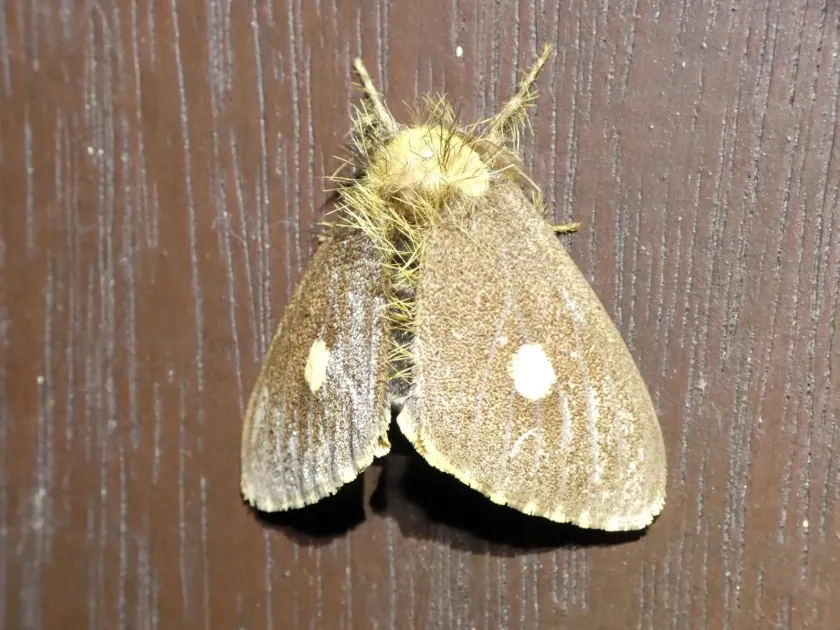
The brown-tail moth (Nygmia phaeorrhoea) is a moth species belonging to the family Erebidae. The adult moth has a wingspan of 30–40 mm and is characterized by its pure white wings and a distinct tuft of golden-brown hair at the tip of the female's abdomen.
The larvae are covered in numerous irritating hairs, which contain toxins that can cause severe skin irritation, rashes, and respiratory issues in humans. They are dark brown or blackish with white to orange-colored markings along their sides.
What it damages
This pest is highly polyphagous, attacking a wide range of deciduous trees and shrubs. Fruit trees like apple, pear, plum, and cherry are highly susceptible, often suffering significant leaf loss which affects their overall health and fruit production.
In addition to orchards, the brown-tail moth is a notorious pest of ornamental trees and hedgerows, such as hawthorn, oak, and elm. Defoliation is the most common damage, occurring in spring when large colonies of larvae feed simultaneously on emerging foliage.
When it appears
The brown-tail moth completes one generation per year. Larvae overwinter in silken "tents" or nests constructed of leaves tightly bound together with silk on the branches of the host tree, where they remain dormant during the winter months.
Larval activity resumes in early spring, coinciding with bud burst. After feeding and maturing through several instars, the larvae pupate in cocoons within the foliage. Adult moths emerge during mid-summer, typically in July, to mate and lay egg masses on the underside of leaves.
Signs of infestation
The most distinctive sign of infestation is the presence of over-wintering nests. These are grey, web-like structures that become easily visible in winter after leaf fall, usually attached to the tips of twigs and branches.
During the feeding season, signs include skeletonized leaves and, as the caterpillars grow, total consumption of the leaf blades. In severe cases, the entire tree canopy can be stripped of foliage, leaving only the primary veins and silken webbing behind.
Control measures
Physical control, specifically the removal and destruction of the winter nests, is the most recommended practice. Pruning the infested twigs during winter prevents the larvae from emerging and beginning their feeding phase in the spring.
Chemical control involving insecticides can be applied early in the season when larvae are actively feeding and still young. It is crucial to use protective equipment when handling the larvae or pruning nests due to the irritating hairs that can cause allergic reactions.
Taxonomy
- Latin name
- Nygmia
- Order
- Lepidoptera (butterflies)
- Family
- Erebidae
- EPPO code
- NYGMSP
Discussion
No discussions yet — be the first.