
Mullein moth (Nothris verbascella)
Nothris verbascella
Description
How to identify
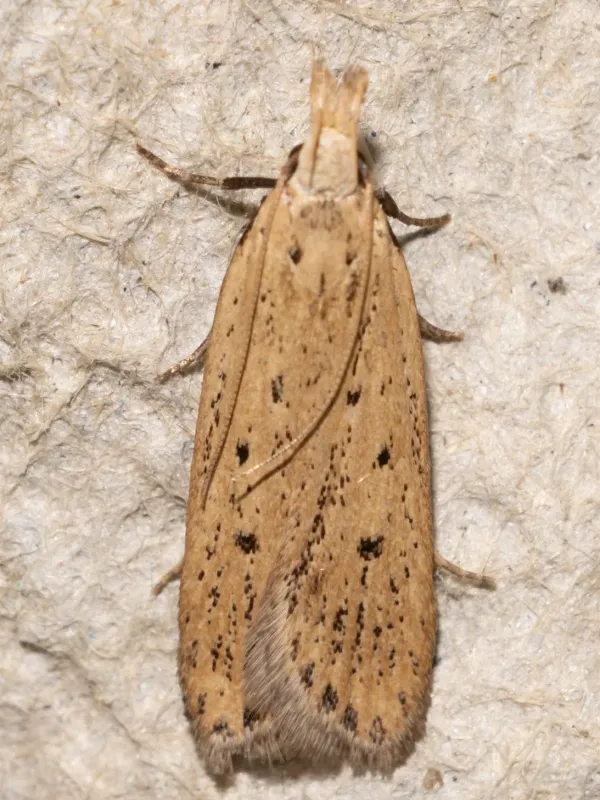
The Mullein moth (Nothris verbascella) belongs to the Gelechiidae family of moths, order Lepidoptera. It is a small moth with a wingspan ranging from 15 to 18 millimeters.
The forewings have a greyish-brown to ochre-brown coloration, featuring dark spots that help the adult insect blend into its habitat.
The larvae are typically 12–15 mm long and often appear yellow or green, usually bearing dark markings that help them camouflage while feeding.
The life cycle undergoes complete metamorphosis, consisting of egg, larva (caterpillar), pupa, and imago stages throughout the growing season.
Overwintering usually occurs in the larval stage, with the insects creating cocoons in the soil or within plant debris for protection during the cold months.
What it damages
The primary hosts of Nothris verbascella are plants within the Scrophulariaceae family, particularly species of the genus Verbascum (mullein).
This moth acts as a significant pest for farmers and pharmaceutical companies cultivating mullein for medical and herbal production.
Larvae consume the leaf tissues, buds, and flowers, leading to skeletonized foliage and damaged reproductive structures of the plant.
High infestation rates can lead to a severe reduction in biomass and quality, rendering the harvested material unusable for commercial purposes.
Beyond cultivated fields, the moth thrives on wild mullein populations, which act as reservoirs for further infestations in agricultural areas.
Signs of infestation
One of the most obvious signs is the presence of curled or rolled leaves, which the caterpillars bind together using silk threads.
Fecal pellets (frass) accumulated on the leaves or at the base of the plant are clear indicators of active larval feeding.
Damaged flower buds often fail to develop properly, becoming deformed or dropping prematurely before the plant can bloom fully.
The presence of fine webbing covering the tips of the shoots indicates that the caterpillars are active in the apical regions of the plant.
Visually, infested plants show stunted growth and irregular holes in their leaves, significantly reducing their vigor and overall health.
Control measures
Mechanical removal and destruction of infested plant parts can significantly reduce the local population of the moth.
Deep plowing of the soil during the autumn helps to disrupt the overwintering pupae and larvae, reducing the pressure for the following spring.
Biological control agents, including microbial insecticides, are effective in managing populations while maintaining the safety of the medicinal crop.
Maintaining a clear distance from wild host plants helps to prevent the spread of the moth into managed plantation areas.
- Monitoring for egg clusters during the early stages of plant development.
- Removing weeds that serve as alternative host plants.
- Judicious use of approved insecticides if monitoring thresholds are exceeded.
Taxonomy
- Latin name
- Nothris verbascella
- Order
- Lepidoptera (butterflies)
- Family
- Tineidae
- EPPO code
- NOTHVE
Discussion
No discussions yet — be the first.