
Nothris
Nothris
Description
How to identify
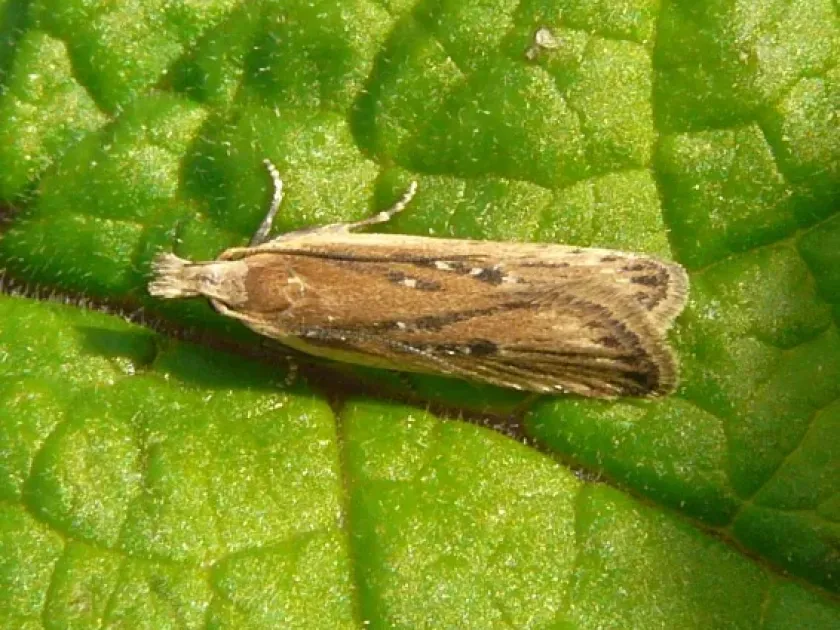
The genus Nothris belongs to the family Gelechiidae (twirler moths) within the order Lepidoptera. These moths are typically small, with narrow wings that are held tightly against the body when at rest.
The larvae are characterized by a well-developed head capsule and specific proleg structures typical of the family. They are often cryptic, matching the color and texture of their host plants to avoid predators.
Taxonomically, identifying Nothris species often requires examination of genitalia and adult wing patterns. In the field, larval behavior and host plant association are the most practical indicators.
The lifecycle consists of four distinct stages: egg, larva, pupa, and adult. They generally overwinter as pupae or mature larvae in protected environments like soil debris or within folded leaves.
Adult moths are primarily crepuscular or nocturnal, with females depositing eggs near the primary food source to ensure larval survival immediately upon hatching.
What it damages
Nothris species primarily affect plants within the Asteraceae family. Larvae cause damage by feeding on leaves, buds, and sometimes the stems of their host plants.
Feeding patterns often include skeletonizing the leaves, where the soft tissue is consumed while the veins are left intact, or mining into the leaf tissue, creating visible tunnels.
Severe infestations can lead to significant photosynthetic loss, stunted growth, and a reduction in both yield and plant health, especially when plants are targeted at early growth stages.
In addition to foliage, larvae are known to infest floral parts and developing buds, which can lead to flower abortion and reduced seed set in affected crops.
The damage caused by these insects often serves as a pathway for secondary bacterial or fungal infections, exacerbating the overall impact on plant health and yield quality.
Signs of infestation
The most common sign of a Nothris infestation is the presence of silk-webbed or curled leaves at the tips of shoots. Larvae create these shelters to protect themselves while feeding.
Frass (larval excrement) found within webbed leaves or on the surface of foliage is a clear indicator of active feeding and the presence of larvae.
Visible leaf mines or window-pane effects (where parts of the leaf are eaten away) are characteristic of early-instar larval activity, indicating damage to the plant's internal structures.
Stunting of plant height and the premature wilting or browning of young leaves are often secondary symptoms caused by the disruption of nutrient and water flow in the plant.
During visual inspections, the sudden movement or falling of larvae when the plant is disturbed is a hallmark of many Gelechiidae species, helping to confirm their presence.
Control measures
Integrated pest management starts with cultural practices, such as crop rotation and the thorough destruction of crop residues, which helps break the lifecycle of overwintering pupae.
Sanitation practices that include weeding out wild Asteraceae plants from field margins can significantly reduce the local population density of the pest.
Biological control using microbial insecticides, such as Bacillus thuringiensis, is effective against young larvae while posing minimal risk to beneficial insects and pollinators.
Chemical control should be employed only when economic damage thresholds are exceeded. Use selective insecticides to manage outbreaks while preserving the local natural enemy complex.
Regular monitoring using pheromone-based traps is highly recommended to pinpoint the timing of moth flights and to ensure insecticide applications occur at the most vulnerable larval stage.
Taxonomy
- Latin name
- Nothris
- Order
- Lepidoptera (butterflies)
- Family
- Tineidae
- EPPO code
- NOTHSP
Discussion
No discussions yet — be the first.