
Sunflower seed fly
Neotephritis finalis
Description
How to identify
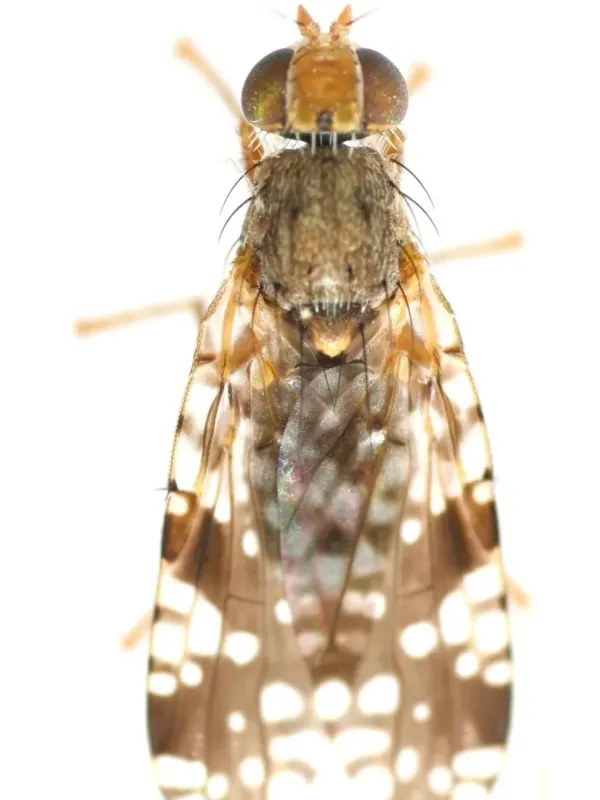
The sunflower seed fly (Neotephritis finalis) is a member of the Tephritidae family, order Diptera. Adult flies are small, typically measuring 5–7 mm in length, with distinctive mottled wing patterns.
Their bodies are usually brownish or grayish in color, covered with fine bristles. These patterns are essential for identifying the species within the Tephritidae family.
Larvae are legless, cylindrical, and cream-colored, typically reaching about 5–6 mm before pupation. They are specifically adapted to feed on the reproductive parts of composite flowers.
The biology of this species is tied to host plants in the Asteraceae family. Adults are active during the day, feeding on pollen and nectar from sunflower blossoms.
Overwintering occurs primarily as a puparium in the soil or within plant debris, allowing the pest to survive through the colder months until the next season.
What it damages
The primary damage is caused by larvae that feed within the sunflower heads (capitula). They target the developing seeds and floral tissues during the flowering stage.
In addition to sunflowers, this pest hosts on various wild Asteraceae, including thistles, sowthistles, and ragweed, which serve as reservoirs for the population.
Larval feeding destroys the seed embryos, leading to a significant reduction in grain weight and oil content, directly affecting yield quality.
Feeding sites often become entry points for secondary infections like gray mold or white rot, which can cause total decay of the sunflower head.
High infestation levels result in a large percentage of empty or shriveled seeds, posing a serious economic threat to commercial sunflower production.
When it appears
Adult flies emerge in the spring as temperatures rise, aligning their activity with the budding and flowering period of sunflower crops.
The species may complete multiple generations within a single season, depending on the climatic conditions and the availability of host plants.
Egg-laying occurs directly into the floral tissues. Larval development is rapid, usually taking 2–3 weeks, followed by pupation inside the flower head or in the soil.
Activity peaks during the mid-summer when the majority of sunflowers are in bloom, making this phase the most critical for monitoring.
Toward the end of the season, late-stage larvae prepare for overwintering, seeking shelter in the soil or crop residues to wait for the next spring cycle.
Signs of infestation
Visible signs of infestation include the presence of adult flies resting on the surface of sunflower heads during sunny, warm weather.
Close inspection reveals small punctures on the flower florets, caused by the female's ovipositor during the egg-laying process.
Internal damage is characterized by larval tunnels and the presence of excrement within the seeds, which can be confirmed by splitting the head open.
Physical deformities, such as necrotic spots or stunted areas on the sunflower head, are common indicators of larval activity underneath the surface.
The appearance of dark rot on the back of the head often suggests that the larvae have compromised the tissue, inviting opportunistic pathogens.
Control measures
Cultural control, such as deep autumn plowing, is essential for destroying pupae that overwinter in the soil of the cultivated field.
Rigorous weed management is crucial, as the removal of wild host plants like thistle helps to break the pest's life cycle and reduce population pressure.
Crop rotation prevents the build-up of the pest population in the soil, which is a major strategy for long-term sunflower protection.
Chemical control with insecticides is effective only if applied when adults are active, before larvae migrate deep into the tissues of the sunflower head.
Selecting sunflower hybrids with denser head structures can physically inhibit larval movement and feeding, offering a degree of natural resistance.
Taxonomy
- Latin name
- Neotephritis finalis
- Order
- Diptera (flies)
- Family
- Tephritidae
- EPPO code
- NTPRFI
Discussion
No discussions yet — be the first.