
Neotephritis
Neotephritis
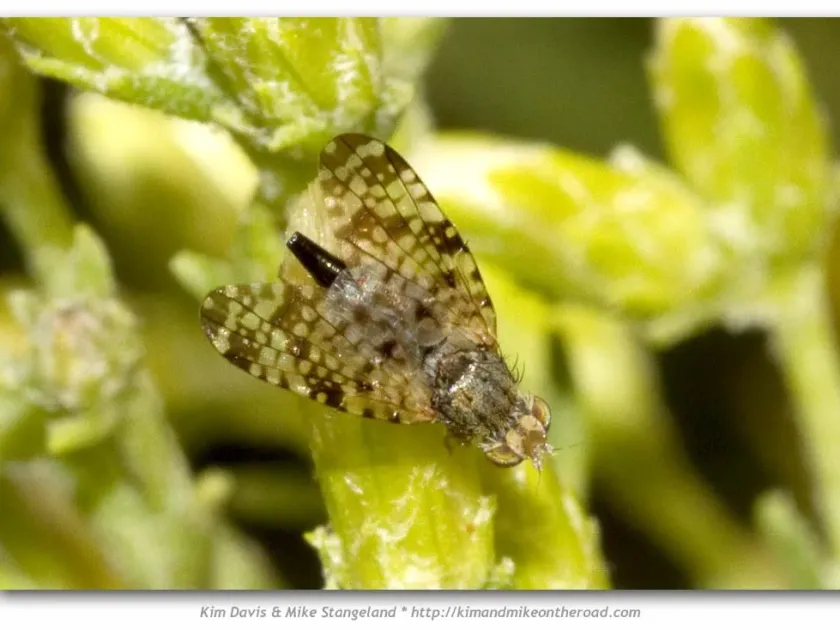
Description
How to identify
Neotephritis is a genus of insects belonging to the family Tephritidae (fruit flies) within the order Diptera. These insects are recognized for their distinct, often elaborate wing patterns.
Adult flies are typically small, with body coloration that facilitates camouflage on the host plants they frequent during the mating and oviposition seasons.
The larvae are apodous (legless) and possess mouth hooks specialized for feeding on internal plant tissues, which is a characteristic feature of this family.
Identification at the species level is complex and often requires detailed examination of adult morphological features or wing venation patterns by entomologists.
They are primarily associated with the Asteraceae family, having evolved specialized interactions with these plants over extended evolutionary periods.
What it damages
The primary damage is caused by the larvae, which feed on the reproductive parts of plants, specifically the flower heads and developing seeds.
This feeding behavior results in severe damage to the seeds, rendering them unviable and significantly reducing the yield for both commercial and home gardeners.
Infested plants show reduced aesthetic quality, which is particularly detrimental to the ornamental flower industry, where appearance is the primary value driver.
The larval mining creates tunnels that serve as entry points for secondary pathogens, such as fungi and bacteria, leading to rot and further tissue decay.
In cases of severe infestation, the entire crop of seed heads can be lost, making the pest a significant concern for seed production farms.
When it appears
The life cycle of Neotephritis is closely synchronized with the flowering phenology of their specific host plants, ensuring food availability for the larvae.
Adult flies emerge during the late spring and summer months, coinciding with the peak flowering period of target Asteraceae species.
Pupation generally occurs within the host tissue or in the soil beneath the plant, providing a refuge during unfavorable weather conditions or the winter season.
Depending on the geographic location and climatic conditions, the pest may complete one or several generations within a single growing season.
Warm and humid environments generally accelerate the developmental stages of the insect, leading to higher populations and potentially increased crop damage.
Signs of infestation
A primary indicator of infestation is the premature browning or deformation of flower heads, which may fail to bloom correctly or appear wilted.
Upon inspecting the flower heads, one may observe the presence of larvae or evidence of their feeding tunnels inside the central receptacle of the flower.
Reduced seed set and the presence of frass (larval excrement) within the flower heads are definitive signs of a Neotephritis presence.
The petals may show abnormal coloration or patchy decay, often misidentified as a fungal disease rather than an underlying insect infestation.
- Deformed or unopened flower buds.
- Premature decay of the central flower head.
- Larval presence within the plant tissues.
Control measures
Cultural practices are essential, including the prompt removal and disposal of infested plant material to prevent the next generation from emerging.
Tilling the soil in late autumn can help expose overwintering pupae to predators and adverse environmental conditions, thereby reducing population levels.
Yellow sticky traps are highly effective for monitoring adult fly populations and can be used to mass-trap them in confined settings like greenhouses.
Chemical control involving systemic insecticides may be applied if thresholds are exceeded, ensuring the application coincides with the adult emergence phase.
Encouraging natural biological control agents, such as parasitoid wasps that target tephritid larvae, is a sustainable strategy for integrated pest management.
Taxonomy
- Latin name
- Neotephritis
- Order
- Diptera (flies)
- Family
- Tephritidae
- EPPO code
- NTPRSP
Discussion
No discussions yet — be the first.