
Caribbean fruit fly
Neosilba glaberrima
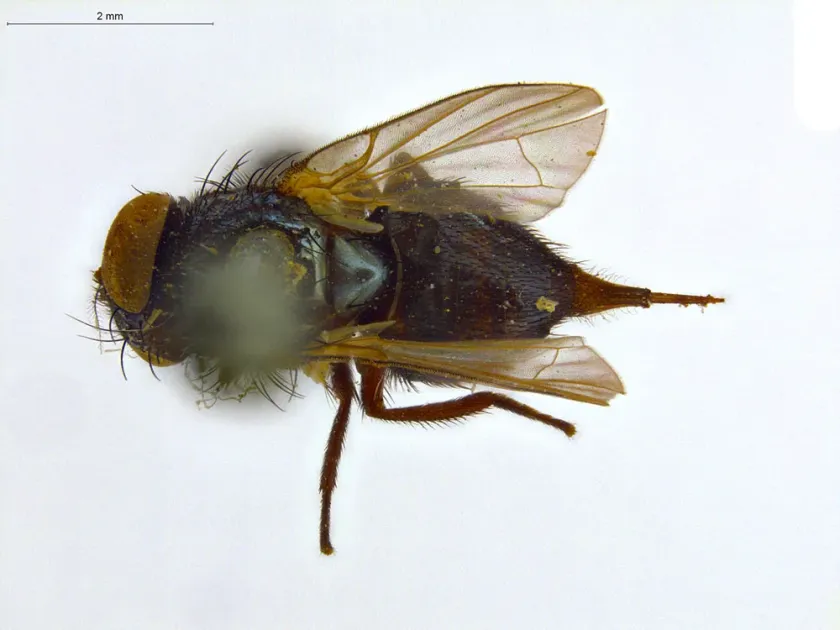
Description
How to identify
The Caribbean fruit fly (Neosilba glaberrima) is a member of the Lonchaeidae family within the order Diptera. These small flies are easily recognized by their shiny, black bodies with a distinct metallic luster.
Adult flies typically measure 3 to 5 mm in length. The female possesses a specialized, sharp ovipositor designed to pierce the skin of ripening fruits, allowing her to deposit eggs deep within the flesh.
Larvae are legless maggots reaching up to 6 mm when fully grown. They have well-developed mouth hooks, which enable them to rapidly penetrate and feed on the soft tissues of various tropical and sub-tropical crops.
The life cycle encompasses four stages: egg, larva, pupa, and adult. Development is highly sensitive to environmental conditions, with the entire cycle completed in just a few weeks under optimal warmth.
Pupation frequently occurs inside the infested fruit or in the soil beneath the host plant, making the identification and control of the pupal stage particularly challenging for farmers.
What it damages
This species acts as a significant polyphagous pest, affecting a wide variety of commercial crops, including papaya, mango, citrus, avocado, and various solanaceous vegetables like tomatoes and peppers.
Larval feeding causes the rapid breakdown of fruit tissues, leading to mushy textures and premature rotting. This damage renders the fruits completely unsalable and unsuitable for local consumption or export.
The infestation often leads to secondary infections by bacteria and fungi, which accelerate the decay process. Consequently, the affected fruit often falls to the ground long before it is ripe.
High infestation levels can result in substantial economic losses for growers, often reaching over 50% of the harvest if management strategies are not implemented promptly.
The presence of Neosilba glaberrima larvae is a major quarantine issue, strictly limiting the marketability of fruit from affected regions to international trade partners.
Signs of infestation
The primary symptom of infestation is the presence of small puncture marks on the fruit skin, which are the oviposition sites created by the female flies. These spots may eventually show slight discoloration or indentations.
Cutting into the fruit often reveals extensive tunneling and larval activity within the pulp. In advanced cases, the internal structure of the fruit becomes a liquefied, decaying mass.
Premature fruit drop is a common indicator of a severe infestation. Collected fallen fruits often reveal numerous larvae and exit holes, which are 1 mm wide circular openings made by mature maggots.
Growers should look for increased fly activity around maturing fruits, as this often precedes a major outbreak of the pest.
Internal fruit softening, even when the skin appears relatively intact, is a classic sign that larvae have been feeding inside the fruit for some time.
Control measures
Effective management requires a rigorous Integrated Pest Management (IPM) approach that focuses on sanitation and the application of appropriate control measures.
Strict orchard sanitation is critical: all infested and fallen fruits must be collected and disposed of by burying, burning, or composting at high temperatures to kill the larvae.
Chemical control focuses on targeting adult flies before they have the opportunity to lay eggs. Foliar applications of insecticides are commonly used in commercial settings.
Attractant-based traps, utilizing protein hydrolysates or specialized baits, are highly effective tools for both monitoring population levels and suppressing the number of adults in the orchard.
- Regular orchard scouting and monitoring using sticky yellow traps.
- Implementation of quarantine and strict movement controls for produce.
- Biological control using hymenopteran parasitoids that attack larvae.
Taxonomy
- Latin name
- Neosilba glaberrima
- Order
- Diptera (flies)
- Family
- Lonchaeidae
- EPPO code
- NSILGL
Discussion
No discussions yet — be the first.