
Neosilba batesi
Neosilba batesi
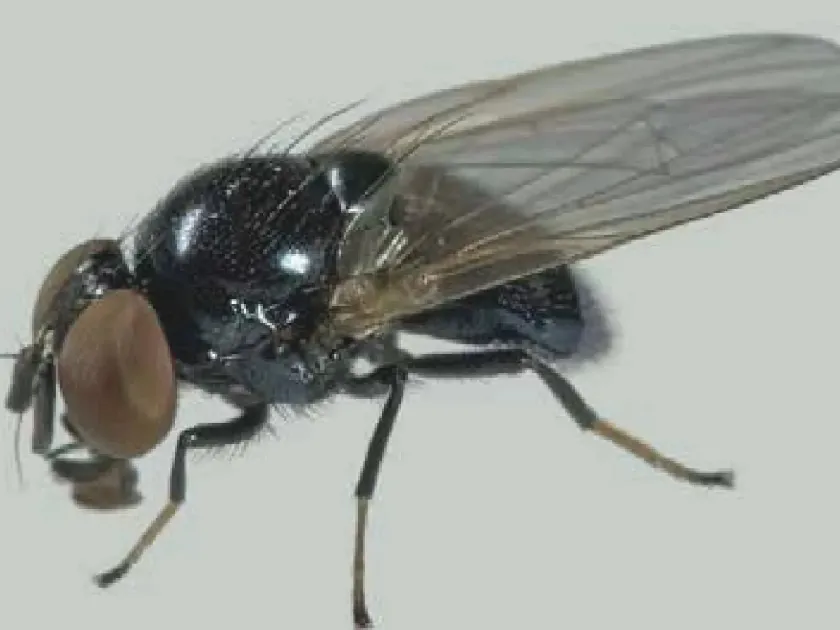
Description
How to identify
Neosilba batesi belongs to the family Lonchaeidae, order Diptera. These are small insects, with adults typically characterized by a shiny black or dark metallic blue coloration.
Adult flies possess prominent compound eyes and specific wing venation characteristic of the Lonchaeidae family. The larvae are generally whitish or yellowish, legless, and reach several millimeters in length.
Accurate identification of this species in the field is difficult due to the similarity with related species, requiring entomological analysis of genitalia for confirmation.
The biology of this species is closely linked to tropical and subtropical fruits. The insect leads a cryptic lifestyle, which complicates population monitoring without specialized traps.
The insect undergoes complete metamorphosis, including egg, larva, pupa, and adult stages, with the life cycle heavily dependent on ambient temperature conditions.
What it damages
This pest is a specialized consumer of various agricultural fruits, particularly mango, coffee, and other tropical plant species.
Neosilba larvae penetrate into the fruit, feeding on the pulp, which causes premature fruit drop and decay long before the harvest period.
Damage to the fruit is often compounded by secondary infections, such as pathogenic fungi and bacteria, entering through the tunnels created by the larvae.
The economic impact of Neosilba batesi is significant, leading to reduced marketability of the produce and substantial losses in export-quality fruit.
In regions where it occurs, this pest is considered a major quarantine threat capable of destroying a large portion of the harvest in commercial orchards.
Signs of infestation
The first sign of infestation is the appearance of tiny entry holes or necrotic spots on the skin of maturing fruits.
Tunnels and galleries bored by larvae are found inside the fruit, causing the progressive degradation of the internal pulp structure.
Infested fruits frequently change color prematurely or start to wilt, signaling an urgent need for phytosanitary inspection.
When cutting open a damaged fruit, one can observe the larvae themselves alongside fecal deposits, which accelerate the rotting process.
The presence of excessive fruit drop beneath trees during the ripening season is often an indicator of high infestation levels within the plantation.
Control measures
A primary management strategy involves timely orchard sanitation, which includes the regular collection and proper disposal of all fallen and damaged fruits.
The use of food-based protein hydrolysate baits helps trap adults, significantly reducing population levels before egg-laying occurs.
Applying netting or individual fruit bags during the fruit development stage is highly effective in preventing female flies from laying eggs.
Chemical control measures involve the use of contact-stomach insecticides, though their application must strictly adhere to pre-harvest interval regulations.
- Monitoring using pheromone or food-based traps.
- Biological control using natural parasitoids and predators.
- Strict adherence to quarantine protocols for fruit shipment.
- Agrotechnical practices focused on improving plant resilience.
Taxonomy
- Latin name
- Neosilba batesi
- Order
- Diptera (flies)
- Family
- Lonchaeidae
- EPPO code
- NSILBA
Discussion
No discussions yet — be the first.