
Sorrel moth
Neofriseria peliella
Description
How to identify
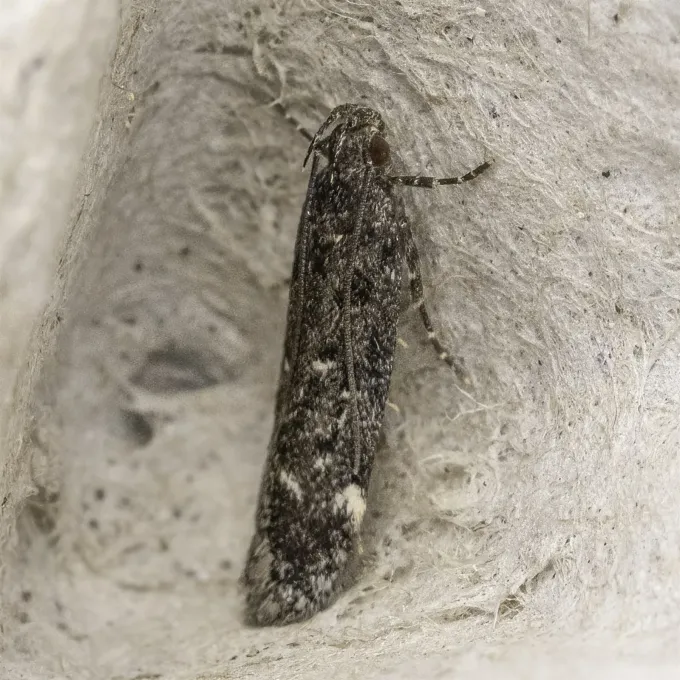
The Sorrel moth (Neofriseria peliella) belongs to the Gelechiidae family, commonly known as twirler moths. It is a small lepidopteran characterized by specific emarginations on the hindwings.
Adult moths are typically greyish or brownish, providing excellent camouflage against soil and withered plant debris. Their small size and cryptic coloration make them difficult to spot in the field.
Larvae pass through several instar stages, feeding primarily on the tissues of host plants. Their development is highly synchronized with the growing season of the sorrel plant.
Pupation generally occurs in the soil or under leaf litter, encased in a silken cocoon. This overwintering strategy allows the species to survive low temperatures during winter months.
The life cycle varies based on regional climate, with some populations completing one or two generations per year, depending on the availability of host foliage.
What it damages
The species primarily affects plants of the genus Rumex. Larvae are the stage responsible for the damage, as they feed on the leaves and sometimes the stems of the plant.
They create mines within the leaf tissue, which disrupts the plant's ability to photosynthesize effectively and leads to visible chlorosis or necrosis of the leaf blades.
Heavy infestations result in severe defoliation, which directly reduces the yield and market quality of the harvested sorrel. The damage also makes the plant vulnerable to secondary infections.
Young seedlings are particularly at risk, as larval feeding can destroy the growth point, potentially killing the plant or causing significant stunting in early development.
Economic damage is most pronounced in professional leafy green production where aesthetic appearance and biomass yield are critical for the market value of the crop.
Signs of infestation
The first signs of infestation include the appearance of transparent mines or small tracks on the leaves, created by the larvae feeding beneath the surface of the leaf epidermis.
Deformed or curled leaves, often webbed together with fine silk, are a clear indication of larval presence, as these structures are used for protection.
Small, dark frass deposits found on the foliage surface or within the leaf axils are diagnostic evidence of larval activity in the immediate vicinity.
Wilting of specific leaves while the rest of the plant remains turgid suggests that larvae may be boring into the petiole or the base of the plant stem.
Sudden disturbance of the crop canopy may cause adult moths to take flight, which is the most reliable way to confirm the presence of the pest during the mating season.
Control measures
Deep cultivation at the end of the season is a critical control measure, as it exposes overwintering pupae to predators and adverse environmental conditions.
Good field hygiene, including the removal of weeds belonging to the Polygonaceae family, helps reduce the population density of the moth by limiting alternative food sources.
The use of biological control agents, such as specific bacterial pathogens, is recommended for managing larval populations in integrated pest management (IPM) programs.
Monitoring using pheromone traps can help farmers determine the optimal timing for interventions, ensuring that control measures are applied when the pest is most vulnerable.
Regular scouting of fields allows for the early detection of larvae, enabling spot treatments or physical removal of infested foliage to prevent the spread of the population.
Taxonomy
- Latin name
- Neofriseria peliella
- Order
- Lepidoptera (butterflies)
- Family
- Gelechiidae
- EPPO code
- NFRIPE
Discussion
No discussions yet — be the first.