
Neofriseria
Neofriseria
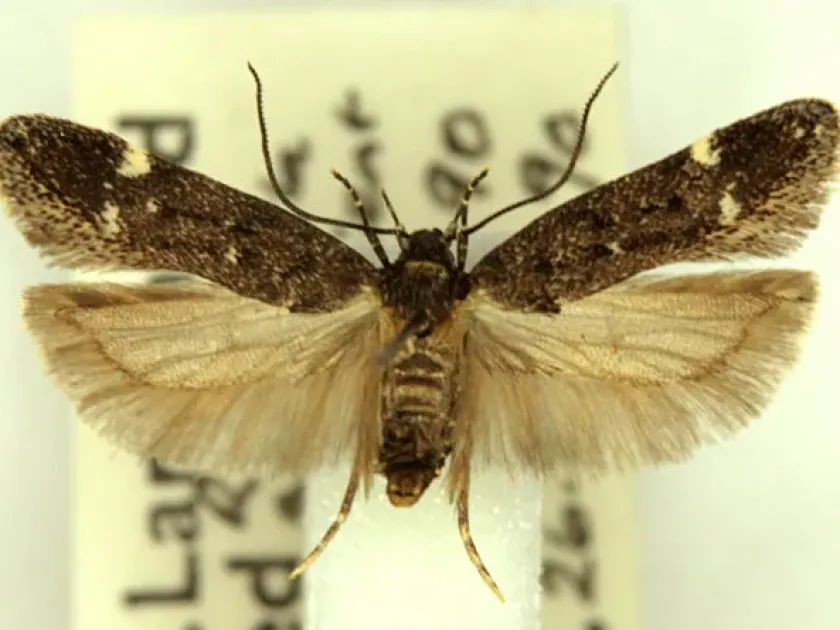
Description
How to identify
Neofriseria is a genus of moths belonging to the family Gelechiidae, which are commonly known as twirler moths.
These moths are typically small, with narrow wings often featuring distinct fringing, making them blend well into their natural environment.
Adults are mostly nocturnal, exhibiting phototactic behavior which is often utilized by entomologists to monitor populations using light traps.
The larvae are specialized feeders, often showing cryptic coloration that allows them to remain hidden while feeding on host plants.
Morphological identification of the species usually requires expert examination, as many members of the Gelechiidae family share similar adult characteristics.
What it damages
Neofriseria species primarily target various plants within the Fabaceae family, making them significant pests in legume production.
Larvae feed on leaves, buds, and flowers, causing physical damage that restricts the plant's photosynthetic capacity and development.
A critical stage of damage occurs when larvae penetrate developing pods to feed on the seeds, which directly reduces both yield and seed quality.
The resulting damage often causes the plant to become stunted and more susceptible to environmental stress and secondary pathogen infections.
Economic losses arise not only from direct tissue consumption but also from the decrease in market value of the harvested produce.
When it appears
The life cycle of Neofriseria is closely linked to the phenology of its host plants, usually peaking during the spring and summer months.
Overwintering adults emerge in early spring to initiate the first generation, aligning with the early vegetative stages of legume crops.
Multiple generations may occur in a single season, depending on the climatic conditions such as temperature and cumulative rainfall.
During peak summer, the rapid turnover of generations can lead to a significant increase in the pest population within agricultural fields.
As the season progresses toward autumn, the insect prepares for winter by pupating in sheltered locations or deep within the soil profile.
Signs of infestation
Initial signs of infestation often include leaves webbed together with fine silk, creating a protective enclosure for the feeding larvae.
Droppings (frass) found on leaf surfaces or near the base of the plant are reliable indicators of current larval activity.
Bud drop or early shedding of blossoms often indicates that larvae have been feeding on the reproductive structures of the plant.
Visible holes in the pod walls are a definitive sign that the insect has successfully bored into the fruit to consume the developing seeds.
General yellowing or uneven growth across a field may signal a widespread infestation that requires immediate scouting and intervention.
Control measures
Integrated Pest Management (IPM) practices, such as crop rotation, are essential to break the life cycle of Neofriseria in the field.
Deep plowing after harvest helps expose pupae to harsh weather conditions and natural predators, significantly reducing their survival rate.
Chemical control should be applied based on economic thresholds, targeting the larval stage before they tunnel deep into plant tissues.
Monitoring using pheromone traps is recommended to ensure that insecticide applications are timed correctly for maximum efficacy.
- Utilization of biological control agents including parasitoid wasps.
- Maintaining field hygiene by removing crop debris that harbors pupae.
- Use of selective insecticides to protect beneficial pollinator populations.
Taxonomy
- Latin name
- Neofriseria
- Order
- Lepidoptera (butterflies)
- Family
- Gelechiidae
- EPPO code
- NFRISP
Discussion
No discussions yet — be the first.