
Heather moth
Neofaculta ericetella
Description
How to identify
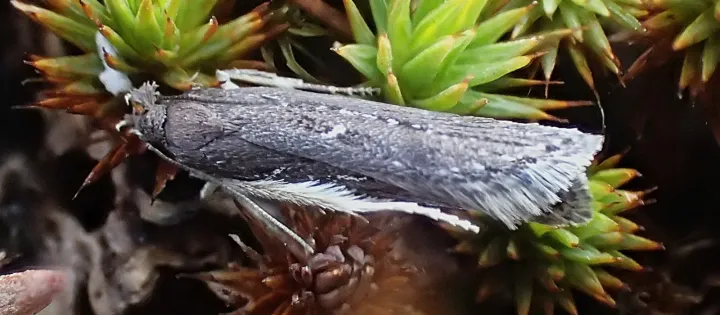
The heather moth (Neofaculta ericetella) is a small moth species belonging to the family Gelechiidae. It is a specialized pest primarily associated with heathland ecosystems and gardens containing heather species.
The adult moth is relatively small with a wingspan of approximately 12–15 mm. The forewings display a mottled brown and grey pattern, serving as effective camouflage against the stems of the host plant.
The larval stage consists of caterpillars which are typically pale, dirty-white or greenish in appearance. They possess dark head capsules and are known for their habit of building shelters.
This species has evolved to be highly synchronized with the lifecycle of its host plant, Calluna vulgaris, ensuring that larvae have immediate access to food upon emergence.
Due to their small size and cryptic coloration, heather moths are rarely seen by gardeners, making the identification of larval feeding damage the most common way to detect their presence.
What it damages
The larvae feed exclusively on the foliage and terminal buds of heather plants. By creating webbed shelters, they protect themselves while consuming the succulent young tissues.
Feeding activity leads to the structural deformation of shoots. In cases of severe infestation, large portions of the plant may turn brown and die back, significantly reducing aesthetic appeal.
The damage is particularly noticeable in commercial nurseries where the uniformity of the crop is crucial. Affected plants often fail to grow properly during the peak spring season.
The web-like structures created by the larvae provide an environment for mold and fungal pathogens to proliferate, which can further damage the overall health of the heather bush.
In mature gardens, while rarely fatal to a large established bush, the cumulative damage over several years can result in stunted growth and a decline in the plant's vigor.
When it appears
Adult moths are generally active during the summer months. Their flight period is typically from June through August, during which time mating occurs.
Eggs are laid on the plant, and larvae hatch to begin their feeding cycle. Larvae overwinter in a state of diapause, hidden within protected spots at the base of the plant or in debris.
Growth resumes in the spring, coinciding with the sprouting of new heather shoots. This is the period of peak larval activity and the most vulnerable time for the host plant.
The developmental rate is temperature-dependent. Warmer spring and summer weather can accelerate the growth cycle, potentially leading to more intense grazing pressure on the host plants.
Monitoring for signs of damage should begin as soon as spring growth starts, as early intervention prevents the most extensive foliage destruction caused by mature larvae.
Signs of infestation
The presence of fine, white webbing connecting adjacent leaves on the tips of shoots is a hallmark sign of a Neofaculta ericetella infestation.
- Curled, twisted, or distorted leaf growth on terminal shoots.
- Frass (larval excrement) trapped within the silken webbed shelters.
- Patches of yellowing or browning foliage indicating localized feeding sites.
- Total consumption of leaf tissue, leaving only thin, skeletal stems.
- Reduced vigor and delayed blooming in the affected sections of the plant.
Control measures
Mechanical control is effective in small gardens; simply pinching off and destroying the webbed shoot tips can significantly reduce the caterpillar population.
For larger infestations, chemical control using systemic insecticides is recommended to penetrate the webbing and reach the larvae hidden inside their shelters.
Cultural practices, such as ensuring good air circulation and avoiding overcrowding of plants, can make the environment less favorable for the moth's lifecycle.
Biological treatments, particularly those using Bacillus thuringiensis, provide an environmentally friendly option that specifically targets the larvae without harming beneficial pollinators.
Integrated Pest Management (IPM) strategies, including the use of pheromone traps, can assist in timing the applications of treatments for maximum efficiency during the moth's active flight window.
Taxonomy
- Latin name
- Neofaculta ericetella
- Order
- Lepidoptera (butterflies)
- Family
- Gelechiidae
- EPPO code
- NFACER
Discussion
No discussions yet — be the first.