
Neoceratitis fruit fly
Neoceratitis
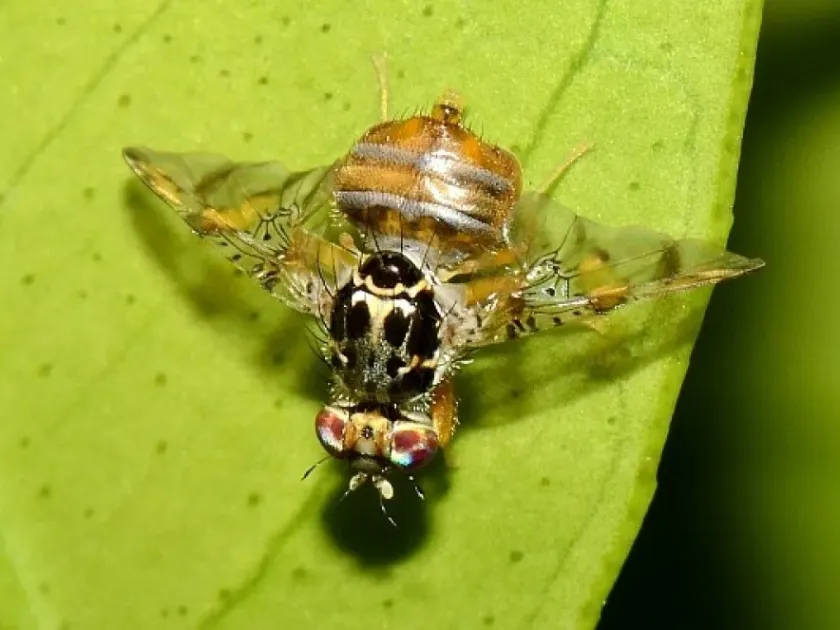
Description
How to identify
The genus Neoceratitis belongs to the Tephritidae family, also known as fruit flies. These insects are easily recognized by their distinctive patterned wings, which often feature bands or intricate markings.
Adult flies are small, ranging from a few millimeters in length, and possess well-developed compound eyes and high-speed flight capabilities for mating and oviposition.
The life cycle is typical of tephritid flies, consisting of egg, larva, pupa, and adult stages. The female uses a specialized needle-like ovipositor to insert eggs into the fruit flesh.
The larvae are legless maggots that burrow into the fruit shortly after hatching, staying protected inside the tissue until they complete their development.
Pupation primarily occurs in the soil, where the larvae drop down after emerging from the decaying fruit, remaining there until the next generation emerges.
What it damages
Neoceratitis species act as primary pests for various fruit and vegetable crops, significantly impacting the quality and quantity of the harvest in affected areas.
Larval feeding activity creates tunnels within the fruit, which leads to the breakdown of internal tissues and the eventual collapse of the fruit structure.
Infested fruits typically exhibit signs of rot and premature ripening, rendering them unsaleable and unsuitable for human consumption or processing.
Secondary infections from opportunistic fungi and bacteria frequently enter the fruit through the exit and entry holes caused by the larvae, accelerating decomposition.
In high-density infestations, the entire crop can be lost if intervention strategies are not implemented at the correct developmental stages of the fly.
Signs of infestation
The first external sign of infestation is the presence of small puncture marks on the fruit skin, which may be surrounded by a subtle color change or depression.
As the larvae grow, the affected areas become soft, and the fruit may show signs of bruising even if no external impact has occurred.
Premature dropping of fruit, often while still green or in the early stages of ripening, is a major indicator that the fruit contains developing larvae.
Upon slicing the fruit, the presence of internal tunneling, discoloration, and visible larvae confirms the infestation by this specific fruit fly species.
Regular monitoring with bait traps can reveal the presence of adult flies in the orchard, providing an early warning system before visible damage to the fruit occurs.
Control measures
Sanitation is a cornerstone of management: all fallen, infested fruit must be collected promptly and destroyed to break the fly's reproductive cycle.
Mass trapping using specific attractants or pheromones can significantly reduce the adult population density in and around crop fields.
Targeted insecticide applications should be timed to coincide with the peak egg-laying periods of the adult flies to minimize exposure to non-target species.
Integrated Pest Management (IPM) practices, including the use of biological control agents like predatory wasps or nematodes, provide a sustainable alternative to chemical controls.
Strict quarantine measures are essential to prevent the spread of these pests between geographical regions through the movement of infested produce.
Taxonomy
- Latin name
- Neoceratitis
- Order
- Diptera (flies)
- Family
- Tephritidae
- EPPO code
- NCERSP
Discussion
No discussions yet — be the first.