
Nemorilla floralis
Nemorilla floralis
Description
How to identify
Nemorilla floralis is a species of fly belonging to the family Tachinidae (order Diptera). These insects, often referred to as tachinid flies, are known for their parasitic behavior towards various arthropod hosts.
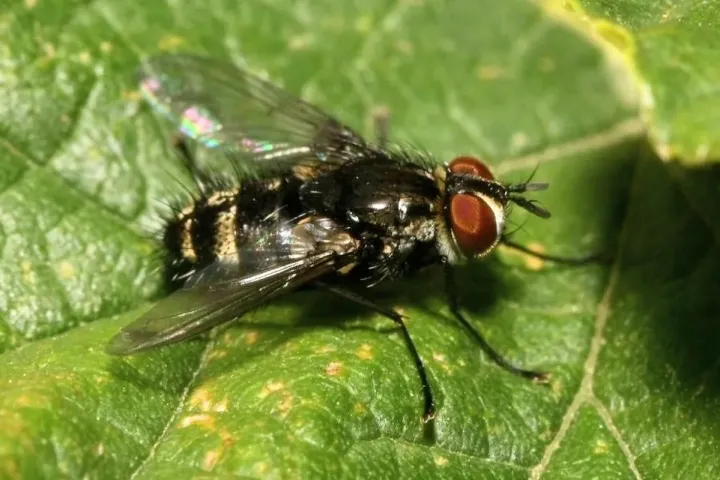
The adult fly resembles a common housefly but is more robust and covered in thick, coarse bristles. Their coloration is typically grey or black, sometimes featuring a metallic sheen on the abdomen, and they possess large compound eyes.
The larvae are internal parasites, meaning they develop inside their host's body. They are legless and have a specialized body structure that allows them to thrive while feeding on the tissues of their host.
Identifying this species in the field can be difficult for non-experts because many tachinids look similar. Accurate identification often requires examining the arrangement of bristles on the adult's thorax and abdomen.
It is essential for agronomists to correctly identify this fly to determine its role in the field, as tachinids are often beneficial biological control agents that regulate the populations of pest caterpillars.
What it damages
The primary impact of Nemorilla floralis is its parasitic nature on caterpillars of various moths, which can be significant pests of agricultural crops. They typically attack the larval stages of Lepidoptera.
The "damage" is often beneficial to the farmer, as the parasite reduces the population of crop-devouring larvae. However, the ecological role is complex, as these flies can also parasitize beneficial insects.
Direct damage to the plants by the adult flies is nonexistent, as they feed solely on floral nectar. The flies themselves do not chew or pierce plant tissues, making them harmless to vegetation.
The damage caused by the host larvae (the caterpillars) is what the flies effectively prevent. By suppressing host numbers, they serve as a natural regulatory mechanism in the agricultural ecosystem.
If the population of Nemorilla floralis is high, it usually indicates that there is a large source of host caterpillars in the field, which requires close monitoring to manage the overall pest pressure.
When it appears
Adults of Nemorilla floralis typically become active in late spring once temperatures are consistently warm. Peak activity is usually observed during mid-summer, aligning with the development cycle of their lepidopteran hosts.
The fly can undergo multiple generations per season, depending on the availability of hosts and favorable climatic conditions, such as sufficient warmth and humidity during the larval development phase.
As autumn approaches, the flies prepare for winter by entering a state of diapause. They overwinter either in the pupal stage or as adults, seeking refuge in protected areas like debris or the soil surface.
The emergence in spring is synchronized with the activity of their hosts. Understanding this synchronization is vital for timing monitoring efforts and assessing the potential impact of the parasites on the current crop.
Weather fluctuations, such as cold springs, can delay the emergence of these flies, potentially creating a temporary imbalance between the parasite and its host populations.
Signs of infestation
One of the most observable signs of Nemorilla floralis presence is the appearance of small, white eggs deposited on the skin of caterpillars by the adult female fly.
Affected caterpillars often exhibit reduced feeding activity, sluggishness, and a lack of growth. As the parasitic larva consumes the internal organs of the host, the caterpillar eventually stops feeding entirely.
Empty pupal cases or dead, shriveled caterpillar remains left on the plant surface often indicate that a parasite has successfully completed its development and emerged from the host.
A noticeable decline in caterpillar infestations in fields where no insecticides have been applied is a strong indicator of successful biological control by parasitic species like this one.
Observing a high number of adult flies resting on weeds or flowering field edges is an indicator of a robust local population, which can serve as a natural suppression agent for nearby pests.
Control measures
Effective management focuses on Integrated Pest Management (IPM) practices that protect beneficial insects. Broad-spectrum insecticides can unintentionally wipe out parasitic flies, leading to secondary pest outbreaks.
The goal is to maintain a healthy population of beneficials while keeping harmful caterpillar numbers below the economic injury level, utilizing selective treatments only when absolutely necessary.
- Maintaining field margins with nectar-rich plants to support adult flies.
- Using crop rotation to disrupt the life cycles of target pest caterpillars.
- Avoiding unnecessary insecticide sprays during peak flight periods.
- Implementing pheromone traps for accurate monitoring of pest populations.
- Conserving natural habitats and overwintering sites near agricultural plots.
By monitoring the density of Nemorilla floralis, agronomists can make informed decisions about whether chemical intervention is truly needed, often saving costs and reducing chemical load.
A balanced ecosystem with high biodiversity naturally keeps parasitic fly populations stable, providing a sustainable solution to managing lepidopteran pests without heavy reliance on synthetic inputs.
Taxonomy
- Latin name
- Nemorilla floralis
- Order
- Diptera (flies)
- Family
- Tachinidae
- EPPO code
- NEMLFL
Discussion
No discussions yet — be the first.