
Archytas marmoratus
Archytas marmoratus
Description
How to identify
Archytas marmoratus is a species of parasitic fly belonging to the family Tachinidae, order Diptera. These flies are notable for their specific role in controlling lepidopteran populations in agricultural fields.
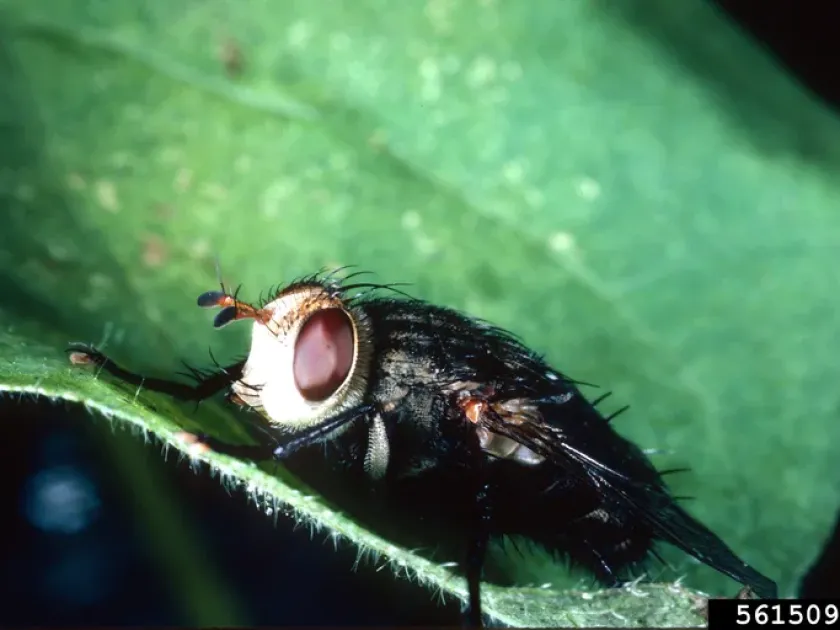
Adult flies are relatively large and covered with dense hairs, often exhibiting a distinctive marble-like pattern on their thorax and abdomen, which aids in camouflage.
Their head features large, well-developed eyes, characteristic of many tachinid flies, facilitating rapid movement and tracking of potential hosts during the mating season.
The life cycle involves complete metamorphosis, including egg, larval, pupal, and adult stages, with significant portions of development occurring within the host insect.
Identification is best achieved by observing the adult flies feeding on nectar from flowering plants in or around agricultural areas during the peak of summer.
What it damages
The primary damage caused by Archytas marmoratus is not direct harm to plants, but rather their parasitic activity on caterpillar species, such as armyworms or cutworms.
While they are technically natural enemies of common pests, in high densities, they can disrupt the ecological balance and the efficiency of other beneficial insect populations.
Direct economic loss occurs when the population dynamics of the host pests are altered in ways that prevent natural biological control mechanisms from working effectively.
Crop plants like maize, cotton, and various soybeans may suffer if the primary pest populations are not successfully kept in check by the interplay of these flies.
The damage threshold is determined by the ratio of parasitized vs. non-parasitized pests present in the field during critical growth stages of the crop.
When it appears
The seasonal appearance of Archytas marmoratus is strongly dictated by the accumulation of active temperatures in the spring.
The most intense flight activity of adults occurs during the warmest months when host caterpillars are most abundant on the crops.
The duration of the pupal stage, which often takes place in the soil, is highly dependent on humidity levels and soil temperature, affecting the timing of adult emergence.
By late autumn, the species enters a diapause state to survive the cold, typically remaining in the soil as puparia.
Effective agricultural planning requires tracking these seasonal windows to ensure that any necessary intervention does not negatively impact beneficial insect populations.
Signs of infestation
Signs of infection include finding sluggish or dead caterpillars on leaves, which usually appear deformed or fail to pupate properly.
Visual inspection of infested fields may reveal the presence of small emergence holes in the puparia or larvae, indicating successful fly development.
A high density of adult flies observed near crop flowers often correlates with a significant level of parasitism within the local caterpillar population.
Farmers can monitor for internal infestation by dissecting collected caterpillars to check for the presence of fly larvae inside the body cavity.
Changes in caterpillar feeding intensity can also serve as an early warning sign that a parasite population is actively affecting the local pest density.
Control measures
Integrated Pest Management (IPM) is essential for managing the impact of Archytas marmoratus while maintaining beneficial insect communities.
Mechanical control, such as post-harvest plowing, is effective in disrupting the pupal stage of the fly by exposing them to predators and harsh environmental conditions.
Chemical control should be applied judiciously, favoring selective insecticides that target specific pests without harming the fly's adult stage or other beneficial species.
Maintaining a high level of biodiversity around field edges provides necessary resources for these flies and supports a self-regulating ecosystem.
- Implement crop rotation to disrupt the life cycle of target host pests.
- Use pheromone traps to monitor adult fly population spikes.
- Avoid broad-spectrum pesticide spraying during the peak flight season.
Taxonomy
- Latin name
- Archytas marmoratus
- Order
- Diptera (flies)
- Family
- Tachinidae
- EPPO code
- ARCSMA
Discussion
No discussions yet — be the first.