
Alophora
Alophora
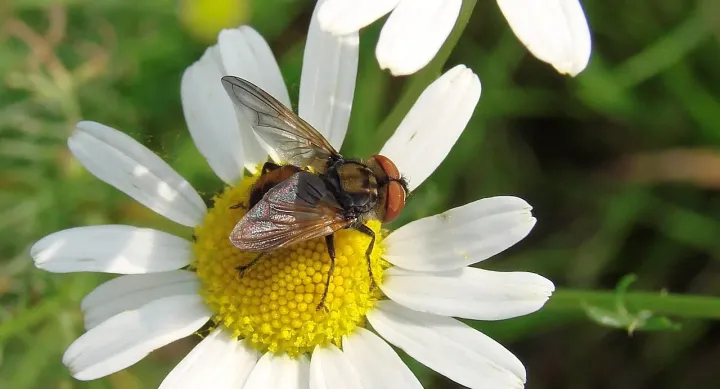
Description
How to identify
Alophora is a genus of flies belonging to the family Tachinidae. These flies are widely recognized as specialized parasitoids that play a significant role in managing populations of various plant-feeding insects, particularly true bugs (Heteroptera).
Adult Alophora flies are generally small to medium-sized, often with a robust, hairy body. Their appearance can vary significantly between species, but they often feature distinct wing venation and specific thoracic bristle patterns.
Taxonomically, they are grouped within the subfamily Phasiinae. This group is well-known for its obligate parasitic lifestyle, where the larvae develop inside the bodies of their hosts, effectively leading to host mortality.
Identification often requires careful examination of the head and thoracic structures. In field settings, they are frequently confused with other Diptera, so distinguishing them requires observation of their oviposition behavior and host selection.
These flies are globally distributed and occupy a wide range of habitats, including meadows, field margins, and cultivated land, where they actively search for their insect hosts.
What it damages
Alophora does not damage crops. Instead, it serves as a highly beneficial natural enemy that parasitizes shield bugs (Pentatomidae) and other hemipteran pests that cause economic damage to grain and vegetable crops.
The life cycle involves the female fly attaching its eggs onto the exoskeleton of the host bug. Upon hatching, the larva bores into the host's body cavity, feeding on its tissues and gradually killing it.
By drastically reducing the number of reproductive adult bugs, Alophora significantly lowers the pressure of pests on agricultural fields, serving as a vital component of integrated pest management strategies.
While the parasitism process is not immediate, the cumulative effect of these flies on pest populations can be substantial, often reducing the need for intensive synthetic pesticide applications.
Farmers can benefit greatly from the presence of Alophora, as these flies provide a free and sustainable service that protects crop quality throughout the growing season.
When it appears
Alophora activity typically begins in late spring, following the warming of soil and vegetation. Adults emerge to coincide with the appearance of the first generation of their host bugs in the field.
Multiple generations can occur throughout the summer, ensuring that the fly population tracks the abundance of the host insects. Adults are most active during warm, sunny days when they search for nectar and mating partners.
Winter is generally spent in the pupal stage, often tucked into the soil or within the remains of the host bug. This diapause strategy allows them to survive cold temperatures and re-emerge in the spring.
The synchronization between the fly's emergence and the host's life cycle is a key evolutionary adaptation. This timing ensures that female flies have immediate access to suitable hosts for oviposition.
Late summer peak populations of Alophora often correlate with high densities of shield bugs, showing how the predator-prey relationship drives the seasonal dynamics of the fly.
Signs of infestation
The most visible sign of Alophora activity is the presence of small, whitish, oval-shaped eggs glued to the dorsal surface of the host bug's body, particularly near the thorax or wing bases.
Parasitized bugs often exhibit altered behavior, such as sluggishness or an inability to feed or fly effectively. As the larval development progresses, the host becomes significantly weakened and eventually dies.
The presence of adult flies on flowering plants, especially umbellifers, near the crop edges, is a reliable indicator that the parasitoid is actively colonizing the area.
Monitoring programs that involve collecting and dissecting host bugs can confirm the rate of parasitism, providing valuable data on the biological control efficacy within the specific agroecosystem.
Finding puparia in the topsoil post-harvest is another indicator of successful reproduction and indicates the potential for a healthy fly population in the following year.
Control measures
The primary control measure regarding Alophora is conservation. To preserve these beneficial insects, it is essential to minimize the use of broad-spectrum insecticides that could cause significant mortality.
Creating non-crop habitats, such as wildflower strips or hedgerows, provides necessary food resources (nectar) for adult flies and shelter for pupae, which boosts their population levels.
Integrated Pest Management (IPM) practices should prioritize the use of selective insecticides that are compatible with parasitoid populations, ensuring that the natural balance remains intact.
Maintaining heterogeneous field margins ensures that Alophora has the habitat required for overwintering and early spring emergence, keeping the biological control service consistent.
- Avoid preventative spraying of pesticides.
- Use selective, pest-specific control agents.
- Implement floral margins to support beneficial insects.
- Conduct regular field scouting to assess parasitism rates.
- Conserve undisturbed soil patches for larval pupation.
Taxonomy
- Latin name
- Alophora
- Order
- Diptera (flies)
- Family
- Tachinidae
- EPPO code
- ALPRSP
Discussion
No discussions yet — be the first.