
Birch leaf miner moth
Nemaxera betulinella
Description
How to identify
The Birch leaf miner moth (Nemaxera betulinella) is a member of the Tineidae family within the order Lepidoptera. This small moth is known for its larval stage, which creates characteristic mines inside leaf tissues.
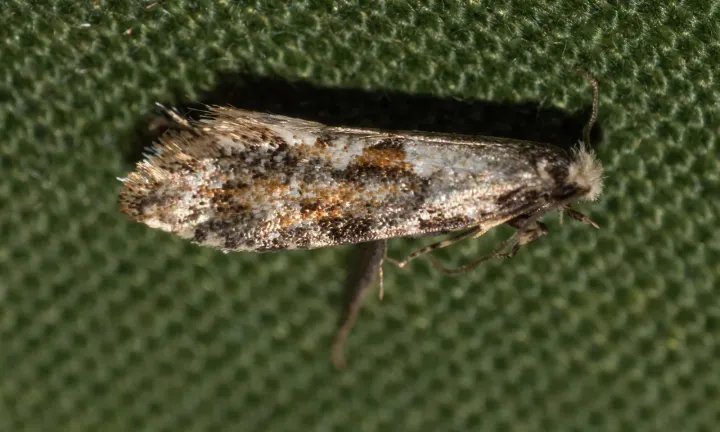
Adult moths are small, with a wingspan of approximately 10–12 mm. Their coloration is typically mottled or patterned, providing excellent camouflage against the rough bark of birch trees.
The larvae are internal feeders. They possess a specialized mouthpart structure that allows them to chew through the mesophyll of the leaf while remaining protected between the leaf epidermises.
The life cycle of the moth is highly synchronized with the leaf development of birch trees. Overwintering occurs in the pupal stage, often in the soil or leaf litter, before emerging in early spring.
Taxonomically, the species is distinct due to specific physiological traits, and accurate identification often requires laboratory examination of adult specimens.
What it damages
The primary host plants are birch trees (Betula). The larvae feed on the green tissues of the leaf, which significantly reduces the tree's photosynthetic capacity.
In cases of heavy infestation, a large percentage of the crown may be affected, which can lead to stress, reduced growth rates, and general decline in tree health.
The mines cause the leaf tissue to die, leading to brown, necrotic patches that make the foliage appear ragged and unhealthy during the summer months.
While mature trees can usually tolerate minor infestations, younger trees or saplings may suffer from suppressed growth and premature leaf drop due to high mining activity.
Repeated yearly attacks can make birch trees more susceptible to other opportunistic pests and environmental stressors, potentially leading to localized branch mortality.
Signs of infestation
The most reliable sign of infection is the presence of pale, winding tracks or blotches on the surface of the birch leaves, known as mines.
Within these mines, one can often see small, dark pellets of frass (larval waste), which provide a clear indicator that the tissue is being consumed from the inside.
As the larva matures, the mines become larger and may cause the leaf to crinkle or fold, leading to premature yellowing and eventual desiccation of the affected areas.
During the peak of the larval activity season, infected leaves might appear translucent when held up to the light, revealing the larvae working inside.
- Visible serpentine or blotch-shaped mines on leaves.
- Dark frass pellets present inside the leaf mines.
- Premature yellowing and shedding of birch leaves.
Control measures
Biological control methods involve encouraging natural predators, such as parasitic wasps, which can significantly regulate larval populations in healthy ecosystems.
Mechanical control focuses on the removal and destruction of fallen leaves in autumn, which helps reduce the overwintering population of the pest.
Chemical applications, specifically systemic insecticides, can be used to manage outbreaks, targeting the young larvae before they cause extensive damage to the foliage.
Using pheromone traps provides a valuable method for monitoring population density, allowing foresters to decide if and when intervention is necessary.
Good silvicultural practices, including proper tree spacing and nutritional support, improve tree vitality and resilience against leaf miner infestation.
Taxonomy
- Latin name
- Nemaxera betulinella
- Order
- Lepidoptera (butterflies)
- Family
- Tineidae
- EPPO code
- TINECO
Discussion
No discussions yet — be the first.