
Nemaxera
Nemaxera
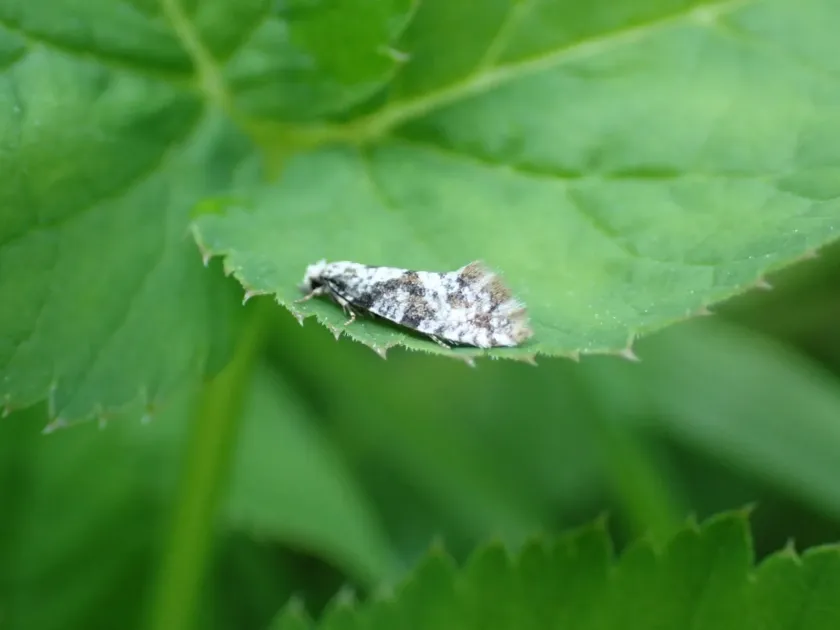
Description
How to identify
The genus Nemaxera belongs to the family Tineidae (true moths) within the order Lepidoptera. These are small insects with morphological characteristics closely tied to their cryptic lifestyle.
The adults are small moths with a wingspan ranging from 10 to 15 millimeters. The wings often exhibit greyish, ochre, or brownish tones, providing excellent camouflage against tree bark or plant debris.
The head is covered in dense hairs, and the mouthparts are weakly developed, as the adult stage often does not feed or consumes only moisture. The antennae are filiform, medium-length, and sensitive to pheromones and substrate odors.
Caterpillars display typical Tineidae traits: a cylindrical body, a well-developed thoracic capsule, and chewing mouthparts. The coloration is usually light, ranging from whitish to yellowish-brown, often with a dark head capsule.
The genus classification is based on the structure of the male and female genitalia, which is essential for precise species identification in laboratory settings, as external adult features can be highly similar.
What it damages
Species within the Nemaxera genus are primarily mycophagous, meaning they feed on fungal cultures developing on decaying wood or plant residues.
However, under certain conditions, populations may colonize weakened fruit trees where fungal infections on the bark create a favorable nutritional environment for larval development.
The primary damage involves injury to the cambium and bark, which disrupts normal sap flow in the tree tissues and leads to an overall decline in the plant's health.
In forestry and horticulture, active bark colonization can facilitate secondary infection by pathogenic microorganisms that enter through the tunnels bored by the larvae.
Although Nemaxera is not always a primary pest, its presence indicates poor phytosanitary conditions in the orchard or forest stand that require intervention.
When it appears
The insect's life cycle is closely linked to temperature and ambient humidity. Adult emergence usually begins in late spring and continues throughout the summer months.
Under favorable conditions, several generations can develop within a single season. Overwintering typically occurs at the larval stage in protected sites, such as bark crevices, cavities, or leaf litter.
The period of greatest caterpillar activity occurs during humid summer months when fungal colonies on wood are most productive and provide an abundant food source.
Pupation takes place inside the tunnels created by the caterpillar or within dense cocoons attached to the substrate, protecting the insect from predators and desiccation.
The emergence of new generations is often synchronized with periods of high humidity, which is a critical factor for the growth of the mycelium that the larvae consume.
Signs of infestation
The first sign of infestation is the presence of characteristic tunnels in the bark, clogged with excrement and remnants of fungal mycelium.
Webbing is often visible on the surface of damaged areas, which caterpillars construct for protection and to secure their position.
Discoloration of the bark, depressions, or peeling on affected areas may also indicate the presence of Nemaxera larvae beneath the periderm layer.
During the summer, adults can be found during inspection of tree trunks, although they lead a hidden life and are most active during twilight hours.
The presence of fine wood dust or frass falling from bark cracks is an indirect indicator of the larvae's activity as they destroy tree tissues or feed on fungi within the structure.
Control measures
The basis of control is agrotechnical: regular sanitary pruning of trees and the removal of dead or decaying bark where insects may seek shelter.
It is important to maintain overall orchard health, treat tree wounds promptly, and prevent the growth of wood-decaying fungi that attract this species.
In cases of high pest density, insecticide spraying during the larval emergence period after winter may be used, though such measures are rarely necessary.
The use of biological controls, such as entomopathogenic fungi or bacterial preparations, can be effective in suppressing populations in intensive horticulture.
Prevention includes maintaining clean tree basins and timely removal of plant debris, which acts as the primary breeding reservoir for the pest.
Taxonomy
- Latin name
- Nemaxera
- Order
- Lepidoptera (butterflies)
- Family
- Tineidae
- EPPO code
- NEMXSP
Discussion
No discussions yet — be the first.