
Malachite sunbird
Nectarinia famosa
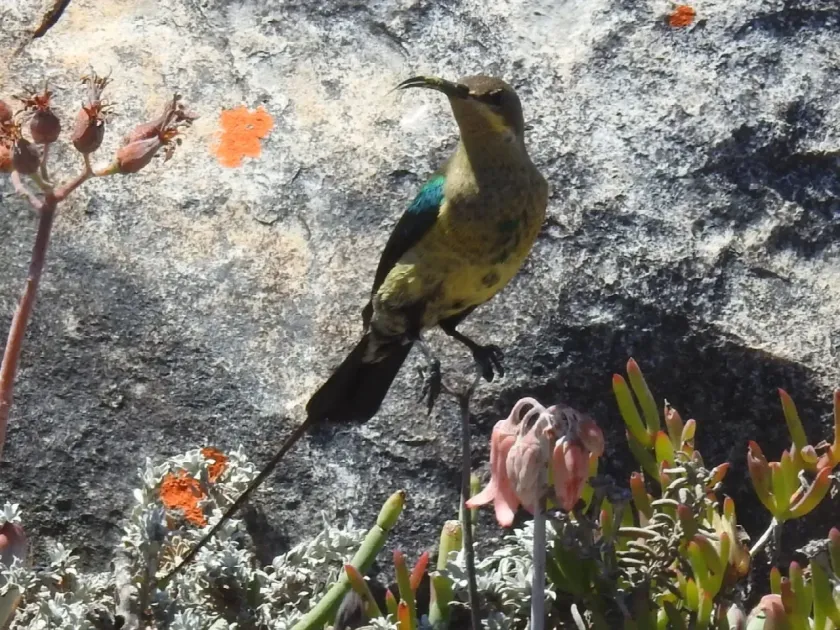
Description
How to identify
The Malachite sunbird (Nectarinia famosa) is a bird species of the family Nectariniidae that can occasionally act as a pest in specific agricultural landscapes where its habitat overlaps with fruit or flower production.
The breeding male is identified by its brilliant metallic green plumage, which is unmistakable, while the female is drabber and cryptic, providing camouflage during nesting periods.
Their long, decurved bills, while specialized for nectar collection, enable them to pierce the base of floral structures, which is the primary cause of their status as an agricultural pest.
These birds are highly active, territorial, and move rapidly between plants, making them difficult to manage once they establish a feeding routine within a farm.
Correct identification is crucial to distinguish them from beneficial pollinators, as their behavior on non-native or specific commercial plants can be highly destructive.
What it damages
Damage primarily occurs in gardens and orchards with large, nectar-rich flowers where the sunbird attempts to gain access to the nectar source.
By piercing the base of the flower tube, the birds bypass the natural pollination mechanism, causing structural damage that inhibits seed set and fruit development.
This mechanical injury leaves the plant vulnerable to fungal infections and secondary pest infestations, further weakening the health of the cultivated crop.
In high-density populations, these birds can systematically destroy large portions of a bloom, leading to significant yield losses in commercial floral or fruit operations.
The impact is most severe on plants with specialized floral shapes that the birds cannot easily access through the natural opening, forcing them to "rob" the nectar.
When it appears
Sunbird activity is highly seasonal, peaking during the flowering phase of target crops when the energy requirements of the birds are at their highest.
During drought periods, sunbirds tend to concentrate in irrigated areas where flowering plants persist, significantly increasing the pressure on local crop production.
Monitoring the flowering phenology is essential for farmers, as the birds typically arrive in numbers shortly after the first blooms appear in the orchard.
Daily feeding intensity is highest during the early morning and late afternoon, which are the windows of time when protection measures are most needed.
Understanding these temporal patterns allows growers to anticipate arrival times and deploy deterrents before the damage becomes widespread.
Signs of infestation
The most distinct sign of sunbird activity is the presence of small, puncture-like holes at the base of the flower or the petal tube.
Wilting of blooms that are still in the early stages of development often indicates that the nectar source has been compromised by avian activity.
Fecal droppings found on leaves surrounding the damaged flowers provide clear evidence of consistent bird presence in those specific areas of the canopy.
Premature fruit drop or lack of fertilization in specific blooms is a functional indicator of "nectar robbing" that has hindered the plant's reproductive cycle.
- Punctures at the flower base.
- Premature petal wilting.
- Physical degradation of suflorescences.
- Bird droppings on foliage near damaged blooms.
Control measures
Management strategies for the Malachite sunbird focus on exclusion and non-lethal deterrents to protect the crop while respecting local wildlife conservation laws.
Physical exclusion, such as fine-mesh netting over sensitive crops, is the most effective method to ensure complete protection during the flowering season.
Auditory deterrents, including broadcasted predator calls or high-frequency sounds, can be effective in discouraging birds from settling in the orchard.
Visual deterrents like reflective tape or hawk-shaped kites require periodic rotation to prevent the birds from habituating to the artificial stimuli.
Cultivating trap crops or "sacrifice plants" that bloom earlier or are more attractive to the sunbirds can help draw them away from the main commercial harvest.
Taxonomy
- Latin name
- Nectarinia famosa
- Family
- Nectariniidae
- EPPO code
- NCTRFA
Discussion
No discussions yet — be the first.