
Sunbirds
Cinnyris
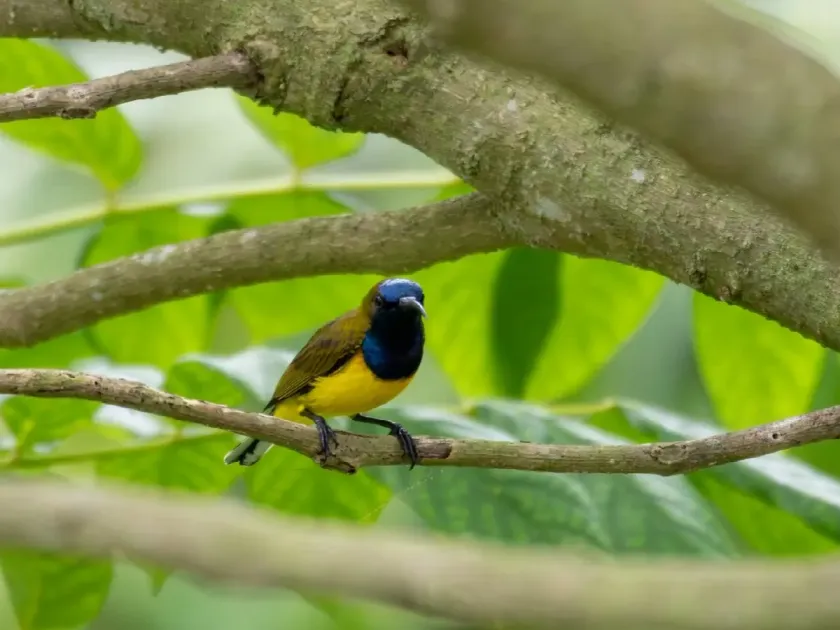
Description
How to identify
Sunbirds (genus Cinnyris) are small, nectar-feeding passerine birds found in tropical and subtropical regions. While they are vital pollinators in wild ecosystems, in intensive horticultural settings, they are often considered pests that can cause significant damage to flowers and young fruit.
They are characterized by their slender, downward-curved bills, which are perfectly adapted to probe deep into tubular flowers. Many species exhibit iridescent plumage, making them highly visible when foraging in fruit tree canopies.
The biology of sunbirds revolves around a high metabolic rate, requiring them to consume large amounts of sugar daily. Their breeding and foraging cycles are often synchronized with the peak blooming periods of local vegetation.
They construct elaborate, hanging nests, usually placed at the tips of branches. This nesting behavior allows them to thrive in orchard environments where human presence might otherwise deter other bird species.
Population density is highly correlated with the availability of high-sugar food sources. In monoculture landscapes, sunbirds may aggregate in large numbers, turning orchards into preferred foraging grounds.
What it damages
Sunbirds damage crops primarily by piercing the base of flower buds and young fruit to access the nectar. This mechanical damage disrupts the development of the fruit and often causes the ovary to wither and drop prematurely.
The puncture wounds inflicted by their sharp bills create entry points for secondary pathogens. Fungi and bacteria can easily invade these wounds, leading to local necrosis, blossom blight, or rot that spreads through the inflorescence.
Beyond nectar, some species consume soft fruit, causing scarring and loss of commercial value. This is particularly problematic for high-value export crops, where aesthetic quality is a strict requirement for grading.
Early-stage damage to buds is especially destructive. When birds feed on flowers at the initial stage of fruit set, the loss of potential yield can be severe, directly impacting the final tonnage harvested by the grower.
In regions with high sunbird activity, the cumulative damage can lead to substantial financial losses, especially during dry spells when orchard crops represent the most accessible and concentrated source of hydration and sugar.
Signs of infestation
The primary diagnostic sign is the presence of clean, puncture-like holes at the base of the flower or the developing fruit. These holes lack the shredded margins typical of insect or rodent feeding.
A noticeable increase in premature fruit and bud drop beneath the canopy. Upon inspection, these fallen pieces often reveal small, precise perforations caused by the bird's beak.
Frequent visual sightings of the birds moving rapidly between branches. Their high-pitched, twittering calls are often audible during foraging, providing a reliable cue for their presence in the orchard.
Darkening of the puncture sites a few days after damage, indicating the onset of microbial infection. This discoloration often manifests as a small necrotic ring around the hole.
Aggregated activity around specific flowering cultivars. If some varieties are preferred over others due to higher nectar sugar content, sunbirds will concentrate their feeding there, making these trees primary hotspots for monitoring.
Control measures
Physical exclusion remains the most effective control method. Installing bird-proof netting over fruit trees prevents access to the canopy and ensures that flowers and young fruits remain intact.
Acoustic and visual deterrents, such as predator calls, holographic flash tape, or reflective surfaces, can be effective if deployed early in the season. Rotation of these tools is necessary to prevent habituation.
Cultural practices involve the removal of non-crop, nectar-rich vegetation from the perimeter of the orchard. Reducing alternative food sources makes the area less attractive to resident bird populations.
Application of botanical-based repellents can be considered in some systems, provided they do not negatively impact native pollinators like bees. These substances are designed to make the nectar unpalatable to birds.
Sanitation is key; promptly removing and disposing of fallen, damaged, or fermenting fruit reduces the lure for birds. Keeping the orchard clean helps maintain a lower bird density throughout the growing season.
Taxonomy
- Latin name
- Cinnyris
- Family
- Nectariniidae
- EPPO code
- CINNSP
Discussion
No discussions yet — be the first.