
Banana scab moth
Nacoleia octasema
Description
How to identify
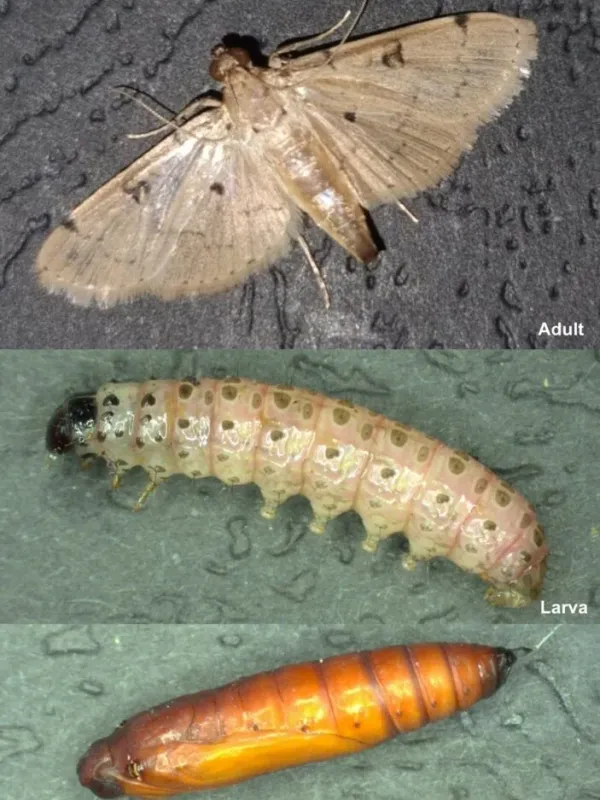
The banana scab moth, scientifically known as Nacoleia octasema, is a moth species in the family Crambidae. It is widely recognized as a serious economic pest in banana-producing regions across the tropical zones of the Asia-Pacific.
Adult moths typically exhibit a wingspan of about 25 mm. Their coloration is generally yellowish-brown with dark, intricate markings on the forewings, providing excellent camouflage against dead leaves and dry vegetation.
The life cycle begins when eggs are laid on the floral bracts of the developing banana bunch. Upon hatching, the larvae immediately seek shelter within the bracts and begin feeding on the young, soft tissues of the banana fingers.
The larvae go through several instars, increasing in size and feeding intensity. They eventually pupate in cocoons spun between the fruit or within the leaves, waiting for the transformation into the adult stage to complete the cycle.
Because they reproduce rapidly in warm climates, populations can build up quickly if not managed, leading to significant infestations that can devastate the quality of a harvest within a short period.
What it damages
The primary host for this pest is the banana plant (Musa species). The larvae specifically target the young bunches, feeding on the surface of the fruit and the underlying tissues of the fingers.
While the pest is primarily associated with commercial banana cultivars, it can occasionally be found on related plant species in the Musaceae family, which serve as alternative reservoirs for the population.
Signs of infestation
The most reliable sign of an infestation is the presence of larval frass (excrement) scattered around the developing fruit bunch. This waste often becomes visible before severe damage is noted.
Damage presents as scarred, corky, or scabby patches on the peel of the banana. In severe cases, deep grooves or lesions form, which not only look unsightly but also serve as entry points for secondary pathogens.
The fruit surface may become discolored and rough, losing its marketability for export. Significant larval feeding can even cause the bunch to deform or stop developing properly as the fruit matures.
Control measures
Cultural control practices, such as removing old leaves and trash that could harbor pupae, are essential for maintaining low population levels. Proper sanitation reduces the overall survival rate of the moth.
The most common and effective industry practice is bagging the banana bunches with insecticide-treated covers. This physical barrier prevents adult females from laying eggs on the young fruit during the vulnerable stage.
Biological control programs utilizing egg parasitoids, such as Trichogramma species, have shown success in suppressing populations. These beneficial insects naturally target the eggs, providing sustainable management.
Monitoring the moth population with pheromone traps is critical for timing interventions. By tracking flight patterns, producers can decide when to apply necessary treatments to achieve maximum protection.
Chemical intervention should be carried out using selective insecticides that are safe for the surrounding environment. It is crucial to integrate these applications into an overall pest management program to avoid resistance.
Taxonomy
- Latin name
- Nacoleia octasema
- Order
- Lepidoptera (butterflies)
- Family
- Crambidae
- EPPO code
- HEDYOC
Discussion
No discussions yet — be the first.