
Myopites
Myopites
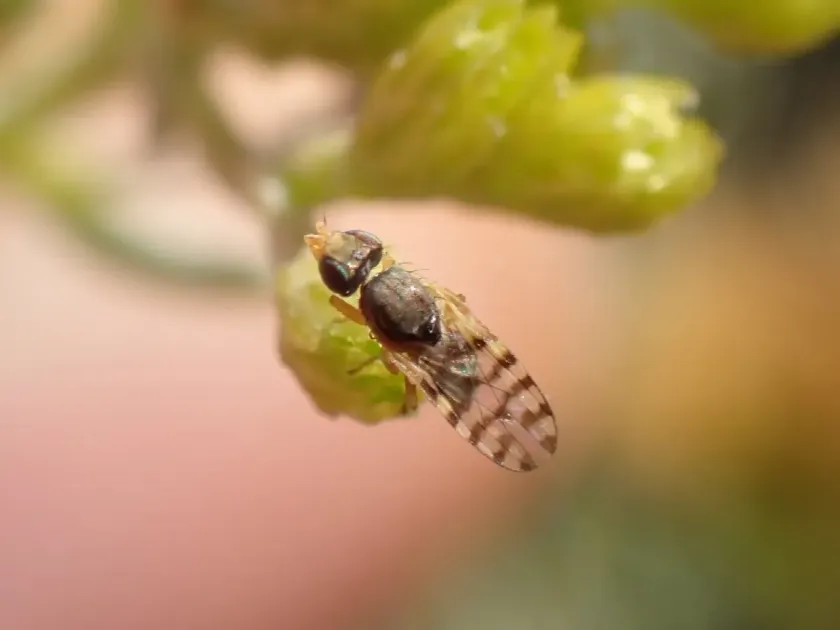
Description
How to identify
Myopites is a genus of fruit flies belonging to the family Tephritidae. These insects are characterized by their small size and distinct wing patterns that often serve as a diagnostic feature.
The larvae are typically specialized to develop within the floral tissues of plants, often causing structural changes to the host organ.
Adult flies are highly active during warm periods and possess mouthparts specialized for feeding on floral nectar and plant exudates.
Taxonomic identification at the species level often requires precise examination of male terminalia due to the high morphological similarity among related species.
Populations of Myopites are often localized, preferring specific host plants that offer stable environments for the development of their offspring.
What it damages
The primary hosts for Myopites are plants in the Asteraceae family, where the larvae feed on the floral receptacles or developing seeds.
Damage to the reproductive organs results in significant yield loss, as infested flower heads often fail to produce viable seeds or healthy florets.
In addition to direct feeding damage, larval activity often creates conditions for secondary infections by fungi, leading to rot and further degradation of the plant tissue.
The presence of larvae can also disrupt normal plant growth patterns, leading to the formation of galls that act as nutrient sinks for the developing insect.
Agricultural losses are particularly significant in crops where the inflorescences are the harvested product, such as certain medicinal or ornamental species.
When it appears
Adult activity of Myopites occurs during the growing season, typically aligning with the budding and flowering stages of their preferred host plants.
The insect typically completes one or more generations per year, depending on local climate conditions and the phenology of the host plants.
Overwintering usually takes place as puparia within the soil or in the debris of the host plant, making these sites crucial for population monitoring.
Spring emergence of adults is highly synchronized with the available floral resources, ensuring immediate access for egg-laying.
High temperatures can sometimes induce a state of diapause or reduce the metabolic rate of the insects if environmental conditions become extreme.
Signs of infestation
The most visible sign of infestation is the deformation of flower heads, which may appear stunted or fail to open correctly.
Exit holes found on the surface of flower heads indicate where adult flies have emerged after completing their development inside the plant tissue.
Plants affected by the larvae may show premature wilting or browning of the floral parts, leading to reduced overall plant vigor.
Dissection of the inflorescences often reveals larval galleries and frass, confirming the presence of the pest within the plant structure.
Monitoring efforts often utilize yellow sticky traps to capture adults, providing a reliable method to track the timing and intensity of the pest population.
Control measures
Cultural practices, such as deep plowing and the thorough destruction of crop residues, are effective methods for reducing overwintering populations.
Weed management, particularly focusing on wild Asteraceae, is critical to limit alternative host plants near commercial cultivation areas.
Chemical control, if necessary, should be timed during the early flowering phase to target larvae before they burrow deep into the tissue.
Biological control through the use of parasitoid wasps can significantly help in suppressing the numbers of Myopites in agricultural landscapes.
- Implement strict crop rotation schemes.
- Use pheromone-based monitoring systems.
- Promote natural predator populations in the field.
Taxonomy
- Latin name
- Myopites
- Order
- Diptera (flies)
- Family
- Tephritidae
- EPPO code
- MYPISP
Discussion
No discussions yet — be the first.