
Melon fly
Myiopardalis
Description
How to identify
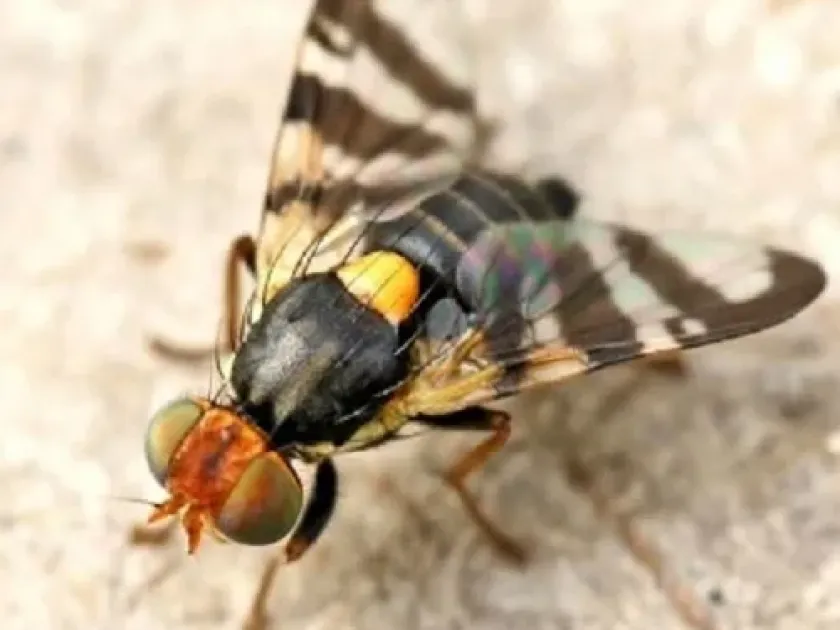
The melon fly (Myiopardalis pardalina) is a significant pest belonging to the Tephritidae family. This small, fruit-infesting fly has a yellow-brown body and distinct, dark banded patterns on its wings, which help in identifying the species.
The female possess a sharp, elongated ovipositor, which is a specialized tool used to penetrate the rind of developing cucurbit fruits. Eggs are deposited deep into the fruit flesh, where the larvae will eventually hatch and begin feeding.
The life cycle is heavily dependent on warm temperatures. Under favorable conditions, the developmental stages—egg, larva, pupa, and adult—can be completed in just a few weeks, leading to several overlapping generations within a single growing season.
Overwintering occurs primarily in the pupal stage, buried in the soil. As temperatures rise in the spring, the pupae emerge as adults, ready to mate and seek out hosts for their next generation.
Their ability to rapidly multiply makes them a persistent threat to commercial melon and watermelon growers. Without intervention, these flies can cause catastrophic damage, leading to significant economic losses in the agricultural sector.
What it damages
The melon fly primarily attacks plants from the Cucurbitaceae family, including melons, watermelons, pumpkins, and cucumbers. They favor fruits that are actively growing, as the soft rind allows for easier piercing.
Once inside, the larvae feed voraciously on the internal tissues, creating complex galleries or tunnels. These tunnels damage the structural integrity of the fruit and introduce external pathogens, such as bacteria and fungi, which lead to rapid rot.
External symptoms of the damage include deformations, bumps, and localized softening. The fruits often lose their commercial value entirely, becoming mushy, bitter, and unfit for consumption or storage.
The infestation can cause premature fruit drop and complete crop failure if left unmanaged. Affected fields become breeding grounds that facilitate the further spread of the pest to neighboring crops throughout the season.
Even if the infestation is not immediately obvious, the presence of these pests reduces the overall shelf life and marketability of the produce, as latent internal damage may only become visible during transport or storage.
Signs of infestation
The most reliable sign of an infestation is the presence of tiny, pin-prick marks on the rind of the fruit. These marks are entry points where the female has inserted her ovipositor to lay eggs.
As the larvae grow, the internal damage becomes apparent through the skin. You may notice localized sunken areas or uneven ripening, where parts of the fruit begin to turn yellow or soft while the rest remains green.
Upon cutting open an infected fruit, the tunnels created by the larvae are immediately visible. The flesh is usually discolored, watery, and emits a sour or rotting odor due to the secondary infections that follow the larvae's feeding.
- Visible needle-like entry holes on the fruit surface.
- Deformed, stunted, or unevenly growing fruits.
- Premature rot occurring on the plant.
- Larvae present inside the seed cavity or fruit pulp.
In heavily infested areas, adult flies may be spotted resting on the leaves or hovering near the flowers and developing fruits. Observing these behaviors is crucial for timely pest intervention.
Control measures
Effective management begins with strict sanitation practices. All infested fruits, including "drops" on the ground, must be collected and destroyed immediately to prevent the larvae from entering the soil to pupate.
Deep plowing or tilling the field after the harvest is a highly recommended practice. This disrupts the life cycle by burying the pupae or exposing them to natural predators and harsh environmental conditions, significantly reducing the next season's population.
Chemical control should be targeted towards adult flies before they have the chance to lay eggs. Application of insecticides should be timed correctly based on monitoring reports to ensure maximum effectiveness with minimal environmental impact.
The use of pheromone traps or protein-based bait traps is an excellent monitoring tool. These help growers track population density and determine the precise timing for when intervention strategies should be implemented.
Implementing a proper crop rotation strategy is vital. Avoiding the cultivation of cucurbits on the same plot for multiple consecutive years forces the pest to migrate or die off, creating a natural break in the infection cycle.
Taxonomy
- Latin name
- Myiopardalis
- Order
- Diptera (flies)
- Family
- Tephritidae
- EPPO code
- MYIOSP
Discussion
No discussions yet — be the first.