
Spotted grain moth
Monopis rusticella
Description
How to identify
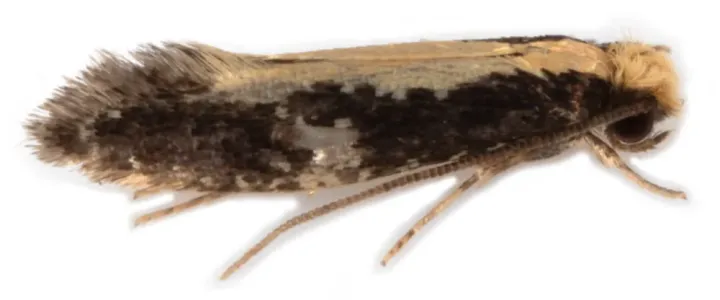
The spotted grain moth (Monopis rusticella) belongs to the order Lepidoptera and the family Tineidae. It is a small moth with a wingspan typically ranging from 12 to 18 mm.
Adult moths are recognizable by their dark brown forewings adorned with scattered light spots and a distinct white central patch, which distinguishes them from other warehouse pests.
The larvae are typically dirty-white with a brown head capsule and are known for their cryptic behavior, preferring dark and sheltered environments within grain stores.
The life cycle involves egg, larva, pupa, and adult stages. In non-heated environments, the pest usually completes one generation per year, but in stable temperatures, multiple generations occur.
This species is highly adaptable and can survive on a wide range of organic matter, making it a persistent resident in poorly managed storage facilities.
What it damages
The pest primarily infests stored grain crops, including wheat, barley, and maize, as well as processed products like flour, bran, and various grain-based animal feeds.
Larvae feed on the grain kernels, often boring into the seed to consume the endosperm, which significantly reduces the quality, weight, and market value of the commodity.
Beyond physical consumption, the larvae produce silk webbing that binds grain particles together, leading to clumping and localized heating within the grain mass.
The presence of larvae and their frass promotes moisture accumulation, which encourages the growth of storage molds and mycotoxins, further degrading the stored product.
It is often considered a secondary pest, frequently following primary grain borers and thriving in dusty, uncleaned areas of the storage facility.
Signs of infestation
The most reliable sign of an infestation is the presence of delicate silken webbing spun by the larvae around individual grains or along the walls of the storage bin.
Visual confirmation of adult moths fluttering near the grain surface, especially during low-light conditions, serves as a strong indicator of an active population.
Clumps of grain bound together by silk, mixed with small dark frass pellets, are characteristic symptoms of the larval feeding activity within the grain bulk.
A musty odor in the storage area often indicates that the larvae have increased the moisture content, facilitating secondary mold growth in the damaged patches.
- Silken tunnels or webbing on the surface of stored goods
- Grain kernels with irregular holes and hollowed-out interiors
- Small dark pellets of larval excrement scattered among the grain
Control measures
Strict sanitation is the primary defense: removing spilled grain, dust, and debris from floors, crevices, and under equipment prevents the moth from establishing breeding grounds.
Aeration and cooling of the grain mass are effective non-chemical methods to inhibit larval development and prevent the population from reaching economic damage thresholds.
If an infestation is confirmed, fumigation of the grain using approved phosphine-based products is required to penetrate the grain mass and eliminate all life stages.
Empty warehouse surfaces should be treated with residual insecticides or aerosol sprays to kill adult moths and larvae that may be hiding in structural cracks.
Implementing a monitoring program using pheromone traps allows for early detection of adult activity, enabling targeted interventions before the infestation spreads.
Taxonomy
- Latin name
- Monopis rusticella
- Order
- Lepidoptera (butterflies)
- Family
- Tineidae
- EPPO code
- MNOPRU
Discussion
No discussions yet — be the first.