
Monopis moth
Monopis
Description
How to identify
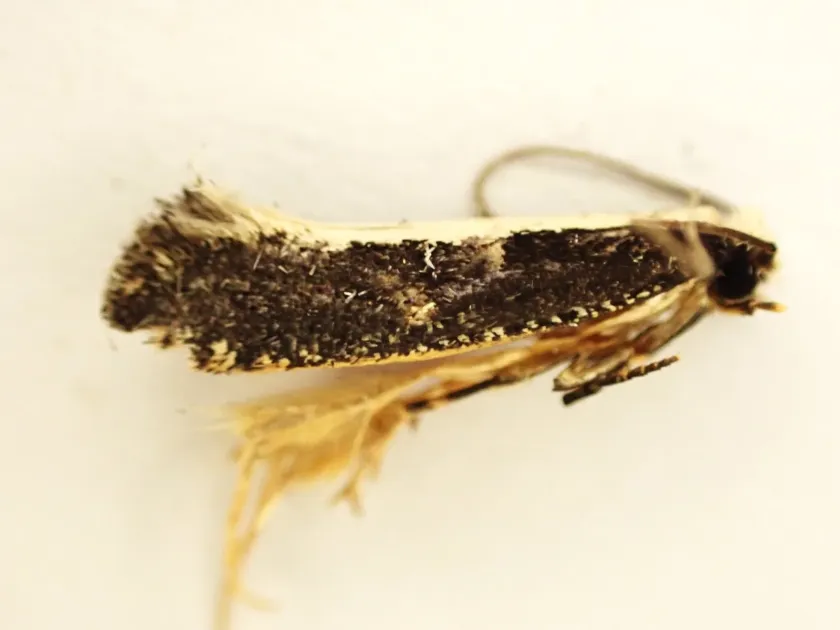
The Monopis moth (genus Monopis) belongs to the family Tineidae, order Lepidoptera. Adult individuals are small moths with a wingspan of approximately 10–18 mm and a characteristic dark pattern on their forewings.
The body of the imago is covered in dense scales, providing specific coloration that helps them camouflage against tree bark or organic debris. Unlike many agricultural pests, adult Monopis are primarily nocturnal.
The larvae (caterpillars) of this genus possess developed chewing mouthparts. Their bodies are usually light-colored, often with a darker head capsule, which is a typical trait for members of the Tineidae family.
Systematically, the genus includes numerous species with high adaptability to various substrates. Identification of a specific species often requires microscopic examination of the individual's genital apparatus.
The biology of the species is closely linked to the presence of decaying organic matter, which is why they are frequently found in storage areas or in high-humidity field ecosystems.
What it damages
The primary damage is caused by the larvae, which are detritivores, but in some cases, they may damage tissues of weakened or decaying plants. They feed mainly on organic residues, fungal mycelia, and necrotic tissues.
In agroecosystems, the Monopis moth can pose a threat to vegetable crops and root vegetables during improper storage. The larvae penetrate fruit tissues, causing spoilage and creating conditions for secondary infections.
The pest's harmfulness also manifests in the damage to stored plant products. The presence of caterpillars leads to the contamination of the harvest with waste products, rendering the produce unsuitable for sale.
In forestry and horticulture, some Monopis species feed on bark or woody debris, indirectly affecting the general condition of stressed trees. However, direct mass mortality of healthy crops due to this species is rarely recorded.
It is important to note that the primary economic danger is associated with the spoilage of produce in greenhouses or storage facilities, where favorable microclimates facilitate population growth.
When it appears
The life cycle of the Monopis moth includes the egg, larva, pupa, and imago stages. In warm regions, the pest is capable of developing through several generations within a single calendar year.
Adults are most active at twilight and night. Mating and oviposition occur near food sources for future offspring—usually areas with accumulations of organic matter.
The development of caterpillars is directly dependent on temperature and humidity levels in the environment. Optimal conditions facilitate a rapid transition to the pupation stage, which typically occurs within the substrate.
Overwintering of the species usually occurs at the larva or pupa stage in sheltered areas: building cracks, plant debris, or soil cover. Development resumes with the onset of warmer weather.
In storage facilities, the pest can maintain activity year-round, provided that stable temperatures and a food supply are maintained.
Signs of infestation
One of the primary indicators of a Monopis moth presence is the discovery of larval frass (excrement) on the surface of damaged fruits or in storage locations.
The presence of silken tunnels, which caterpillars spin for protection and movement, is also a characteristic indicator of the crop being infested by this pest.
Damaged plant parts begin to soften and emit a characteristic smell of decay, which attracts further pests and facilitates the spread of diseases.
Adult moths can be spotted in the evening using light traps. Their erratic flight and specific resting posture with wings held tightly help distinguish them from other Lepidoptera.
- Presence of damaged areas with larval deposits.
- Characteristic silk webbing on storage surfaces.
- Excrement traces in the form of small dark granules.
- Appearance of holes in plant tissues.
- Detection of adults via pheromone or light traps.
Control measures
Strict adherence to sanitation standards in storage facilities is paramount in managing the Monopis moth: timely removal of plant debris and maintaining low humidity levels.
Regular disinfection of storage facilities using approved insecticidal products allows for effective reduction of pest populations across all life stages.
The use of pheromone traps is recommended for population monitoring and early detection of moth emergence, allowing for targeted application of protective measures.
Biological control methods, including the use of entomopathogenic fungi or bacterial preparations, show positive results when utilized in greenhouse conditions.
Agrotechnical practices aimed at increasing plant resistance to rot also reduce the risk of attracting females to lay eggs on weakened crops.
Taxonomy
- Latin name
- Monopis
- Order
- Lepidoptera (butterflies)
- Family
- Tineidae
- EPPO code
- MNOPSP
Discussion
No discussions yet — be the first.