
Monochroa
Monochroa
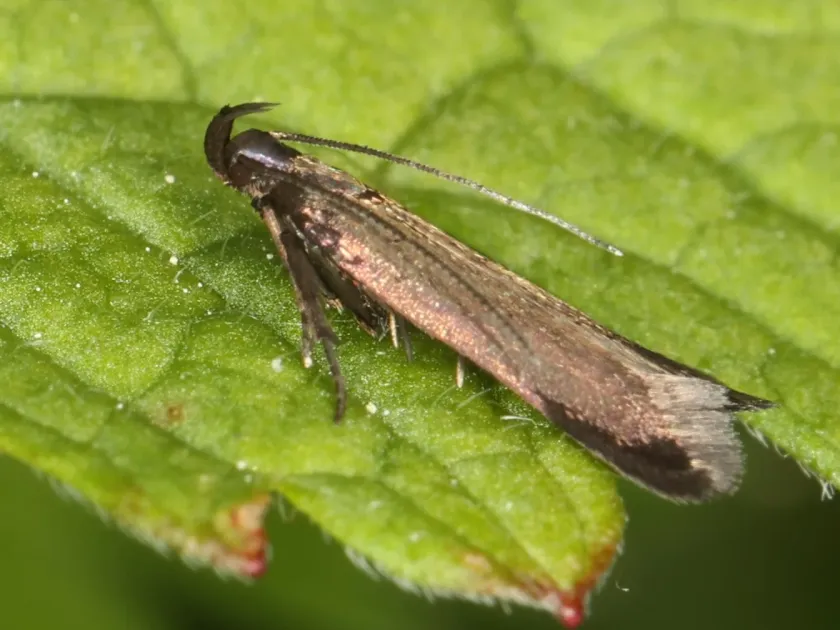
Description
How to identify
The genus Monochroa belongs to the Gelechiidae family, a diverse group within the order Lepidoptera. These are small nocturnal moths characterized by specialized wing structures and mouthparts adapted for feeding on plant tissues or sap.
Adult moths typically exhibit cryptic coloration, often in shades of gray or brown, allowing them to blend seamlessly with stems and leaves. When at rest, their wings are folded tightly along the body, which is a diagnostic feature of many species within this family.
The larvae, or caterpillars, are cylindrical with well-developed heads and thoracic legs. Their coloration often varies depending on the host plant, making early detection a significant challenge for field agronomists during crop scouting.
Species-level identification within the genus requires professional examination of genitalia, as morphological similarities between species are high. In the field, experts prioritize searching for structural evidence of infestation rather than relying on visual observation of the adult moths.
A key biological marker of their presence is the accumulation of frass (larval excrement) near entry points into the host tissue. Infested plant sections often exhibit structural deformation or chlorotic discoloration due to internal damage.
What it damages
Species of the Monochroa genus are known to infest a variety of herbaceous plants. In agriculture, they are particularly notable for attacking grain legumes, such as lupines, and various wild species of the Asteraceae family.
The primary damage is caused by the larvae, which lead an endophagous lifestyle by boring into the plant. They target stems, leaf petioles, and reproductive structures, disrupting nutrient flow and causing significant potential yield losses for the producer.
Infestation symptoms include the wilting of entire plant sections or secondary shoots due to the destruction of internal vascular tissues. Widespread infestation can drastically reduce crop density and the overall quality of the harvested product.
Internal feeding activity facilitates the entry of secondary pathogens, including fungi and bacteria. These infections often enter through the larvae's boring sites, further compromising the plant's health beyond the initial damage caused by the insect.
Economic impact is highly dependent on the growth stage of the crop. Larval damage during critical phases, such as budding or fruit set, is particularly devastating as the plant cannot fully compensate for the loss of vital reproductive tissues.
When it appears
The development cycle of Monochroa is intrinsically linked to the growing season of its host plants. Adult moth activity generally begins in late spring or early summer, coinciding with the rapid vegetative growth phase of target crops.
Eggs are typically deposited on the host plant's surface or in the soil near the base, depending on the specific species. Upon hatching, the larvae quickly bore into the plant to start their feeding process in a protected internal environment.
Depending on the region and the species, the insect may have one or more generations per year. Overwintering usually occurs in the pupal or larval stage within the soil or crop debris, making field sanitation a critical management step.
Peak injury levels are often observed during mid-to-late summer when larvae are actively boring within the stems. This is the optimal window for agronomists to perform scouting and determine the necessity of intervention strategies.
Environmental factors, specifically warm and humid spring conditions, can accelerate moth emergence and larval development. Monitoring local weather patterns is essential for predicting the timing of pest pressure in the current agricultural season.
Signs of infestation
The primary visual indicator of infestation is the premature wilting or drooping of apical shoots during peak daylight hours. Careful examination of these shoots usually reveals small entry holes where the larva penetrated the stem.
Yellowing or curling of leaves situated directly above the infestation site is another common symptom. This occurs because the larva disrupts the xylem and phloem vessels within the stem, limiting water and nutrient transport to the upper canopy.
The presence of fine frass particles pushed out of the stem is a definitive sign of active feeding. These particles are often visible at leaf axils or on the soil surface directly beneath the affected plant parts.
Internally, the stem shows a hollowed-out channel, the size of which increases as the larva matures. Decaying tissue within the stem, often caused by opportunistic pathogens, further indicates long-term infestation.
Increased activity of predators, such as birds or parasitic wasps, in specific patches of the field can serve as a warning sign. Scouting these "hotspots" often confirms the presence of larval pests that are otherwise hidden from view.
Control measures
Effective management of Monochroa requires an integrated pest management (IPM) approach combining cultural and chemical tactics. Strategic crop rotation is paramount, as it prevents the buildup of larval populations in the soil over consecutive seasons.
Deep autumn tillage is a crucial cultural control method, as it buries crop residues and destroys overwintering pupae. This significantly reduces the size of the initial pest population that emerges the following year.
Chemical control must be timed precisely to target larvae after hatching but before they successfully bore into the plant stem. During this narrow window, larvae are exposed to contact or systemic insecticides, making treatments highly effective.
Rotation of insecticide modes of action is recommended to delay the development of resistance. Using pheromone traps to monitor adult flight activity ensures that insecticide applications are timed exactly for the onset of the next generation.
Sanitation practices, including the removal of wild host weeds surrounding the field, are essential to minimize refugia for the pest. Robust agronomic practices that encourage rapid crop growth also help plants better withstand minor feeding damage.
Taxonomy
- Latin name
- Monochroa
- Order
- Lepidoptera (butterflies)
- Family
- Gelechiidae
- EPPO code
- MNCRSP
Discussion
No discussions yet — be the first.