
Mocis frugalis
Mocis frugalis
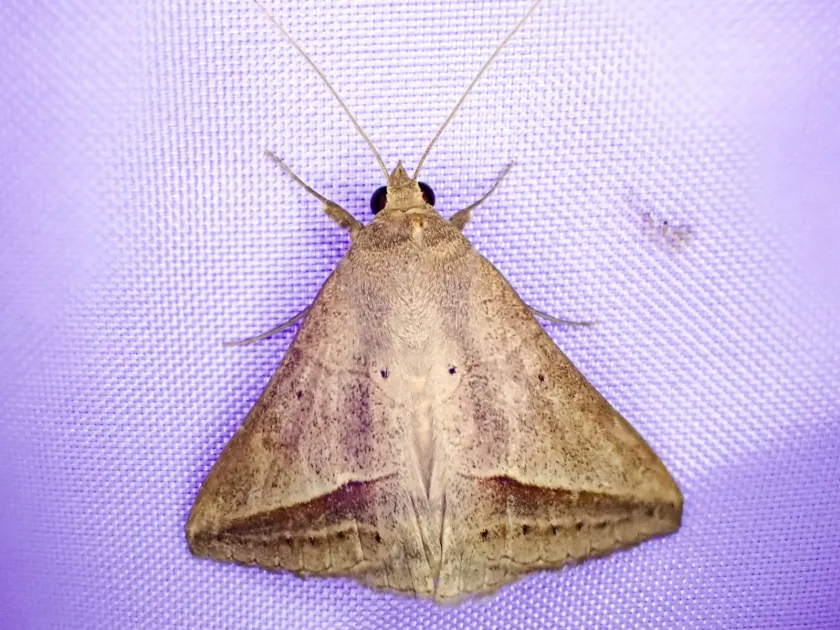
Description
How to identify
Mocis frugalis is a moth species belonging to the Erebidae family. The adult moth features a wingspan of approximately 35–45 mm, with forewings showing shades of brown and grey, often decorated with dark, zigzag lines that mimic dried leaves to escape predators.
The larvae, known as caterpillars, are polyphagous feeders that exhibit a characteristic looping movement similar to geometer moths, although they are biologically classified as part of the Erebinae subfamily. Their color ranges from light green to brownish, providing excellent camouflage on host stems.
The lifecycle follows a complete metamorphosis: egg, larva, pupa, and adult. Females typically deposit eggs in small clusters on the undersides of leaves, ensuring that the emerging larvae have immediate access to a food source.
Pupation usually occurs within the soil or inside folded leaves secured with silk threads. This protective mechanism allows the pupa to withstand environmental stressors and provides a stable environment for final development into the adult stage.
The rate of development is heavily influenced by ambient temperature and humidity. In tropical regions, the species can undergo multiple overlapping generations per year, making it a persistent threat to agricultural production throughout the growing season.
What it damages
The larvae are primarily responsible for the agricultural damage, as they are voracious feeders on various Poaceae family members. Key host crops include rice, sugarcane, maize, and sorghum, which are vital for local food security and economic stability.
Young larvae initially graze on the surface of the leaf blades, but as they grow, they consume entire sections of the leaf. In severe infestations, only the midribs remain, causing the plant to wither and significantly reducing photosynthetic capacity.
For rice crops, damage during the tillering and elongation phases is particularly detrimental. Stunted growth and reduced grain filling are common outcomes, leading to substantial yield losses if the infestation is not managed in time.
The mechanical damage caused by feeding also leaves the plants susceptible to secondary infections, such as bacterial leaf blight or fungal pathogens, which can enter the damaged plant tissues more easily than healthy ones.
High population densities can lead to rapid deforestation of field margins, from where the larvae migrate inward, creating large patches of decimated vegetation that are clearly visible from a distance.
Signs of infestation
The primary sign of a Mocis frugalis infestation is the appearance of ragged, irregular edges on the leaves. These patterns are distinct from the circular holes often made by beetles or other types of chewing insects.
The presence of large amounts of frass (caterpillar droppings) on the leaves or the soil surface underneath the canopy is a strong indicator of an active and growing caterpillar population that requires immediate attention.
Yellowing of the upper leaves or premature senescence of the plant is often a sign of high-level herbivory, suggesting that the caterpillars have already caused significant stress to the plant's vascular system.
Carefully examining the crop for folded leaves webbed together with silk will often reveal the presence of caterpillars during the day or pupae in protected stages, confirming the pest's occupation of the field.
Observing adult moths fluttering around light sources during the night is a reliable monitoring tool that warns farmers of the potential for an upcoming egg-laying cycle and subsequent caterpillar outbreak.
Control measures
Integrated Pest Management (IPM) is crucial for controlling Mocis frugalis. Cultural practices such as cleaning field boundaries of weeds and alternative host grasses help reduce the initial pest pressure before the main crop reaches a susceptible stage.
Biological control agents, including parasitic wasps like Trichogramma species and various predatory bugs, play a significant role in keeping populations in check. Preserving these beneficial insects by minimizing broad-spectrum pesticide use is vital.
When chemical intervention is necessary, targeting the early larval stages with specific, reduced-risk insecticides is recommended. This approach ensures high efficacy against the pest while protecting beneficial insect communities in the ecosystem.
Utilizing light traps for population monitoring allows for precise timing of spray applications. By predicting peak flight activity, farmers can target egg-laying periods, making control efforts significantly more efficient and cost-effective.
Post-harvest tillage is a highly effective mechanical method to disrupt the lifecycle. By turning the soil, pupae buried in the ground are exposed to predators and environmental desiccation, effectively reducing the carry-over population for the next season.
Taxonomy
- Latin name
- Mocis frugalis
- Order
- Lepidoptera (butterflies)
- Family
- Erebidae
- EPPO code
- MOCIFR
Discussion
No discussions yet — be the first.