
Mirificarma
Mirificarma
Description
How to identify
Mirificarma is a genus of moths belonging to the family Gelechiidae, known for their distinct wing shape and complex developmental cycles.
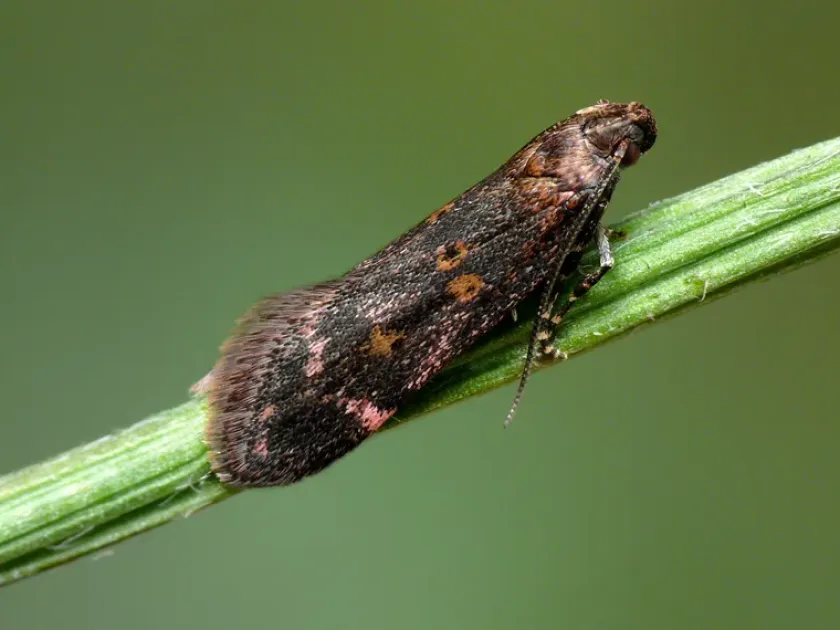
The adult insects are relatively small with a wingspan typically ranging between 10 to 15 millimeters, often exhibiting cryptic coloration.
Their forewings usually show shades of grey and brown, which serves as camouflage when resting on host plants during the day.
The life cycle follows a complete metamorphosis pattern including egg, larva, pupa, and adult stages, adapted to specific host plant phenology.
Larvae undergo several instars, with their feeding habits and appearance evolving as they mature to support rapid growth.
What it damages
These pests primarily target legume crops, causing significant stress to plants such as vetch and other fodder legumes.
The larvae feed on various parts of the plant, including leaves, stems, and reproductive organs, directly impacting the plant's vigor.
In cases of high infestation, the larvae consume buds and developing ovaries, which can lead to severe yield reduction in seed production.
Feeding damage often causes the deformation of leaves and creates entry points for various phytopathogens, including fungi and bacteria.
Continuous feeding during the critical growth phases significantly depletes the plant's energy reserves and delays normal maturation.
When it appears
Adult emergence typically aligns with the flowering period of host legumes, allowing for precise egg-laying timing on susceptible tissues.
Peak pest activity is usually observed during warm summer months, which provides ideal thermal conditions for larval development.
The species typically overwinters in the pupal or late larval stage, sheltered in the upper soil layers or within plant debris on the field.
The number of annual generations is highly dependent on local climatic conditions and the duration of the growing season.
Monitoring adult populations via pheromone traps provides essential data to predict infestation waves and optimize timing for intervention.
Signs of infestation
One of the first signs of infestation is the presence of webbing and frass on the leaves, indicating active feeding by larvae.
Leaves often appear curled, twisted, or skeletonized, which is a clear indicator that a Mirificarma population is present.
When inspecting buds, one might find boreholes, indicating that larvae have entered the reproductive tissues to feed internally.
Stunted growth of specific stems and premature senescence of flowers or fruit indicate significant damage that requires immediate action.
Visual confirmation of small larvae during the early morning hours can help in determining the severity of the outbreak before damage progresses.
Control measures
The core of integrated management includes crop rotation and maintaining spatial distance from previous years' legume fields to break the cycle.
Deep autumn plowing is a highly effective cultural practice to disrupt the overwintering success of pupae in the soil.
Chemical control should be implemented based on scouting results, targeting the vulnerable larval stages before they penetrate plant tissues.
- Utilizing biological control agents like Bacillus thuringiensis to reduce environmental impact.
- Deploying pheromone traps to monitor and potentially mass-trap adult males.
- Strict field sanitation, including the removal of crop residues post-harvest to reduce overwintering sites.
Regular monitoring combined with early-stage intervention is key to preventing economic losses caused by this lepidopteran pest.
Taxonomy
- Latin name
- Mirificarma
- Order
- Lepidoptera (butterflies)
- Family
- Gelechiidae
- EPPO code
- MIRFSP
Discussion
No discussions yet — be the first.