
Knapweed moth
Metzneria paucipunctella
Description
How to identify
The knapweed moth (Metzneria paucipunctella) belongs to the family Gelechiidae, within the order Lepidoptera. This species is specifically adapted to feed on the flower heads of various plants in the Asteraceae family.
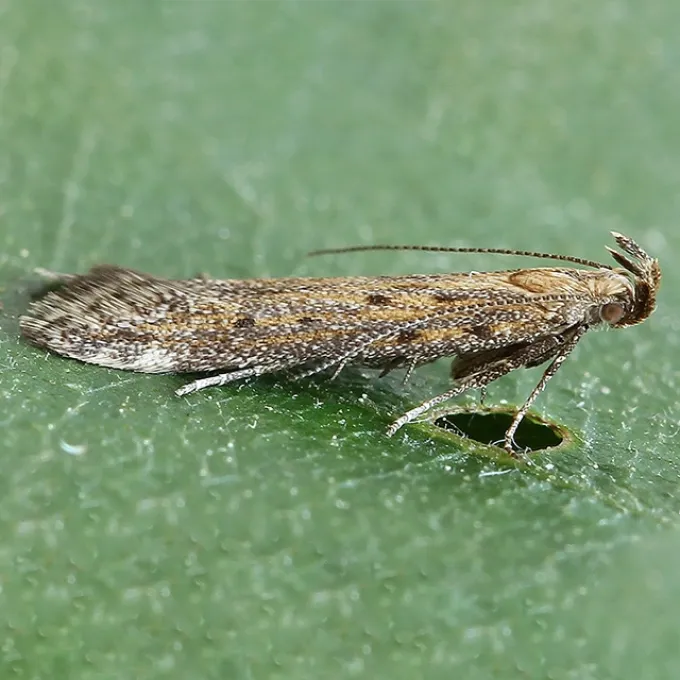
Adult moths are small, with a wingspan ranging from 12 to 18 mm. Their wings are narrow, grey-brown, and typically adorned with distinct small dark spots, providing excellent camouflage against flower buds.
The larvae are typically creamy-white or yellowish with a dark, sclerotized head capsule. They are internal feeders, spending their entire larval stage hidden within the flower heads of the host plant.
Females lay their eggs singly or in small clusters on the bracts of the developing flower heads. This ensures that newly hatched larvae have immediate access to food.
The pupal stage occurs inside the damaged flower head, often within a silken cocoon. This protected environment shields the pupa from external predators and harsh weather conditions.
What it damages
The knapweed moth primarily infests knapweeds (Centaurea species). The damage is concentrated in the reproductive structures of the plant, specifically the capitula (flower heads).
Larvae feed on the developing seeds and the floral receptacle. This feeding activity leads to a significant reduction in seed production, which can be devastating for seed crop production.
Beyond seed loss, the destruction of internal tissues causes the flower heads to become deformed, wilt, or dry out prematurely, impacting the plant's overall development.
In high-density infestations, the larvae can consume almost the entire contents of the flower head, leaving behind only frass and damaged floral parts.
Secondary infections, such as fungal pathogens, often colonize the damaged flower heads, further reducing the viability of any remaining seeds and causing the head to rot.
When it appears
This moth typically completes one generation per year. The adult flight period is observed during the summer months, specifically from June through July.
Eggs are laid during the blooming phase of the host plants. Once the larvae emerge, they promptly tunnel into the flower heads to begin their feeding cycle.
The larval stage continues throughout the summer and autumn. As the season progresses, the larvae mature while consuming the internal contents of the seed head.
Winter is spent as a mature larva or pupa, typically tucked away within the remains of the dry flower head or among plant debris on the soil surface.
Development resumes in the following spring as temperatures rise, leading to pupation and the eventual emergence of a new generation of adults.
Signs of infestation
Visible signs of infestation often include the presence of silk webbing near the bracts of the flower head, which larvae use for protection and structural support.
- Premature browning or wilting of the flower head.
- Small, visible entrance holes on the surface of the receptacle.
- Accumulation of larval frass (droppings) within the flower head upon opening it.
- Deformity or failure of the flower head to open correctly.
- Lack of viable seeds when the flower head is opened at maturity.
If you inspect an infested flower head, you will likely find a single larva curled inside, often surrounded by its frass and the remnants of consumed seeds.
In heavily infested fields, the overall visual quality of the crop is severely compromised, with a large percentage of flower heads appearing discolored or damaged.
Control measures
Good agricultural practices are the first line of defense. Removing and destroying infested plant material post-harvest is crucial to reducing overwintering populations.
Deep plowing in the autumn helps bury plant debris, effectively killing the larvae and pupae residing within the dried flower heads.
Managing weeds and wild knapweed in the vicinity of crop fields prevents these areas from becoming reservoirs for the moth population.
Biological control, using specific entomopathogenic organisms, can be utilized to manage population levels sustainably during the early larval stage.
If chemical intervention is necessary, it must be timed precisely with the period of adult activity or the early stages of larval entry, before the larvae become protected deep inside the flower head.
Taxonomy
- Latin name
- Metzneria paucipunctella
- Order
- Lepidoptera (butterflies)
- Family
- Gelechiidae
- EPPO code
- METZPA
Discussion
No discussions yet — be the first.