
Treehopper Metcalfiella monogramma
Metcalfiella monogramma
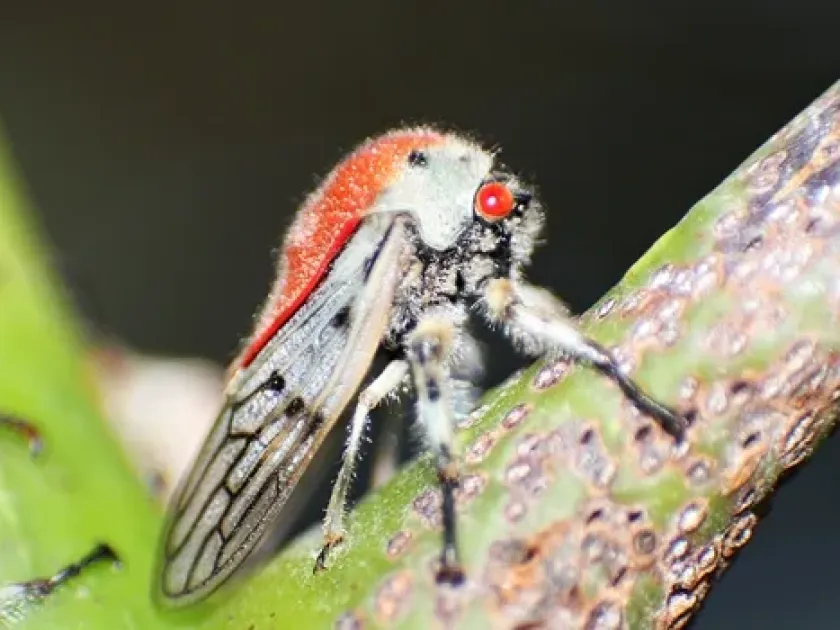
Description
How to identify
The treehopper Metcalfiella monogramma is a member of the Membracidae family, belonging to the order Hemiptera. These insects are easily distinguished by the prominent, often bizarrely shaped pronotal projections.
Adult insects exhibit camouflaging colors, allowing them to blend perfectly with bark and small twigs. Their compact bodies and unique structures make them fascinating examples of insect evolution.
Nymphs undergo incomplete metamorphosis, passing through several stages before reaching adulthood. During these juvenile stages, they lack fully developed wings and often stay localized near their feeding sites.
For accurate identification, researchers look at the specific shape of the pronotal horn and detailed morphological features. Variations between populations of Metcalfiella monogramma can sometimes complicate field diagnostics.
These insects prefer specific habitats where their host plants are abundant. Their population density is highly influenced by climate conditions, particularly temperature and humidity levels throughout the growing season.
What it damages
Metcalfiella monogramma primarily feeds on the sap of various woody plants and shrubs. Both adults and nymphs contribute to the damage by piercing the plant tissue with their specialized mouthparts.
Frequent sap extraction by a large colony significantly reduces the plant's overall vigor. This leads to reduced nutrient transport, which slows down the growth of shoots and leaves.
The punctures made during feeding create physical stress on the plant. These wounds can become entry points for various bacterial and fungal pathogens, potentially leading to bark necrosis.
Heavy infestations often result in stunted growth and the distortion of new shoots. In extreme cases, repeated feeding can lead to dieback of small branches, especially in younger, more vulnerable trees.
Orchards and nurseries are particularly at risk, as the presence of these pests affects both the health and the aesthetic value of the ornamental or fruit-bearing stock.
When it appears
The life cycle of Metcalfiella monogramma follows a predictable seasonal pattern. Activity levels rise significantly as soon as spring temperatures begin to favor plant growth.
Overwintering usually occurs in the egg stage. Females deposit their eggs directly into the bark or the stems of host plants, providing them with protection against freezing winter conditions.
Early spring marks the emergence of nymphs. This is the period when the most noticeable feeding activity occurs, as young stages require substantial nutrients for their rapid development.
Multiple generations may occur throughout the summer months depending on the regional climate. Each generation builds upon the previous one, potentially leading to population spikes in mid-summer.
As autumn approaches, the life cycle slows down. Adults prepare for the coming winter, ensuring that eggs are securely placed in plant tissues to survive until the next season's cycle begins.
Signs of infestation
The presence of these insects is often indicated by small, circular feeding punctures on the bark of young shoots. These spots can sometimes appear slightly discolored or swollen.
Visible growth retardation is a common symptom of infestation. If a branch is heavily colonized, the foliage may look yellowed, smaller than usual, or even begin to wilt.
Ant activity is a key indicator of treehopper presence. Ants are frequently attracted to the honeydew excreted by the insects, often forming symbiotic relationships by guarding the treehoppers.
Sooty mold growth on leaves and twigs is another sign of infestation. This black fungal layer grows on the sugary honeydew residue, further inhibiting the plant's photosynthesis process.
In cases of severe damage, the bark may show cracking or physical deformation. The overall appearance of the tree may change as it loses its natural structural balance due to weakened branches.
Control measures
Managing Metcalfiella monogramma requires a comprehensive approach. Physical control, such as pruning and destroying heavily infested branches, is highly effective for reducing egg populations.
Regular monitoring of the orchard is essential. Early detection allows for localized management, preventing the pest from spreading throughout the entire plantation.
Chemical control should be timed carefully. Applications of suitable insecticides are most effective when applied during the mass hatching of nymphs, when they are most susceptible to contact treatments.
Maintaining good plant health through proper fertilization and irrigation is a preventive measure. Stronger trees can tolerate feeding damage better and recover more quickly from potential infections.
Encouraging natural predators, such as parasitic wasps and predatory bugs, is a sustainable way to keep the treehopper population in check without over-relying on synthetic chemicals.
Taxonomy
- Latin name
- Metcalfiella monogramma
- Order
- Hemiptera (bugs, aphids, leafhoppers)
- Family
- Membracidae
- EPPO code
- METCMO
Discussion
No discussions yet — be the first.