
Banana stem borer
Metamasius hemipterus
Description
How to identify
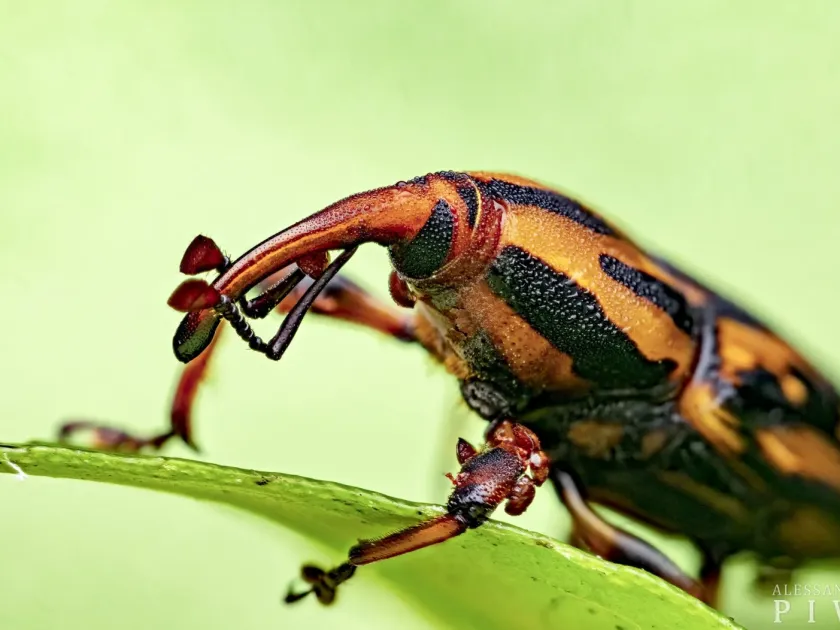
The banana stem borer, scientifically known as Metamasius hemipterus, is a beetle of the Curculionidae family. Adults are characterized by an elongated body and a prominent rostrum (snout), with colors ranging from black to reddish-brown featuring darker markings on the elytra.
The life cycle encompasses egg, larval, pupal, and adult stages. The adults lead a nocturnal and cryptic lifestyle, primarily hiding in shaded, moist areas at the base of the banana pseudostem, which makes early detection difficult.
The larval stage is responsible for the most significant damage. Larvae are white, legless, and possess a robust brown head capsule, specialized for boring into dense plant tissue. They go through several instars, rapidly growing in size and internal destructive capacity.
Pupation occurs within fibers of the plant host, as larvae construct specialized cocoons inside the tunnels they create. This stage remains protected from external environmental factors and many contact-based pesticide applications.
In tropical climates, reproduction occurs year-round. Females deposit eggs into small cavities bored into the pseudostem or fruit, ensuring that emerging larvae have immediate access to nutrients and protection.
What it damages
While the primary host is the banana plant, Metamasius hemipterus is a polyphagous pest that can also infest sugarcane, oil palms, and several other tropical crops, making it a serious threat to diversified agriculture.
Larval feeding activity creates extensive galleries throughout the plant stem. This disrupts the translocation of nutrients and water, severely weakening the structural integrity of the pseudostem and inhibiting fruit development.
The tunnels created by larvae serve as infection courts for various pathogenic fungi and bacteria. This frequently leads to severe plant rot, which significantly compounds the damage caused by the physical tunneling of the insects.
Adults also feed on developing fruit, creating small puncture wounds. These lesions are not only unsightly but also render the fruit susceptible to fruit flies and further microbial decay, drastically reducing market value.
Total yield losses can be substantial if infestation levels remain high. The decline in plant vigor and the potential for total lodging (toppling) of banana plants represent significant economic risks to commercial operations.
Signs of infestation
Early symptoms include the appearance of brownish, fermenting sap or frass (boring dust) exuded from entry holes at the base of the plant. This is a clear indicator of larval activity within the stem.
Infested plants often show signs of physiological stress, including yellowing leaves, premature senescence, and stunted growth. Severe infestations may result in the plant leaning or collapsing entirely due to internal tissue destruction.
Visual inspection often reveals multiple boreholes in the pseudostem. In advanced stages, the internal tissue may turn into a soft, mushy mass with a characteristic pungent odor associated with secondary rot.
Adult beetles may occasionally be spotted in the evenings near the base of the plant. Nighttime surveys with artificial lighting can be used to identify active populations on the plant surface.
Significant infestations are often accompanied by the collapse of the plant's structural support, leading to uneven stands and decreased fruit production quality across the entire plantation block.
Control measures
Strict phytosanitary practices form the first line of defense. Ensuring that only clean, certified planting material is used and effectively isolating infected areas prevents the further spread of the pest.
Trapping techniques, including the use of pheromone baits and sliced banana pseudostem traps, are highly effective for monitoring and suppressing adult populations. These traps should be maintained and checked regularly.
Cultural control involves systematic field sanitation. Removing and destroying heavily infested plant residues eliminates breeding grounds and prevents the buildup of larval populations within the plantation.
Chemical control is generally reserved for severe outbreaks, utilizing systemic insecticides. However, due to residue concerns and international trade regulations, application timing must be strictly managed to ensure food safety.
Biological control options are increasingly utilized, particularly the use of entomopathogenic fungi such as Beauveria bassiana. These natural enemies can effectively penetrate the tunnels and infect larvae, providing a sustainable management solution.
Taxonomy
- Latin name
- Metamasius hemipterus
- Order
- Coleoptera (beetles)
- Family
- Dryophthoridae
- EPPO code
- METAHE
Discussion
No discussions yet — be the first.